Food and culture · 10 min read
Etiquette in China: what not to do and what's normal here
In short: Chinese people don't expect tourists to know local customs and will forgive a lot, but a few rules are worth knowing. At the table, dishes go in the middle, the host serves the guests and pays the bill, and when toasting you hold your glass lower than an older person's. Never embarrass anyone in front of others, because in China "face" matters. Give and receive gifts with both hands, but don't give a clock, an umbrella or pears: they're associated with death and separation. Four is unlucky and eight is lucky. On the other hand, loud conversations, slurping, questions about your salary and requests for a photo together are normal in China, and nobody means to offend you.
What surprised us in China was how many things that seem rude back home are completely normal there, and the other way round. Knowing a few rules is enough to feel at ease.
Correct as of October 2026. Customs vary between regions and generations: in big cities young people are more relaxed about them than in the countryside.
Chinese etiquette at a glance
| Situation | Do | Avoid |
|---|---|---|
| Greeting | a handshake, a slight nod | hugging and kissing hello |
| At the table | wait for the host to start; take a little from each dish | sticking chopsticks upright in rice, digging around in a dish |
| Toasts | hold your glass lower than an older person's | refusing without a word: you can toast with tea |
| Gifts | give and receive with both hands | clocks, umbrellas, pears and sets of four |
| Conversation | praise the food and places, ask about family | criticising someone in front of others, politics |
| Temples | modest clothes; walk clockwise around stupas (Buddhist monuments holding relics) | stepping on the threshold, photos where they're banned |
"Face" (面子): the most important rule
Face (面子, miànzi) is a person's reputation and dignity in the eyes of others. In China people care about it more than in the West, both their own and other people's.
- Don't criticise anyone in front of others. If something is wrong, with your hotel room for example, talk about it calmly and in private. Shouting and making a scene in public gets you nowhere, and you're the one who "loses face".
- "Give face" by praising and thanking people in front of others: the cook for the food, the guide for the tour.
- "No" often goes unsaid. Answers like "we'll see" or "that might be difficult" (可能有点难, kěnéng yǒudiǎn nán) often simply mean "no". Don't push, look for another solution.
Greetings and conversation
- A handshake, often gentler than in the West, or a nod. Nobody hugs or kisses hello.
- The family name comes first. In the name 王小明 (Wang Xiaoming), Wang is the surname. Address people you don't know as "Mr Wang" (王先生, Wáng xiānsheng) or "Ms Wang" (王女士, Wáng nǚshì).
- A QR code instead of a business card. Contacts are usually swapped by scanning a code in WeChat (what WeChat is). When someone hands you a business card, take it with both hands and look at it for a moment rather than putting it straight in your pocket.
- Questions about your age, salary, marriage and children are normal and not nosy. You can answer vaguely with a smile.
- Compliments are accepted modestly. Chinese people often politely deny them (哪里哪里, nǎlǐ nǎlǐ, "oh, not at all"). You'll also hear that your Chinese is excellent, even if all you know is 你好 (nǐ hǎo).
- "Have you eaten?" (吃了吗?, chī le ma?) is a traditional greeting, especially among older people, not an invitation to lunch.
- Good topics: food, family, travel, your home country. Politics is best left until you're home (more in our article on common mistakes).
At the table
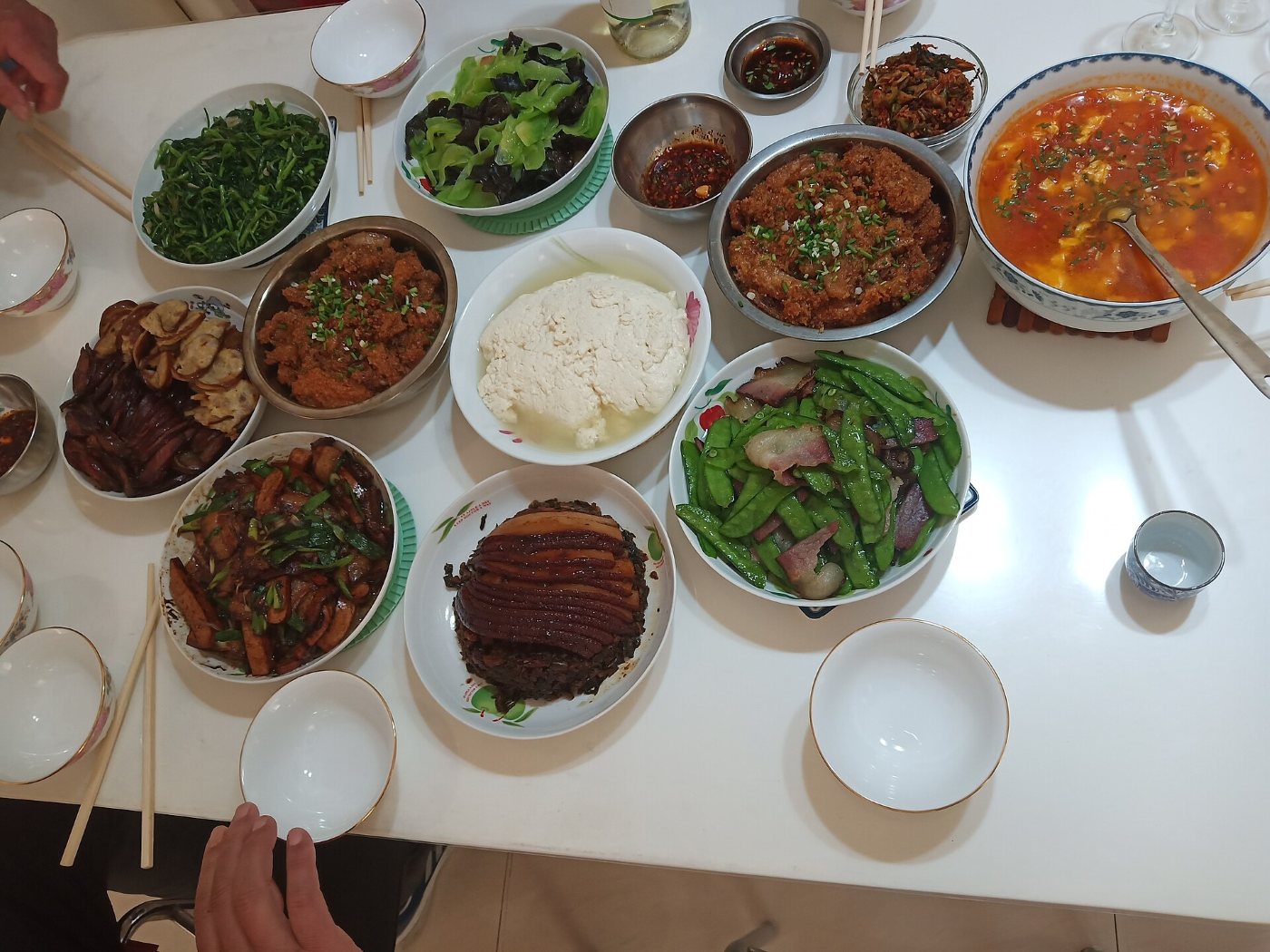
Eating together is the most important social occasion in China. We cover how to order and what to eat in our article There is no such thing as "Chinese food"; here we focus on how to behave.
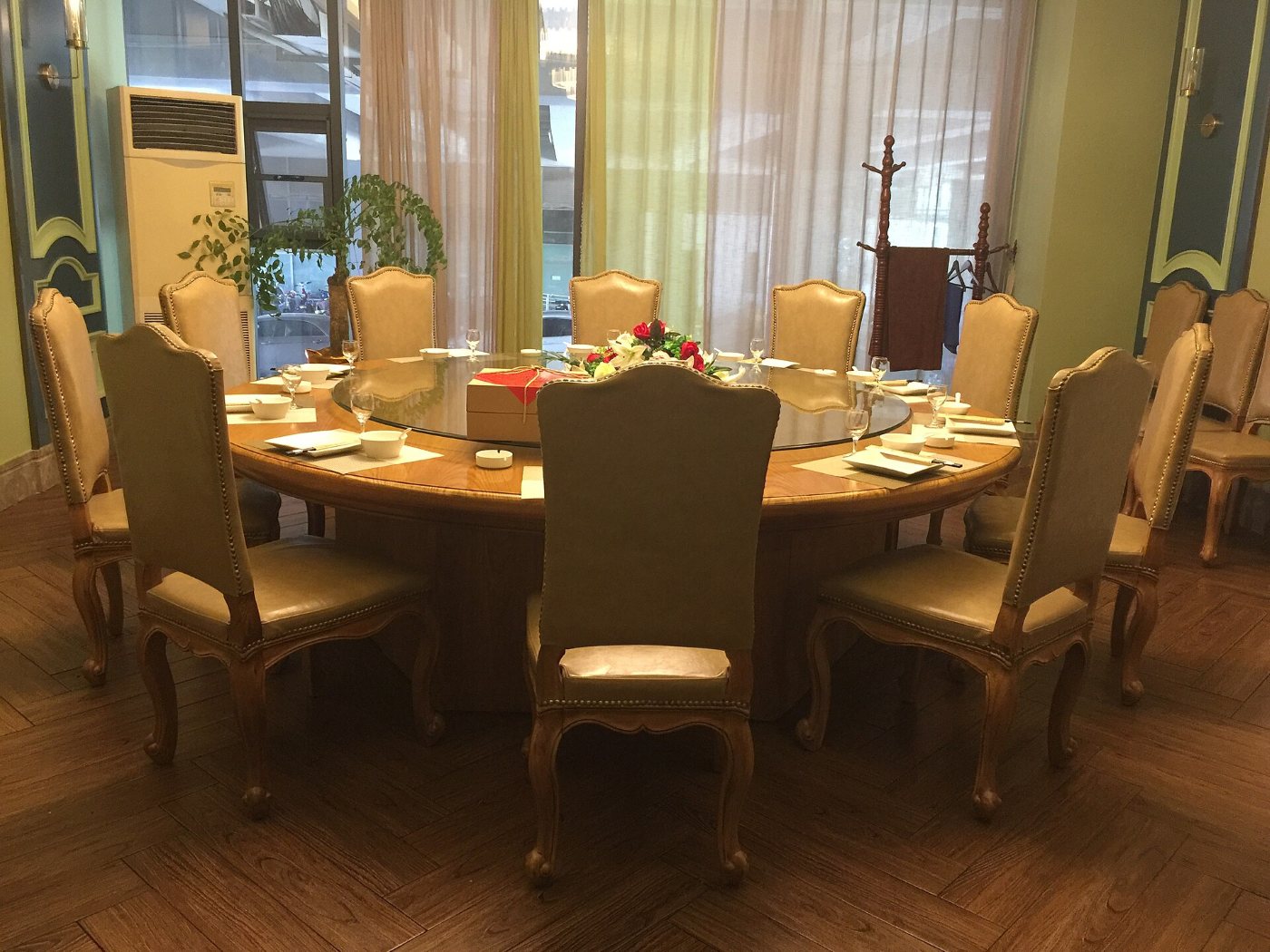
- Wait to be shown your seat. The chair facing the entrance usually belongs to the host or the most important guest.
- Turn the lazy Susan (转盘, zhuànpán) slowly, and not while someone is helping themselves. A new dish is often turned towards the guest first.
- The host will put the best morsels on your plate. It's a sign of hospitality, so accept them. If you don't want something, just leave it on your plate.
- Chopsticks: don't stick them upright in rice (why), don't tap them on your bowl and don't point them at people. If there are separate serving chopsticks on the table (公筷, gōngkuài), use them instead of your own.
- Slurping soup and noodles, lifting your bowl to your mouth and putting bones on your plate are all perfectly normal at a Chinese table.
- Don't flip a whole fish over, especially in the south and on the coast: it's associated with a boat capsizing. Eat the top half, then simply lift out the bone.
- Say thanks for tea with a tap. When someone tops up your tea, tap the table twice with two fingers. It's a silent "thank you".
- Leftovers: traditionally you left a little food to show the host had been generous. Today China is fighting food waste: the "Clean Plate" campaign (光盘行动) has run since 2020, and a 2021 law lets restaurants charge a fee for large amounts of leftovers if the rate is displayed. Order sensibly and take leftovers with you (打包, dǎbāo, "to take away").
Toasts
- 干杯 (gānbēi) literally means "dry glass". At formal dinners there are plenty of toasts, often with the strong spirit baijiu (白酒).
- When clinking, hold your glass lower than an older person's or the host's. It's a sign of respect.
- You don't have to drink alcohol. Say 我不喝酒 (wǒ bù hē jiǔ, "I don't drink alcohol") and toast with tea or juice. There's even a set phrase for it: 以茶代酒 (yǐ chá dài jiǔ), "tea in place of alcohol".
The bill
Whoever invites, pays. The "battle for the bill", with several people trying to pay at once, is a polite ritual. If you're a guest, offer to pay but don't insist, and invite them next time. Among young people splitting the bill evenly (AA制, AA zhì) is increasingly common. There's no tipping in mainland China (exceptions in Hong Kong and Macau).
Gifts: what to give and what to avoid
Give and receive gifts with both hands. The recipient will often politely refuse once or twice first, so offer again. Gifts usually aren't opened in front of the giver. Good choices are something from your home country (local sweets, a small speciality), good tea or fruit in nice packaging, ideally wrapped in red or gold.
Many unlucky associations come from Chinese words that sound alike:
| Don't give | Why |
|---|---|
| a clock (钟, zhōng) | "to give a clock" (送钟, sòng zhōng) sounds exactly like "to see someone off to their death" (送终) |
| an umbrella (伞, sǎn) | sounds like 散 (sàn), "to break up" |
| pears (梨, lí) | sound like 离 (lí), "to leave"; sharing a pear (分梨) sounds like "separation" (分离) |
| a green hat | "wearing a green hat" (戴绿帽子) means your partner is cheating on you |
| knives and scissors | a symbol of cutting ties |
| white flowers, black-and-white wrapping | associated with funerals |
| sets of four | 四 (sì, "four") sounds like 死 (sǐ, "death") |
Numbers and colours
| What it means | |
|---|---|
| 4 | unlucky, because it sounds like "death"; many buildings have no 4th floor and no flat numbers containing a 4 |
| 8 | luck and wealth, because 八 (bā) sounds like 发 (fā), "to get rich"; the Beijing Olympics opened on 8 August 2008 at 20:08 |
| 6 | "everything goes smoothly" (六六大顺) |
| 9 | 九 (jiǔ) sounds like 久 (jiǔ), "long", so it stands for long life and a lasting relationship |
| red | luck and celebration: weddings, New Year, red envelopes with money (红包, hóngbāo) |
| white | mourning: white is worn at funerals |
Phone numbers and number plates with eights can cost more, and ones with fours less. You don't have to believe in it, but it's worth keeping in mind when choosing a gift or a hotel room for Chinese friends.
In temples
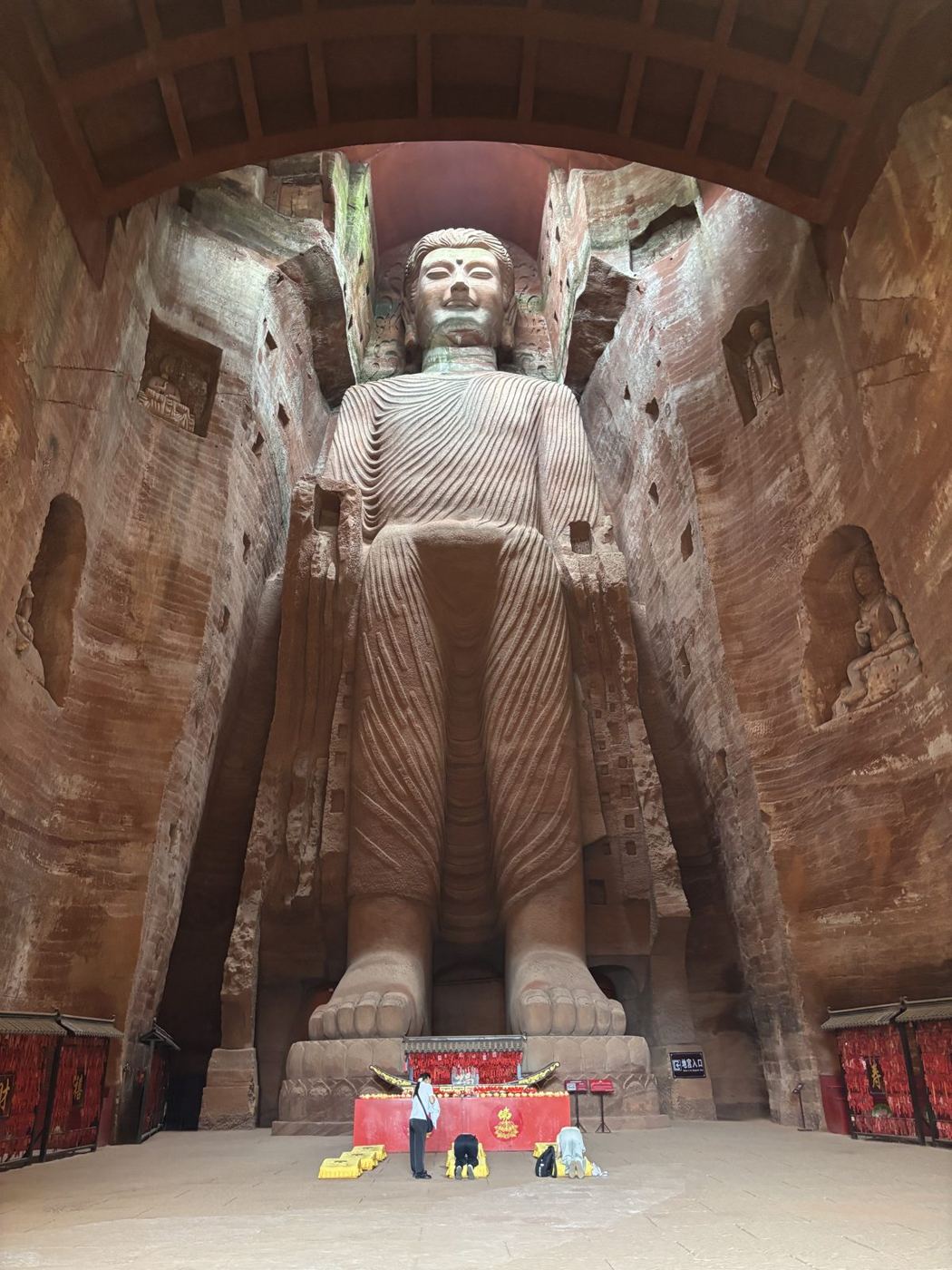
- Dress modestly, especially in Tibetan temples: shoulders and knees covered.
- Step over the high threshold (门槛, ménkǎn) at the entrance to the halls, but don't stand on it.
- Photos: usually fine in the courtyards, often not in halls with statues. Look for signs saying 禁止拍照 (jìnzhǐ pāizhào, "no photography").
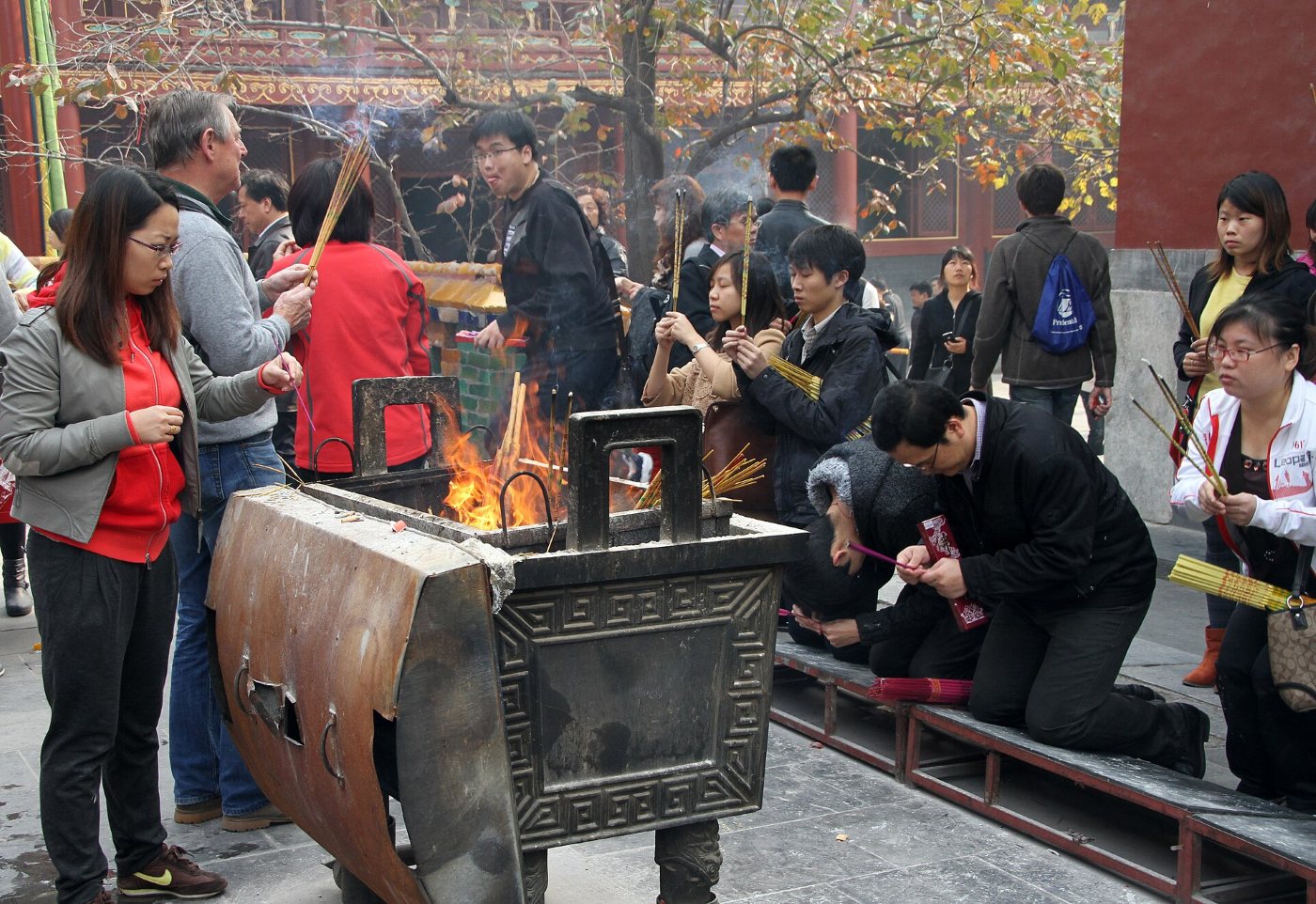
- Incense isn't compulsory. If you'd like to light some, people usually light three sticks and place them in the large incense burner in front of the hall.
- In Tibetan temples walk clockwise around stupas (white, bell-shaped monuments holding relics, such as the White Dagoba in Beihai Park in Beijing), prayer wheels and whole temples.
- Don't touch the statues or point your feet at them.
What seems strange to us but is normal in China
- Loud conversations, including phone calls on speaker and videos watched without headphones on the metro.
- Slurping and talking with your mouth full.
- Hot water to drink (开水, kāishuǐ): stations and hotels have free boiling-water dispensers.
- Requests for a photo together with a foreigner, especially outside big cities. You can say no with a smile.
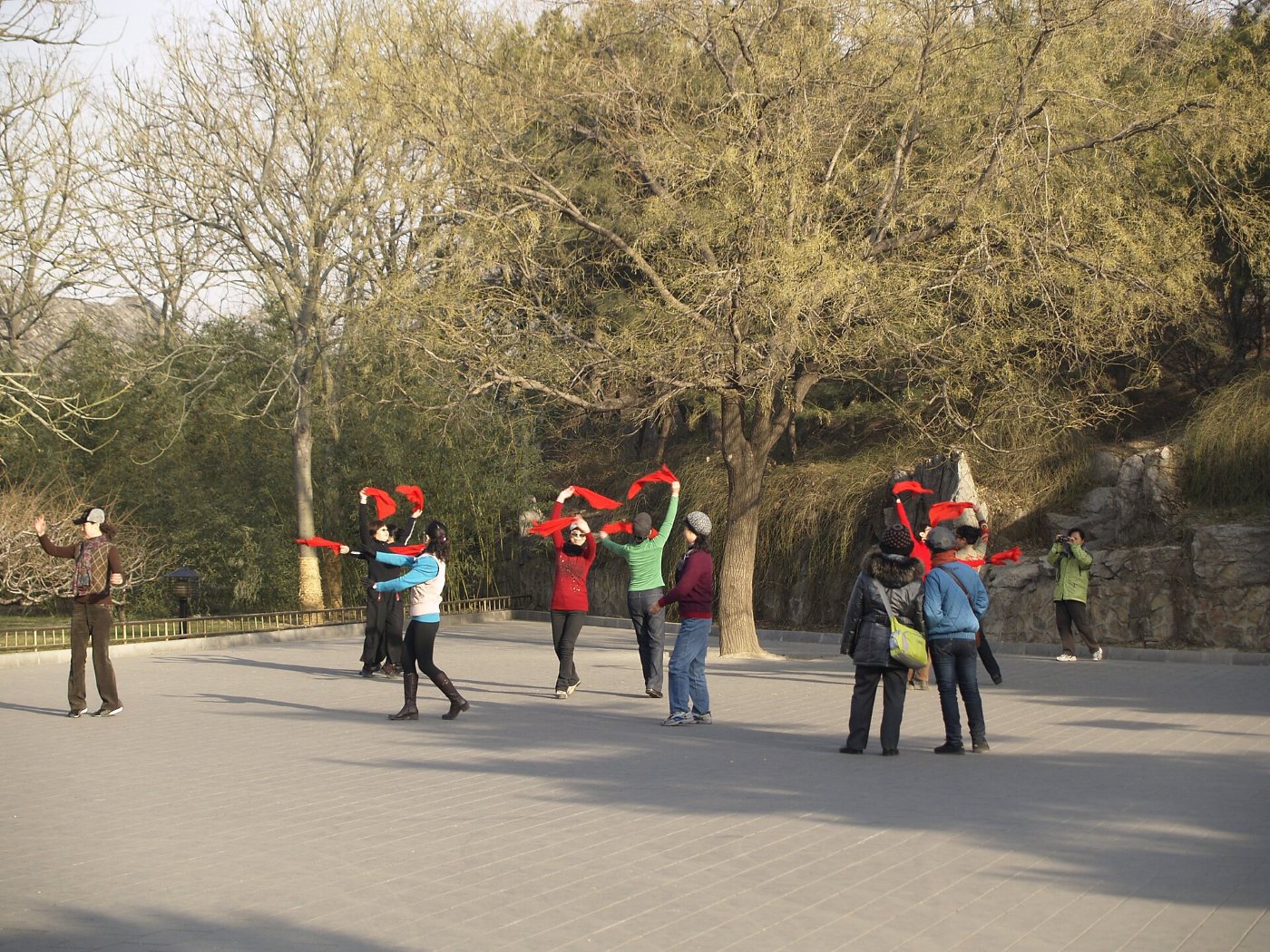
- Evening square dancing (广场舞, guǎngchǎng wǔ) and morning tai chi in parks.
- Sun umbrellas, arm sleeves and face masks in summer: pale skin is considered beautiful.
- Naps at the office, on the metro and on park benches.
- Crowding at the doors of the metro and lifts. In big cities, platforms increasingly have marked queues.
- Smoking in restaurants in smaller cities. In Beijing (since 2015), Shanghai and Shenzhen smoking is banned in indoor public places.
11 polite phrases
| English | Chinese | Pronunciation |
|---|---|---|
| Hello | 你好 | nǐ hǎo |
| Thank you | 谢谢 | xièxie |
| You're welcome | 不客气 | bú kèqi |
| Excuse me (to get someone's attention) | 不好意思 | bù hǎo yìsi |
| Sorry (for a mistake) | 对不起 | duìbuqǐ |
| No problem | 没关系 | méi guānxi |
| Cheers (bottoms up) | 干杯 | gānbēi |
| Delicious! (about food) | 好吃 | hǎochī |
| Delicious! (about drinks) | 好喝 | hǎohē |
| I'm full | 我吃饱了 | wǒ chī bǎo le |
| Goodbye | 再见 | zàijiàn |
FAQ
Do you tip in China?
Not in mainland China. Nobody expects tips, and leaving change on the table can cause embarrassment. In Hong Kong and Macau restaurants often add a 10% service charge to the bill.
Is it rude to refuse a toast with alcohol?
No. Say 我不喝酒 (wǒ bù hē jiǔ, "I don't drink alcohol") and toast with tea or juice. What matters is the gesture, not what's in the glass.
What gifts should you not give in China?
Clocks, umbrellas, pears, green hats, knives and scissors, white flowers and sets of four. They're all associated with death, separation or infidelity.
Do you take your shoes off in a Chinese home?
Usually yes. Hosts often give guests slippers.
Can you take photos of people in China?
It's best to ask: 可以拍照吗? (kěyǐ pāizhào ma?, "may I take a photo?"). Don't photograph police officers, soldiers or military sites.
Sources
- Wikipedia: Mianzi (the concept of "face" in Chinese culture)
- Wikipedia: Chinese numerology (the meaning of 4, 6, 8 and 9)
- China Daily: anti-food waste law (2021, fee for large leftovers)
- WHO: Beijing smoke-free law (since 1 June 2015)
A ready-made plan with practical tips
Our travel plans include practical tips for restaurants and sights: what to order, what it costs and how to behave, plus addresses in Chinese to show your taxi driver. See our China travel plans.