Problems and tips · 10 min read
The most common mistakes travellers make in China
In short: most problems in China come from things you need to sort out before you fly: internet (an eSIM), mobile payments (Alipay or WeChat Pay), maps (Amap or Apple Maps instead of Google) and tickets bought in advance. On the ground, the most common mistakes are leaving your passport at the hotel, going to the wrong station, taking a taxi from a tout and accepting a "tea" invitation from friendly strangers. If you stay somewhere other than a hotel, you must register within 24 hours, but since September 2026 you can do it online.
What surprised us most in China was how clean it is, even in huge railway stations and on the metro. So most travellers' problems don't come from dirt or danger, but from a lack of preparation. That's why this list starts with what to do at home, followed by what to watch out for once you're there.
Correct as of 12 October 2026. Rules (accommodation registration, power banks, visa-free entry) can change, so check them again before you travel.
Mistakes before you go
1. Arriving without internet
Google, Gmail, WhatsApp, Instagram and Facebook don't work in China, hotel Wi-Fi included. The simplest fix is a travel eSIM bought before you fly (we used Airalo): it connects through a foreign network, so Western apps work as soon as you land. Without internet you can't pay by phone, call a taxi or check directions. More: Internet in China.
2. Payments not set up
In China people pay with a QR code in Alipay or WeChat Pay, even at a street stall. Big hotels and malls accept foreign cards, but a noodle bar won't. Install Alipay at home, link your card and complete the passport verification, because doing it on arrival, without internet and in a hurry, is harder. Payments over ¥200 (about 116 PLN) with a foreign card carry a 3% fee. More: How to pay in China.
TipCarry 500–1,000 ¥ in cash in case your phone dies or an app won't accept your foreign card.
3. Relying on Google Maps
Google Maps doesn't work without a VPN, and even with one it shows your position a few hundred metres off the street, because Chinese maps use shifted coordinates. Download Amap (Gaode) or use Apple Maps, which uses Chinese map data in China. Save your hotel's address in Chinese too, to show taxi drivers. More: China without Google Maps.
4. Booking a hotel that doesn't accept foreigners
The authorities have banned hotels from turning away guests with foreign passports, but in practice it still happens, especially in budget hotels in smaller cities. The booking goes through, and at reception you hear "no foreigners". Before you book, check the listing to see whether the hotel accepts foreign guests, and if in doubt, message the hotel. More: Hotels, trains and flights.
5. Staying outside a hotel without registering
Hotels register you automatically. But if you stay with friends or in a private flat, you or your host must register your stay within 24 hours of arrival. This also applies to visa-free visitors. Since 21 September 2026 you can do it online anywhere in China: on the National Immigration Administration (NIA) website, in the NIA 12367 app, or in its mini-programs in WeChat or Alipay. You can still go to the nearest police station instead.
6. A power bank without the 3C mark
Since 28 June 2025, power banks without the Chinese 3C (CCC) mark have been banned on domestic flights in China. Many power banks bought abroad don't have it (check the device itself, not the box), so it may be confiscated at security before a flight from Beijing to Chengdu. If your trip includes a domestic flight, buy a 3C-marked power bank in China. Power banks always go in your carry-on. Lighters and matches are not allowed on board either.
7. Buying tickets at the last minute
High-speed train tickets go on sale 15 days before departure, and on popular routes at weekends and holidays they sell out fast. Forbidden City tickets are released 7 days ahead and in high season disappear within minutes. Buy them as soon as sales open. Many big museums, such as the Forbidden City and the National Museum in Beijing, are usually closed on Mondays.
8. No insurance or medicine
Insurance isn't required for entry, but healthcare in China has to be paid for, often upfront. Buy a policy with high medical cover. Take prescription medicines in their original packaging, ideally with a prescription or a doctor's letter in English. You may not find your usual over-the-counter medicines in a Chinese pharmacy.
Mistakes while travelling
9. Leaving your passport in the hotel safe
In China your passport is your ticket: you scan it to enter the station and board the train, show it at hotels and at the entrance to many museums and national parks. Without it you can't board a train, even with a ticket. Carry it with you for the whole trip, and keep a photo of the photo page on your phone.
10. Going to the wrong station or airport
China's big cities have several railway stations and often two airports, up to an hour apart. Always check the exact name on your ticket.
| City | Railway stations (incl.) | Airports |
|---|---|---|
| Beijing | Beijing, Beijing South, Beijing West, Beijing Chaoyang | Capital (PEK), Daxing (PKX) |
| Shanghai | Shanghai, Shanghai Hongqiao, Shanghai South | Pudong (PVG), Hongqiao (SHA) |
| Chengdu | Chengdu East, Chengdu South, Chengdu West | Tianfu (TFU), Shuangliu (CTU) |
| Chongqing | Chongqing North, Chongqing West, Chongqing East | Jiangbei (CKG) |
In ChineseIn a station name, what matters is the last character before 站 (station): 南 = south, 北 = north, 东 = east, 西 = west. For example, 北京南站 is Beijing South, where trains to Shanghai leave from.
11. Arriving at the station at the last minute
Chinese stations are huge, and before entering you go through a bag and passport check, much like at an airport. Platform gates close 3–5 minutes before departure, and after that nobody gets through. At big stations, arrive about an hour before departure. In big cities, bags are also scanned at metro entrances.
12. Taking a taxi from a tout
At airports and stations, drivers approach offering a ride "cheaper and right now". These are unlicensed taxis that often charge several times the meter. Go to the official taxi rank (with a queue and branded taxis) or book DiDi in the Alipay app: you pick your destination on a map and see an estimated fare before the ride.
13. Drinking tap water
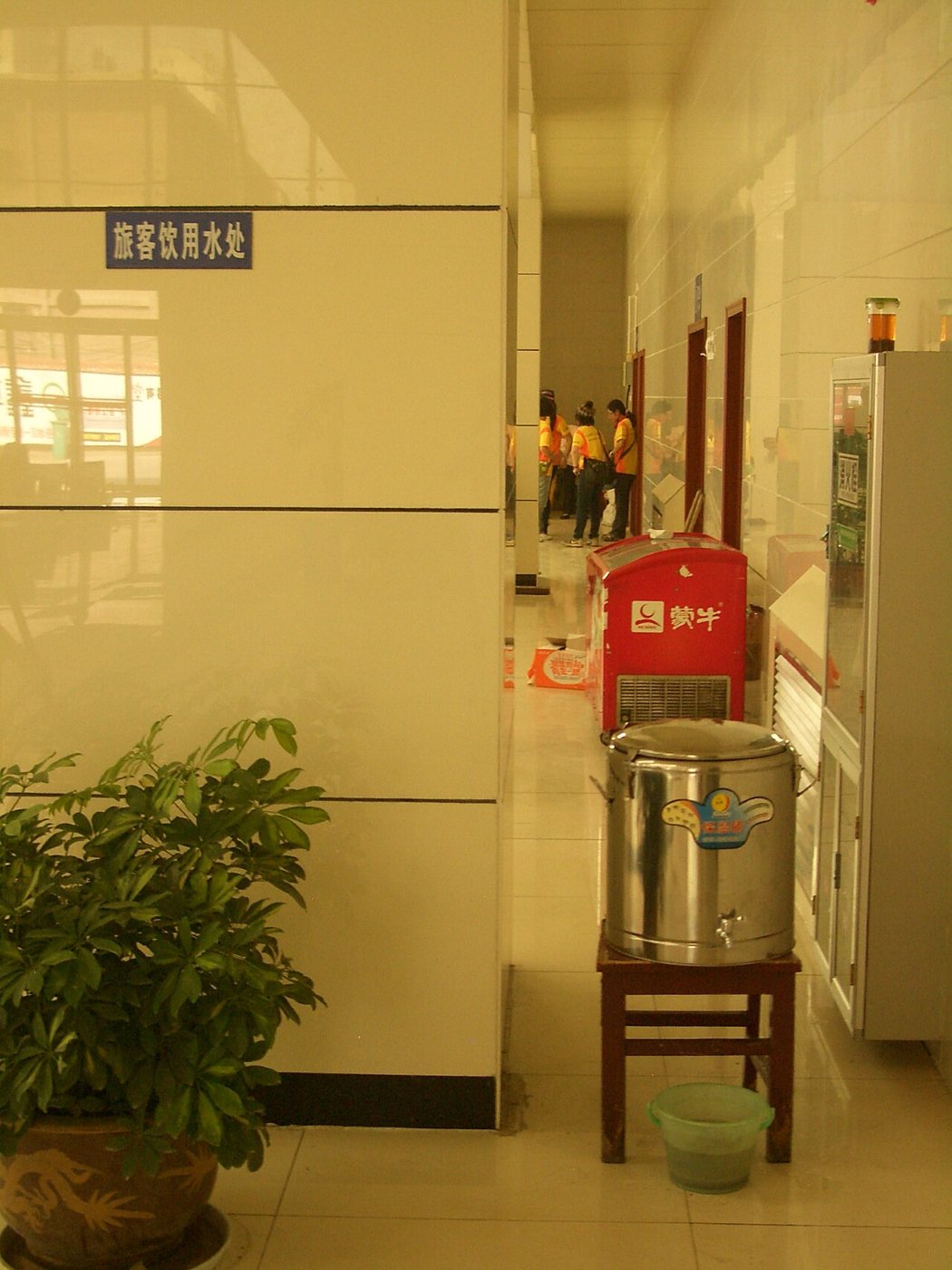
Tap water in China isn't for drinking. People drink boiled or bottled water. Hotel rooms usually have a kettle and bottled water, and stations and trains have hot water dispensers.
14. Crossing the road the European way
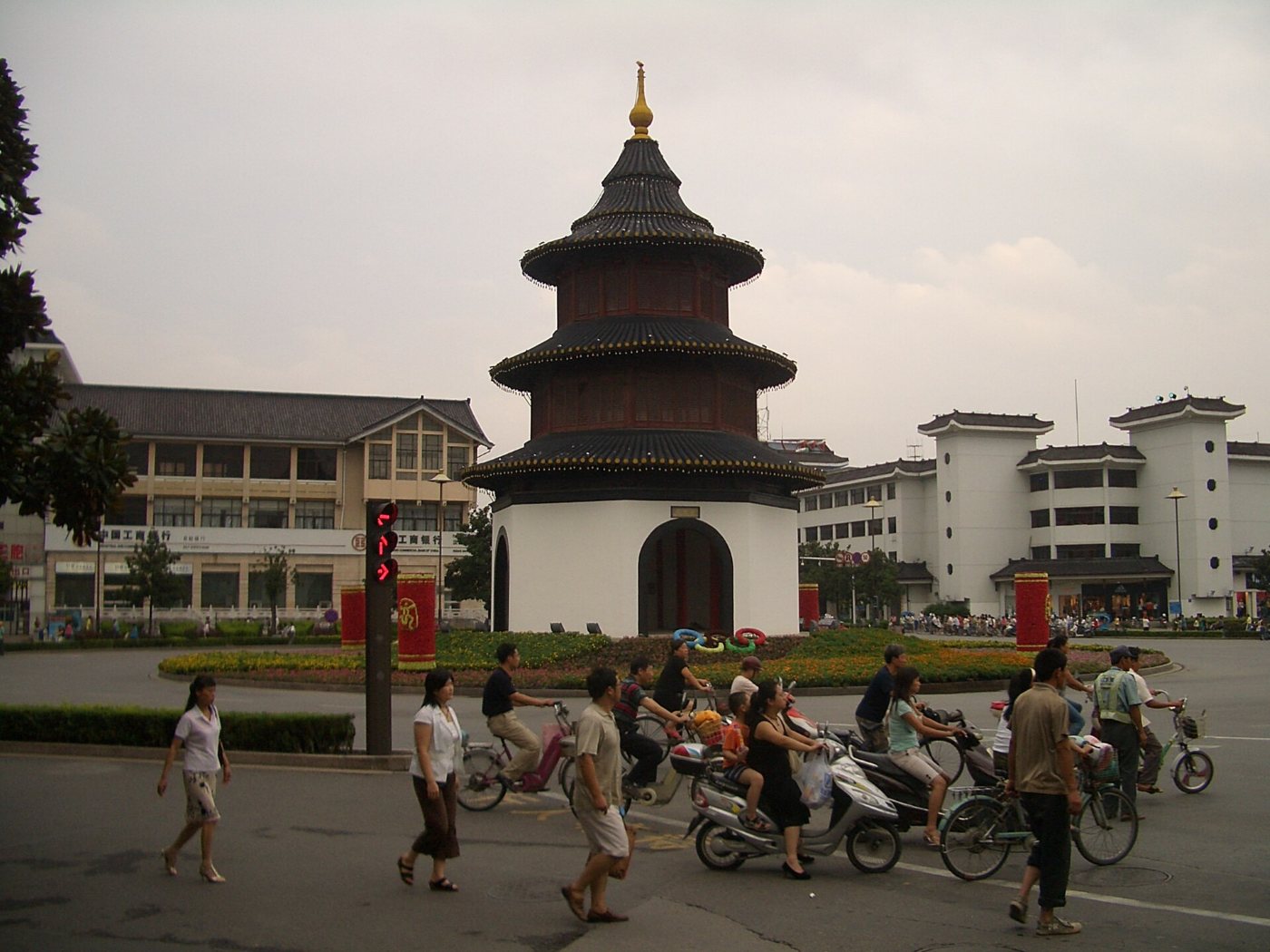
In China cars may turn right on a red light, so a green pedestrian signal doesn't mean nothing is coming. Watch out for electric scooters too: they're silent and often ride on the pavement or against the traffic. Look both ways before crossing, even at a zebra crossing.
15. No tissues
Public toilets, especially outside hotels and malls, often have no paper, and many are squat toilets. Carry a pack of tissues and hand sanitiser.
Mistakes with people
16. A "tea" invitation from friendly strangers
This is the best-known tourist scam in China. Near Tian'anmen Square, Wangfujing Street, the Bund or Nanjing Road in Shanghai, young people with excellent English strike up a conversation. After a chat they suggest tea, a drink or an "art students' exhibition". At the end you get a bill for hundreds or even thousands of yuan. The rule is simple: don't go anywhere with strangers who approach you in the street, and in a teahouse always ask for a menu with prices first.
17. Haggling in the wrong places
At stalls and tourist markets, such as the Silk Market in Beijing, the first price can be several times too high, and haggling is normal. In shops, restaurants and malls prices are fixed and nobody expects you to bargain.
18. Leaving tips
In mainland China tipping isn't customary and nobody expects it. Coins left on the table are more likely to cause confusion. Hong Kong and Macau are the exception: restaurants there often add a 10% service charge to the bill.
19. Chopsticks stuck in rice
Chopsticks stuck upright in a bowl of rice are associated in China with incense at funerals. Rest them on the chopstick holder or across your bowl. Don't point at people with your chopsticks either.
20. Talking politics and photographing police
Political topics are best left until you're home: you don't know who's listening, and the person you're talking to may feel awkward. Don't photograph police officers, soldiers or military sites, and don't fly a drone without checking the rules, as there are no-fly zones over big cities and airports.
Checklist: what to do before you fly
- Buy an eSIM and check that it works.
- Install Alipay (and possibly WeChat), link your card and complete the verification.
- Download Amap or set up Apple Maps, plus a translation app with offline mode.
- Save your hotels' addresses in Chinese.
- Check that your hotels accept foreigners.
- Fill in the arrival card online (China visa-free).
- Buy train tickets and tickets for the main sights as soon as sales open.
- Check that your power bank has the 3C mark (if you're flying within China).
- Buy travel insurance and pack your medicines with a prescription.
- Bring a universal plug adapter, tissues and some cash.
Frequently asked questions
Is China safe for tourists?
Yes. Crime against tourists is low, and evening walks in big cities are completely normal. The biggest risk is petty scams: taxi touts and "tea" invitations. More on a first trip: First time in China.
Can I pay by card in China?
In big hotels, malls and some restaurants, yes, but in most cafés, small shops and street stalls you can only pay by phone. The easiest option is to link your card to Alipay or WeChat Pay before you fly.
Do I need to register my stay in China?
At a hotel you don't need to do anything, because the hotel registers you. If you stay with friends or in a private flat, you must register within 24 hours. Since 21 September 2026 you can do it online, for example in the NIA 12367 app or the Alipay mini-program.
Can I bring a power bank to China?
Yes, in your carry-on. On domestic flights within China, however, it must have the Chinese 3C (CCC) mark, or it may be confiscated at security. On trains and in everyday life the mark doesn't matter.
Can you drink tap water in China?
No. Drink bottled or boiled water. Hotels usually provide a kettle and bottled water.
Do you tip in China?
Not in mainland China. In Hong Kong and Macau restaurants often add a 10% service charge.
Sources
- National Immigration Administration (NIA): online accommodation registration for foreigners (pilot from 20 March 2026) and Beijing.gov.cn: online registration nationwide from 21 September 2026
- Trip.com: power banks on flights in China (3C mark)
- China Discovery: power bank rules and the 3C certificate
- Trip.com: lighters on flights in China
- Chinavigators: the most common tourist scams in China
- Our own trips and the practical information in our 11 itineraries (as of October 2026)
An itinerary with these mistakes already solved
Each of our itineraries includes addresses in Chinese to show taxi drivers, the exact names of stations and airports, when to buy train and sightseeing tickets, and connections between cities with prices. See our China itineraries.