Food and culture · 20 min read
There is no such thing as “Chinese food” – a map of China's flavours
In short: There is no single “Chinese cuisine”, just as there is no single “European cuisine”. China is almost as big as Europe, with 1.4 billion people and 56 officially recognised ethnic groups, and the food changes every few hundred kilometres. Sichuan is hot and numbing from Sichuan pepper, Cantonese food is fresh and delicate, Shanghai's is sweetish, Beijing and Xi'an eat more wheat than rice, and Xinjiang cooks lamb with cumin like Central Asia. The Chinese themselves talk about the Eight Great Cuisines (八大菜系, bā dà càixì), and even that is only part of the list. What most Western countries call “Chinese food” is mostly a simplified version of Cantonese cooking adapted to local tastes.
What surprised us most in China was its cultural diversity. A few hours on a bullet train and people speak a different dialect, dress differently and eat something completely different from where we'd just come from.
Correct as of 14 October 2026. Prices are approximate. Amounts in yuan are converted at the National Bank of Poland rate into the currency you pick in the site menu.
Why there is no single Chinese cuisine
Every region's food is shaped by its climate, what grows locally and its history. Winters in Harbin in the north-east drop below -20°C, while Sanya on Hainan is in the tropics. The dry north has grown wheat and millet for thousands of years, the humid south grows rice. Then come the neighbours: Russian influence in Harbin, Central Asian in Xinjiang, Portuguese in Macau and Tibetan in western Sichuan and Yunnan.
Rice in the south, wheat in the north. The rough dividing line runs along the Qinling Mountains and the Huai River: Xi'an lies just north of it, while Chengdu, Nanjing and Shanghai are to the south. In the north the staples are noodles, dumplings and steamed buns; in the south, rice and rice noodles. The Chinese sum it up as 南米北面 (nán mǐ běi miàn), “rice in the south, flour in the north”.
Sweet or salty? A popular saying, 南甜北咸 (nán tián běi xián), claims the south likes sweet and the north likes salty. Chinese social media has real “flavour wars” about it. In the north, silky tofu pudding (豆腐脑) is eaten with soy sauce and chilli; in the south (豆花) it comes with syrup. The same goes for zongzi, the sticky rice parcels eaten at the Dragon Boat Festival: sweet with red bean paste or dates in the north, savoury with pork and salted egg yolk in the south.
The Eight Great Cuisines of China
Under the Qing dynasty people spoke of four great cuisines: Sichuan, Shandong, Cantonese and Huaiyang from Jiangsu province. Since 1980 the usual list has had eight. It's a loose classification. Each of these cuisines splits further into city styles, and there are equally distinctive cuisines outside the list, such as Beijing, Uyghur and Yunnan food.
| Cuisine | Where | Flavour | What to order |
|---|---|---|---|
| Sichuan (川菜) | Sichuan, Chongqing | hot and numbing | mapo tofu, kung pao chicken, hotpot |
| Hunan (湘菜) | Hunan | hot, sour, smoky | fish head under chopped chillies |
| Cantonese (粤菜) | Guangdong, Hong Kong, Macau | fresh and delicate | dim sum, char siu pork |
| Fujian (闽菜) | Fujian | soups, broths, seafood | “Buddha Jumps Over the Wall” soup |
| Jiangsu (苏菜) | Nanjing, Yangzhou, Suzhou | delicate, slightly sweet | “lion's head” meatballs |
| Zhejiang (浙菜) | Hangzhou, Ningbo | fish, vinegar, sweetness | Dongpo pork |
| Anhui (徽菜) | Anhui, Huangshan | mountain produce, long braising | fermented fish (臭鳜鱼) |
| Shandong (鲁菜) | Shandong | salty, leeks and garlic | sweet and sour carp |
Sichuan and Chongqing: hot and numbing
This is the best-known Chinese regional cuisine in the world. Its signature is 麻辣 (má là): má is the tingling, numbing feeling on your lips from Sichuan pepper (花椒, huājiāo), and là is the heat of chilli. Sichuan pepper isn't related to black pepper: it's the dried fruit of a shrub in the citrus family, used in China since ancient times. Chilli is much younger. It came from the Americas, and the first mention of it in Chinese sources dates from 1591.
But Sichuan food isn't only fire. Locals say 一菜一格,百菜百味: “every dish has its own character, a hundred dishes, a hundred flavours”. There is “fish-fragrant” flavour (鱼香, yúxiāng) without any fish, a sweet, sour and spicy sauce with garlic and ginger, and “strange flavour” (怪味), where everything meets at once. The soul of the cuisine is the fermented broad bean and chilli paste from Pixian (郫县豆瓣).
- Mapo tofu (麻婆豆腐): tofu in a spicy sauce with minced meat and Sichuan pepper. The name means “pockmarked grandma's tofu”, the nickname of Mrs Chen, who ran a small eatery in Chengdu with her husband in the 1860s–70s.
- Kung pao chicken (宫保鸡丁): chicken with peanuts and dried chillies, named after the title of Ding Baozhen, a 19th-century governor of Sichuan. Sweet and spicy, and usually milder than the rest of the menu.
- Dan dan noodles (担担面): noodles with chilli oil, minced meat and Sichuan pepper. The name comes from the carrying pole (担子) street vendors used to carry their pots. A bowl costs about ¥15 (about 9 PLN).
- Twice-cooked pork (回锅肉): pork belly boiled first, then stir-fried with leeks and broad bean paste.
- Hotpot (火锅): a pot of boiling broth in which you cook your own meat, tofu and vegetables. In Chongqing the broth is made with beef tallow and is said to be the spiciest in China (what to eat in Chongqing). The version with ingredients on skewers is chuanchuan (串串香).
In Chinese不辣 (bù là) – not spicy, 微辣 (wēi là) – mildly spicy, 中辣 (zhōng là) – medium, 特辣 (tè là) – very spicy. For most Westerners, 微辣 in Sichuan is already plenty.
You'll get to know Sichuan food in our Spicy Chengdu, Pandas, Buddha & a Sea of Clouds, Cyberpunk & Pandas and Sichuan Deluxe itineraries.
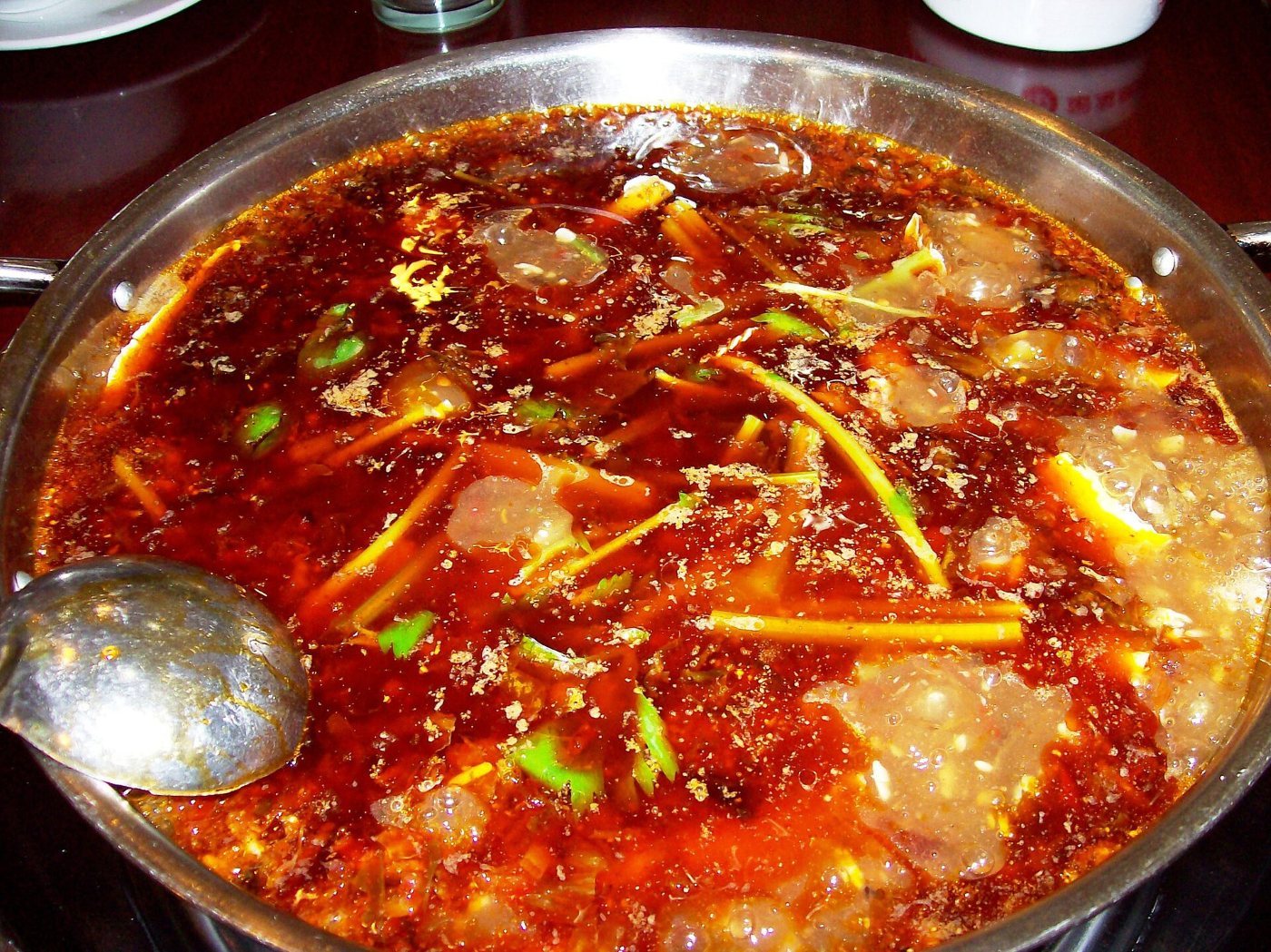
Hunan: heat without the numbness
People in Hunan love chilli as much as the Sichuanese, but without Sichuan pepper. The heat here is “pure”, often combined with the sourness of pickled chillies and the smokiness of cured meat (腊肉). Many Chinese consider Hunan food even hotter than Sichuan food.
- Steamed fish head with chopped chillies (剁椒鱼头): a fish head steamed under a layer of chopped, salted chillies.
- Chairman Mao's red-braised pork (毛氏红烧肉): pork belly braised in caramel and spices, the favourite dish of Mao Zedong, who was from Hunan.
- Farmhouse stir-fried pork (农家小炒肉): pork fried with green chillies, the simplest and most popular dish in Hunanese eateries.
- Changsha stinky tofu (臭豆腐): fried black cubes of fermented tofu with chilli sauce. The smell is off-putting, the taste much less so.
In American restaurants Hunan cuisine is represented by General Tso's chicken. It was invented by Chinese chefs in New York in the 1970s, and when one of them opened a restaurant in Hunan, the locals found the dish too sweet. Zhangjiajie is in Hunan, so you'll taste the local food in our From the Avatar Mountains to Hong Kong and Sichuan Deluxe itineraries.
Guangzhou, Hong Kong and Macau: freshness and dim sum
“To eat, go to Guangzhou” (食在广州), goes the Chinese saying. Cantonese cooking is all about freshness (鲜, xiān): fish and seafood wait in tanks by the entrance, and cooks steam, stir-fry briefly and season lightly so as not to drown the taste of the ingredients. There is little chilli, but plenty of ginger, spring onion and oyster sauce.
The best way to get to know it is yum cha (饮茶, “drinking tea”): a morning or late-morning meal of tea and dim sum (点心), small portions served in bamboo baskets. In Guangzhou it usually costs about ¥60 (about 35 PLN)–¥150 (about 87 PLN) per person.
- Har gow (虾饺): translucent prawn dumplings.
- Siu mai (烧卖): open-topped pork and prawn dumplings.
- Char siu bao (叉烧包): fluffy steamed buns filled with roast pork.
- Cheung fun (肠粉): thin rice-flour rolls with prawns or beef, drizzled with sweet soy sauce.
- Egg tarts (蛋挞): flaky tartlets filled with egg custard.
Beyond dim sum, try char siu (叉烧) pork in a sweet glaze, roast goose (烧鹅), wonton noodle soup (云吞面) and congee (粥) for breakfast. Sweet and sour pork (咕噜肉) is a genuine Cantonese dish and the closest relative of the sweet and sour chicken found in Western takeaways.
TipWhen someone tops up your tea, you can say thank you without words by tapping two fingers on the table. When the teapot is empty, leave the lid ajar and the staff will refill it with hot water.
Macau adds Macanese cuisine, a blend of Chinese and Portuguese cooking, and Portuguese custard tarts (葡挞). Hong Kong is the place for Hong Kong-style milk tea and “pineapple buns” (菠萝包), which contain no pineapple, just a crunchy, sweet crust. Guangzhou, Hong Kong and Macau are the focus of our Dim Sum & Palm Trees itinerary, and Guangzhou and Hong Kong are the finale of From the Avatar Mountains to Hong Kong.
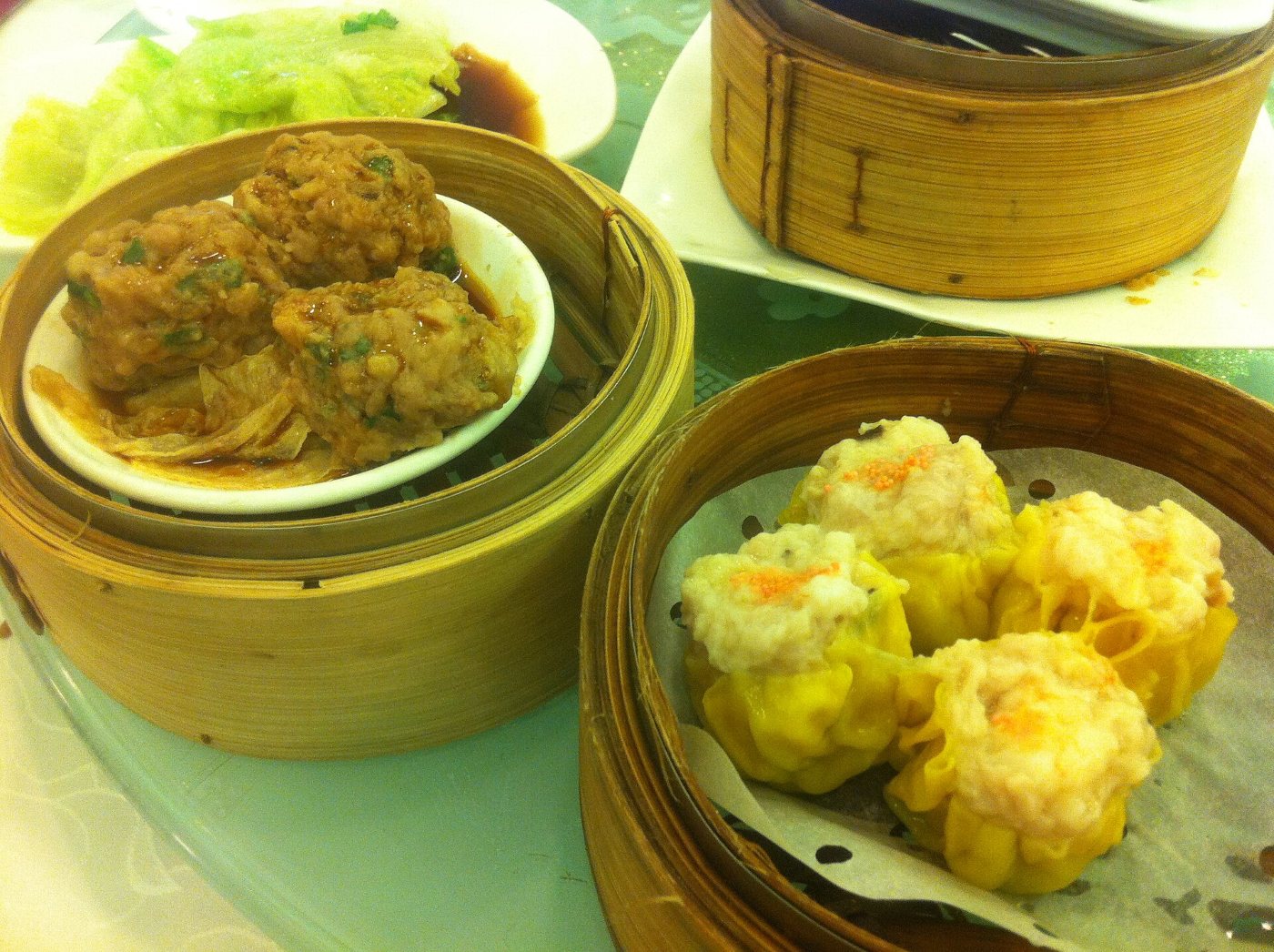
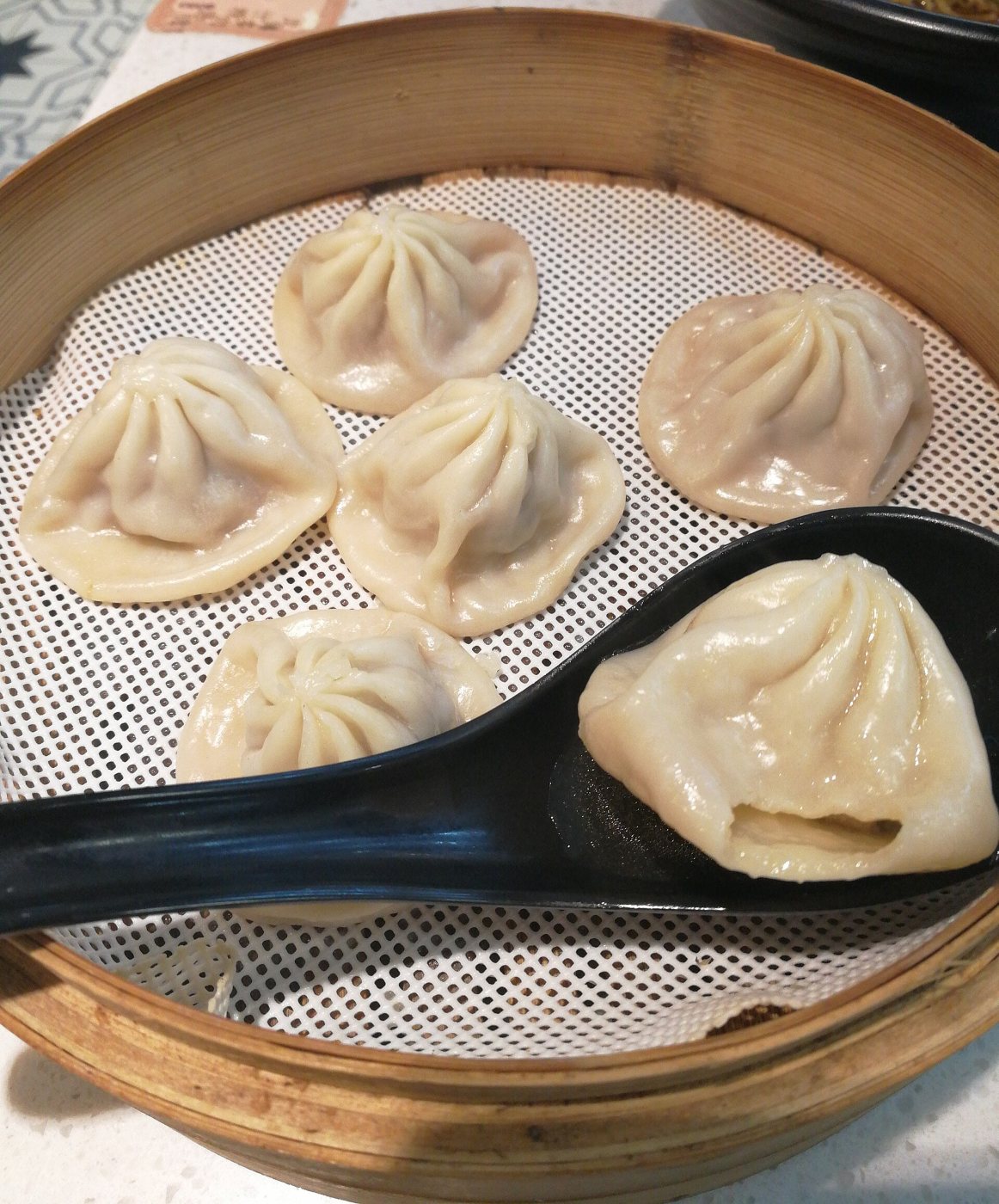
Shanghai and Jiangnan: sweet and delicate
Jiangnan, “the land south of the Yangtze” (Shanghai, Jiangsu and Zhejiang), is a delta of rivers, lakes and rice paddies. The cooking is mild and slightly sweet: meat and fish are braised in soy sauce and sugar until glossy and reddish-brown (红烧, hóngshāo). Huaiyang cuisine from Jiangsu is famous for its precision; chefs cut tofu into threads as thin as noodles. It was Huaiyang food that Zhou Enlai served at the first state banquet of the People's Republic on 1 October 1949, because it suited guests from both north and south.
- Xiaolongbao (小笼包): steamed dumplings filled with hot broth, from Nanxiang near Shanghai. Bite carefully, sip the broth from your spoon, then eat the rest.
- Shengjian bao (生煎包): buns filled with pork and broth, fried crisp on the bottom, Shanghai's favourite breakfast.
- Dongpo pork (东坡肉): cubes of pork belly braised for hours in rice wine, named after the poet Su Dongpo, who was prefect of Hangzhou.
- West Lake fish in vinegar sauce (西湖醋鱼) and prawns with Longjing tea (龙井虾仁): Hangzhou classics.
- “Lion's head” (狮子头): big, tender pork meatballs from Yangzhou, braised in broth or soy sauce.
- Squirrel-shaped mandarin fish (松鼠鳜鱼): from Suzhou, scored and fried so it looks like a squirrel, then covered in sweet and sour sauce.
- Hairy crab (大闸蟹): an autumn delicacy (September to December); the most famous come from Yangcheng Lake.
You'll see Jiangnan in our Shanghai in 5 Days, Along the Yangtze (Shanghai, Hangzhou, Wuxi, Nanjing) and China's Golden Triangle+ (Shanghai and Ningbo) itineraries.
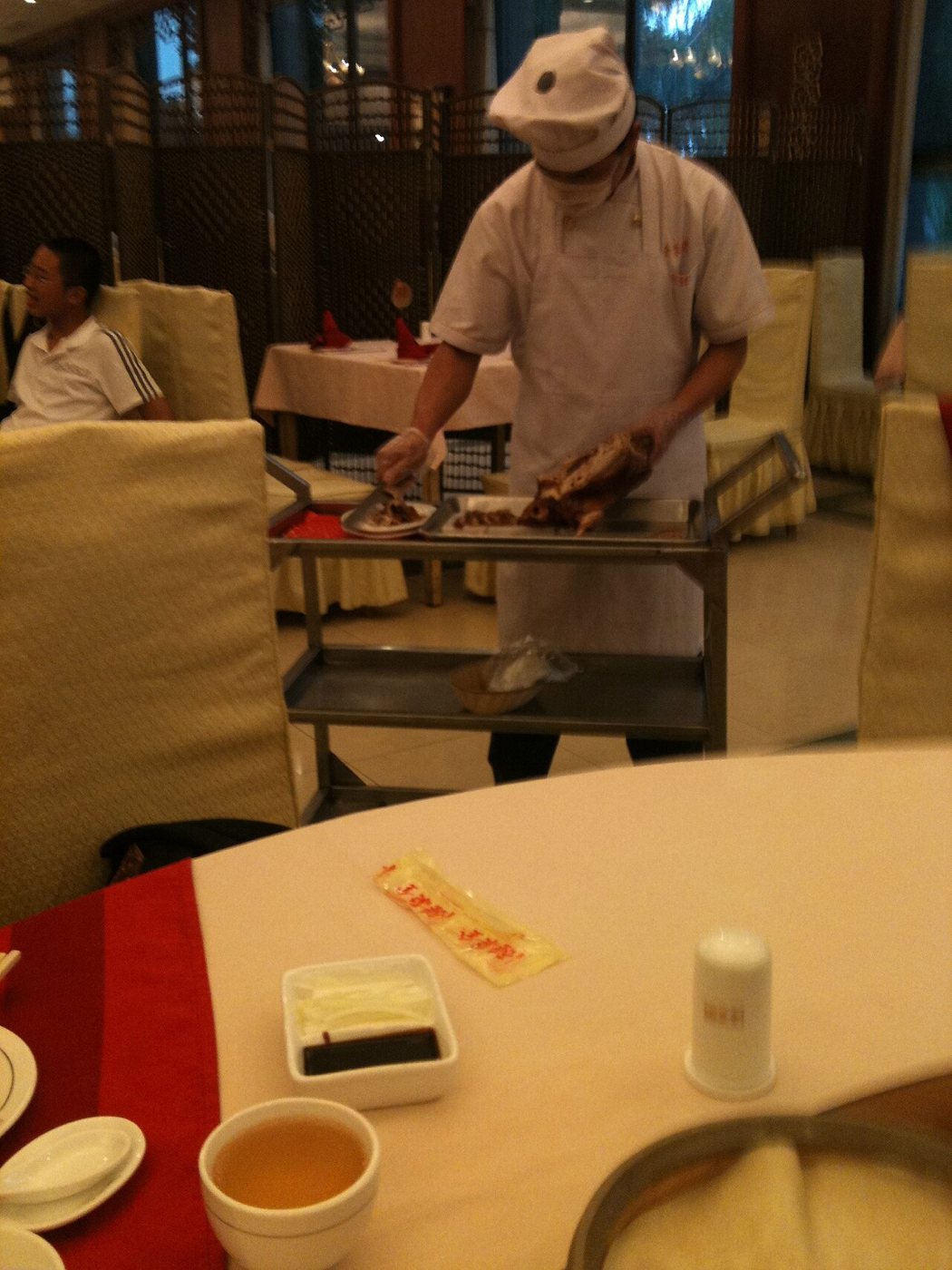
Beijing and the north: duck, dumplings and noodles
Beijing cuisine isn't one of the Great Eight, but it blends Shandong cooking, the imperial court and Muslim influences from the west. Wheat rules the north: dumplings, steamed buns (包子) and noodles.
- Peking duck (北京烤鸭): the first restaurant serving it, Bianyifang, was already open in Beijing in 1416, and Quanjude has been going since 1864. The chef carves the duck at your table. First you eat the crispy skin dipped in sugar, then the meat wrapped in thin pancakes with spring onion, cucumber and sweet bean sauce (甜面酱). A whole duck feeds 2–3 people, and with side dishes it comes to about ¥150 (about 87 PLN) per person.
- Jiaozi (饺子): boiled dumplings with pork and cabbage, leek or fennel. In the north they're eaten on Chinese New Year's Eve.
- Zhajiang noodles (炸酱面): thick noodles with a fermented soybean and pork sauce and raw vegetables.
- Jianbing guozi (煎饼果子): a crêpe with egg, sauces and a crispy cracker inside, a street-cart breakfast for about ¥8 (about 5 PLN)–¥15 (about 9 PLN). It comes from Tianjin.
- Copper-pot hotpot (铜锅涮肉): Beijing's cousin of Sichuan hotpot. Slices of lamb are cooked in a clear broth and dipped in sesame sauce, with no chilli at all.
In Tianjin, try Goubuli steamed buns (狗不理包子). Next door is Shandong, home of the oldest of the great cuisines: salty and bold, with giant leeks from Zhangqiu, garlic and seafood. In Qingdao it's washed down with Tsingtao beer, from a brewery founded by Germans in 1903. Beijing features in our China's Golden Triangle+ and Emperors & Hotpot (with Tianjin) itineraries.
Xi'an and the Silk Road: noodles and lamb
Xi'an, a former capital of China and the start of the Silk Road, has some of the best street food in the country. It's home to a large community of Hui Muslims, so in the Muslim Quarter (回民街) you'll find beef and lamb instead of pork, and eateries display the sign 清真 (qīngzhēn), meaning “halal”.
- Biangbiang noodles: noodles as wide as a belt, with chilli and sizzling oil poured over them. The character “biang” is one of the most complicated in Chinese writing and is missing from most fonts.
- Roujiamo (肉夹馍): the “Chinese hamburger”, a flatbread filled with chopped braised meat.
- Yangrou paomo (羊肉泡馍): you crumble a hard flatbread into your bowl yourself, and the cook pours lamb soup over it.
- Liangpi (凉皮): cold noodles with a vinegar and chilli dressing, perfect in summer.
Further west lies Lanzhou, home of hand-pulled beef noodle soup (兰州牛肉面). Its modern version was made popular from 1915 by Ma Baozi, a Hui Muslim. A good bowl should be “one clear, two white, three red, four green, five yellow”: clear broth, white radish, red chilli oil, green coriander and yellow noodles. You'll find shops marked 兰州拉面 in every Chinese city, and a bowl costs about ¥15 (about 9 PLN)–¥25 (about 15 PLN). What else to see there is in our Xi'an guide, and the city features in our China's Golden Triangle+ and Emperors & Hotpot itineraries.
Xinjiang: Central Asia on a plate
The Uyghurs of Xinjiang cook closer to Uzbekistan than to Beijing. Lamb, cumin, oven-baked flatbreads and pilaf dominate the menu. Xinjiang restaurants (新疆餐厅) are in every big city, so you can try this food in Beijing or Shanghai too.
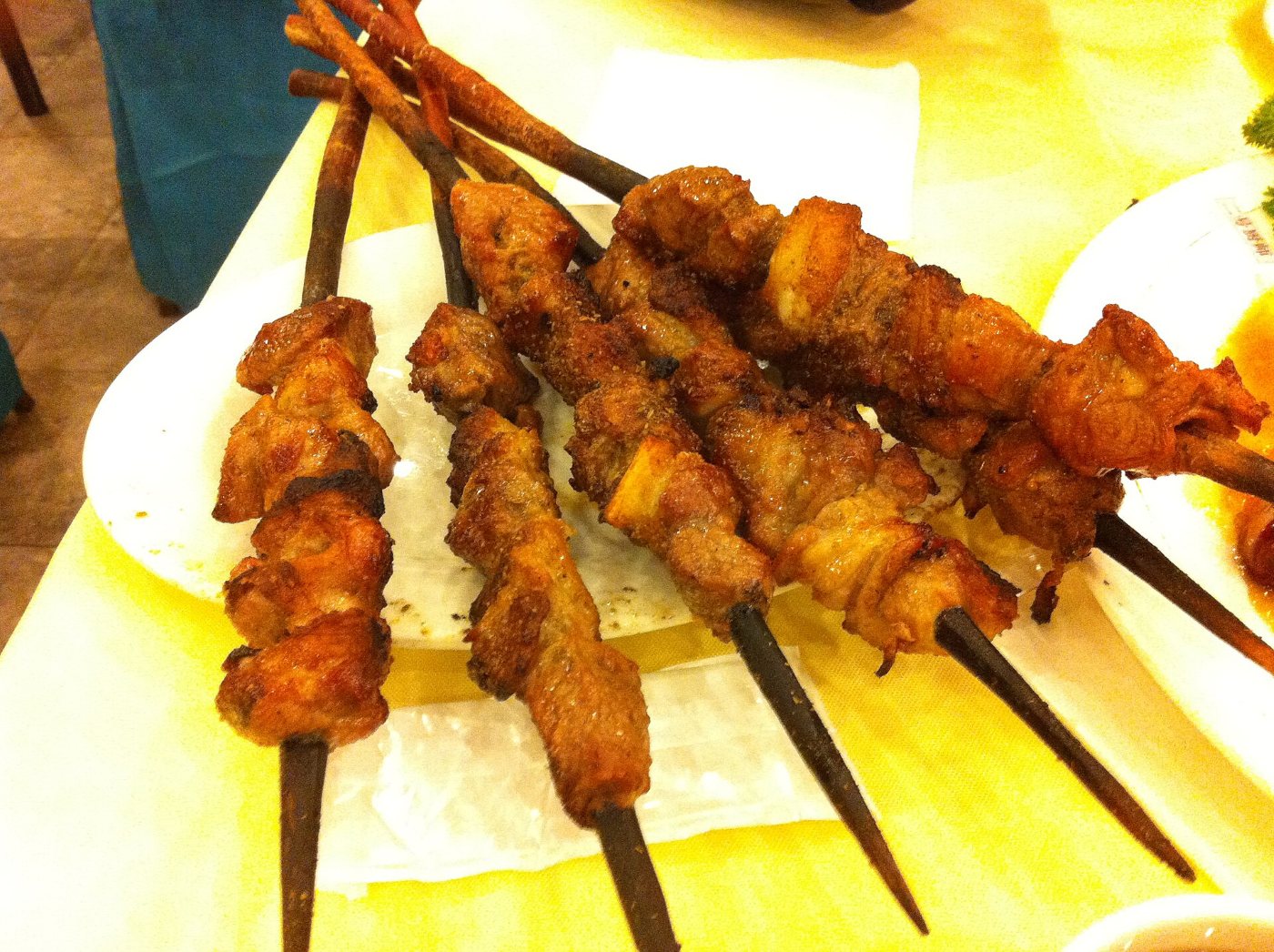
- Lamb skewers (羊肉串) with cumin and chilli.
- Polo (抓饭): pilaf with lamb, carrots and raisins.
- Laghman (拉条子): hand-pulled noodles with a meat and vegetable sauce.
- Nang (馕): round flatbreads baked on the walls of a clay oven.
- Dapanji (大盘鸡): “big plate chicken” with potatoes and peppers, finished with wide noodles in the sauce. It was invented in Shawan in the 1980s by a chef from Sichuan, so it's fairly spicy.
Dongbei: pickled cabbage and dumplings
The food of north-eastern China (former Manchuria) can feel surprisingly familiar to Central and Eastern Europeans. Long, freezing winters meant pickling and stewing, so there's pickled cabbage (酸菜, suāncài), chicken stewed with mushrooms (小鸡炖蘑菇) and dumplings filled with pickled cabbage (酸菜饺子). Portions are huge.
- Guobaorou (锅包肉): crispy slices of pork in a sweet and sour sauce. According to the most popular story, a chef at Harbin's government office created it around 1907 to suit the taste of Russian guests.
- Red sausage (红肠) and the big round dalieba bread (大列巴): souvenirs of the days when the Chinese Eastern Railway was built.
Poles helped build the railway and Harbin itself: engineers made up a large share of the construction staff, and in 1917–1920 up to 10,000 Poles lived in Harbin, with two parishes and a Polish secondary school.
Yunnan: mushrooms, flowers and rice noodles
Yunnan is home to 25 ethnic minorities, each with its own cooking, and its mountainous, mild climate produces remarkable ingredients. The province is famous for wild mushrooms: according to researchers, about 90% of the edible mushroom species known in China grow here. The season runs through the rainy months, roughly June to September.
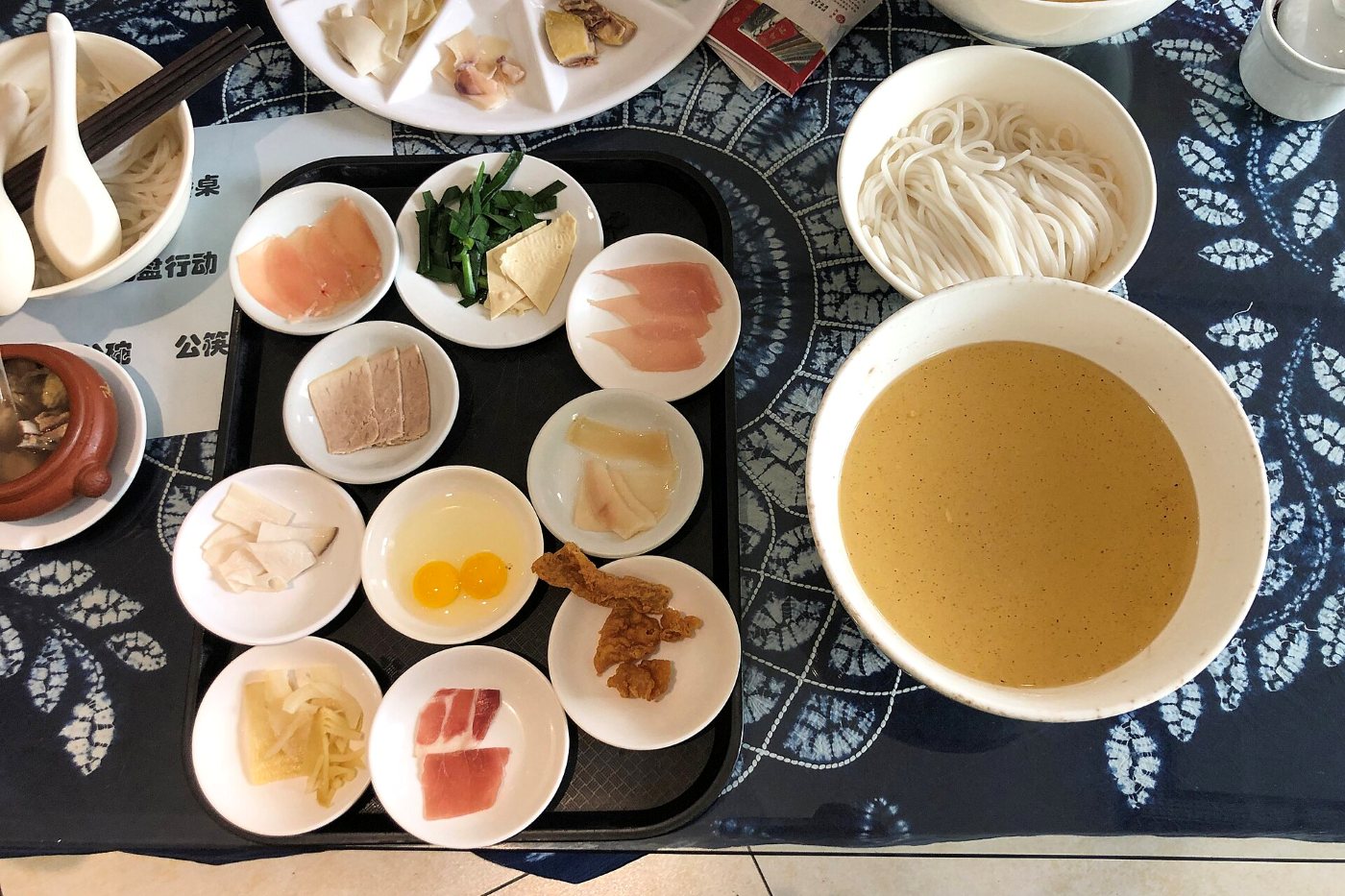
- Crossing-the-bridge noodles (过桥米线): you add raw meat, a quail egg, vegetables and rice noodles to a bowl of boiling broth yourself. Legend has it that a wife carried soup to her husband across a bridge, and the layer of fat on top kept it hot.
- Stir-fried wild mushrooms: on every menu in season. Only eat them in reputable places and well cooked, because undercooked boletes (见手青, jiànshǒuqīng) cause hallucinations.
- Flower cakes (鲜花饼): flaky pastries filled with edible rose petals, Yunnan's most popular edible souvenir.
- Rushan (乳扇): in Dali, thin sheets of dried cow's milk cheese grilled on a stick.
- Yak butter tea (酥油茶) and tsampa (糌粑), roasted barley flour: Tibetan food in Shangri-La.
We cover the whole route through Yunnan, with Kunming, Dali, Lijiang and Shangri-La, in The Road to Shangri-La; for what to see along the way, read our Yunnan guide.
More flavours along our routes
- Guilin: Guilin rice noodles (桂林米粉) with marinated meat and peanuts, a cheap and filling breakfast (From the Avatar Mountains to Hong Kong).
- Wuhan: reganmian (热干面), “hot dry noodles” with sesame paste, the local breakfast (Along the Yangtze).
- Ningbo: tangyuan (宁波汤圆), sticky rice balls filled with black sesame (China's Golden Triangle+).
- Hainan: Wenchang chicken (文昌鸡), the ancestor of the Hainanese chicken rice famous in Singapore and Malaysia (Dim Sum & Palm Trees).
“Chinese” dishes from home you won't find in China
Chinese restaurants abroad have spent decades adapting their menus to local tastes, so many dishes look and taste different in China.
- Sweet and sour chicken in thick batter with pineapple is hard to find. The closest are Cantonese sweet and sour pork (咕噜肉) and Harbin's guobaorou.
- Rice with everything? In the north, dishes are more often eaten with steamed buns or noodles, and in restaurants you usually have to order rice (米饭) separately.
- Fortune cookies don't exist in China. They were created in California, probably based on Japanese crackers.
- General Tso's chicken and chop suey belong to American Chinese cuisine and are practically unknown in China.
Hot and sour soup (酸辣汤) and wontons, on the other hand, are the real thing, though in China they taste bolder.
How to eat and order in China
- Dishes are ordered for the whole table. Everyone gets a small bowl and takes a little from each plate. A good rule of thumb: one dish per person, plus one, and a soup for the table.
- Rice is ordered separately (米饭, mǐfàn) and often arrives at the end. If you want it straight away, say 米饭先上 (mǐfàn xiān shàng).
- Picture menus or QR codes. In many places you order by scanning a QR code on the table and pay with Alipay or WeChat Pay (how to pay in China). To ask for a paper menu, say 有菜单吗? (yǒu càidān ma?). A camera translation app, such as Google Translate with the offline Chinese pack downloaded, handles Chinese menus very well.
- Allergies and diets: 我对花生过敏 (wǒ duì huāshēng guòmǐn) means “I'm allergic to peanuts”, and 我吃素 (wǒ chī sù) means “I don't eat meat”. Vegetables are often fried in lard or cooked with meat stock, though, so the safest bet is a Buddhist vegetarian restaurant (素食), usually near a temple.
- To drink you'll usually get hot water or tea, often free. For something cold, say 冰的 (bīng de). Don't drink tap water (common mistakes in China).
- There's no tipping, and don't stick your chopsticks upright in rice, as it looks like incense sticks at a funeral.
- Where to eat: wherever there's a queue of locals. Shopping mall food courts and night markets also have good food. Restaurant ratings are on the Chinese app Dianping (大众点评), the local equivalent of TripAdvisor.
- Prices: a bowl of noodles costs about ¥20 (about 12 PLN), a meal in an ordinary restaurant about ¥60 (about 35 PLN) per person, and hotpot or Peking duck about ¥150 (about 87 PLN) per person. More in How much does a trip to China cost?
What you'll eat on our itineraries
| Itinerary | Days | Cuisines along the way |
|---|---|---|
| Spicy Chengdu | 4 | Sichuan: hotpot, mapo tofu, dan dan noodles |
| Shanghai in 5 Days | 5 | Shanghai: xiaolongbao, shengjian bao |
| Pandas, Buddha & a Sea of Clouds | 6 | Sichuan |
| Cyberpunk & Pandas | 8 | Chongqing and Sichuan |
| Emperors & Hotpot | 10 | Beijing, Tianjin, Xi'an, Chongqing |
| The Road to Shangri-La | 10 | Yunnan and Tibetan |
| China's Golden Triangle+ | 11 | Beijing, Xi'an, Shanghai, Ningbo |
| Along the Yangtze | 11 | Shanghai, Hangzhou, Wuxi, Nanjing, Wuhan |
| Dim Sum & Palm Trees | 11 | Cantonese, Hong Kong, Macau, Hainan |
| From the Avatar Mountains to Hong Kong | 13 | Chongqing, Hunan, Guilin, Guangzhou, Hong Kong |
| Sichuan Deluxe | 14 | Sichuan, Chongqing, Hunan |
Frequently asked questions
Is food in China very spicy?
Not everywhere. It's spicy in Sichuan, Chongqing, Hunan, Guizhou and parts of Yunnan. In Guangzhou, Shanghai, Hangzhou and Beijing most dishes aren't spicy. In the spicy regions, order 不辣 (bù là, not spicy) or 微辣 (wēi là, mildly spicy).
What are the Eight Great Cuisines of China?
Sichuan, Hunan, Cantonese, Fujian, Jiangsu (Huaiyang), Zhejiang, Anhui and Shandong. The list is a convention: outside it are Beijing, Uyghur (Xinjiang) and Yunnan cuisines, among others.
How does northern Chinese food differ from southern?
The north eats more wheat (noodles, dumplings, steamed buns) and prefers salty flavours, while the south eats rice and lighter, often sweetish dishes. The rough dividing line runs along the Qinling Mountains and the Huai River.
What can I eat in China if I don't like spicy food?
Dim sum and roast meats in Guangzhou and Hong Kong, xiaolongbao in Shanghai, Hangzhou cuisine, Peking duck, jiaozi dumplings and copper-pot hotpot in Beijing. Order Lanzhou noodles without chilli oil: 不要辣椒 (bú yào làjiāo).
Do people in China eat dog meat?
Rarely, and less and less. Dog meat is eaten only in some regions, and in 2020 China's agriculture ministry removed dogs from the list of livestock and classed them as companion animals. In the restaurants tourists visit, you won't eat it by accident.
Is street food in China safe?
Usually yes, if you choose busy stalls and food served hot. Peel fruit and don't drink tap water. It's worth packing some stomach medicine.
Is there vegetarian food in China?
Yes, there are lots of vegetable and tofu dishes, but they're often fried in lard or cooked with meat or stock. Say 我吃素 (wǒ chī sù) and look for Buddhist vegetarian restaurants (素食), usually near temples.
Sources
- Wikipedia: Chinese cuisine (the four and eight great cuisines, the 1980 People's Daily article) and Huaiyang cuisine (the 1949 state banquet)
- Wikipedia: Chili pepper (first mention in Chinese sources, Hangzhou 1591)
- Wikipedia: Peking duck (Bianyifang 1416, Quanjude 1864, how it's served)
- Wikipedia: Mapo tofu, Lanzhou beef noodles, Dapanji and General Tso's chicken
- The World of Chinese: “Flavor wars” (sweet vs salty tofu pudding and zongzi)
- Zhang et al., Journal of Fungi 2021: edible mushrooms in Yunnan
- CGTN: the livestock list without dogs (2020)
- Dzieje.pl: the Polish community in Harbin (in Polish)
- Food prices: the budgets in our itineraries (as of October 2026)
China's cuisines in a ready-made itinerary
In our itineraries, food is part of the route: for every city we say what to eat and recommend specific places with their names in Chinese, so you can simply show them to a waiter or driver. For food lovers we recommend starting with Spicy Chengdu, Dim Sum & Palm Trees or Emperors & Hotpot. See all our China itineraries.