Planning your route · 14 min read
First time in China: which route should you choose?
In short: for a first trip to China, the classic route works best: Beijing, Xi'an and Shanghai in 10–11 days. You'll see the Forbidden City, the Great Wall, the Terracotta Army and the Bund, and Beijing and Shanghai have the most long-haul flights. If you only have a week, pick one region: Sichuan around Chengdu (pandas, the Giant Buddha, Mount Emei) or Shanghai on its own. Two weeks, and nature appeals more than monuments? Head to the Zhangjiajie mountains and the Li River. In winter, choose the south: Guangzhou, Hong Kong and the beaches of Sanya.
What surprised us most in China was how safe it is. An evening walk through an old town or a metro ride back after dinner is completely ordinary there. That makes China a good choice even for your first independent trip to Asia.
Correct as of 11 October 2026. Check flight schedules and Chinese holiday dates before you book, as they can change.
Choosing your first route: 4 questions
- How many days do you have? A week is enough for one region or one city. In 10–11 days you'll see 3–4 cities, and in two weeks 2–3 very different regions.
- What do you want to see? Imperial landmarks, mountains and national parks, food, modern megacities or a beach? Every region of China has a different character.
- When are you going? The season changes the choice. In summer Chongqing and Wuhan reach 35°C and more, and the south gets typhoons. In winter Beijing is freezing, while Guangzhou and Hainan are pleasantly warm.
- Where is your cheapest flight? Beijing, Shanghai and Hong Kong have the most direct long-haul flights; for Chengdu, Chongqing or Kunming you'll usually connect. An open-jaw ticket pays off: fly into one city and out of another.
TipCompare airports in neighbouring countries too. In Central Europe, for example, flights to China from Budapest, Prague and Vienna are often much cheaper than from Poland, and there are more nonstop routes: Budapest flies to Beijing, Shanghai, Guangzhou and (weekly in summer) Chongqing, Vienna to Beijing and Xi'an, and Prague to Beijing. If you book the trip to the airport separately, leave a few hours' margin or arrive the day before.
China is huge
Beijing to Shanghai is about 1,070 km in a straight line, roughly London to Prague. The bullet train covers it in 4.5–6 hours. From Harbin in the north to Sanya in the south is further than from Lisbon to Istanbul.
So on your first trip, don't try to see "all of China". Pick 1–2 regions and travel between cities by train, rather than spending half your holiday in airports.
Six regions for a first trip
1. The classics: Beijing, Xi'an and Shanghai
Who it's for: first-timers who want to see what China is most famous for.
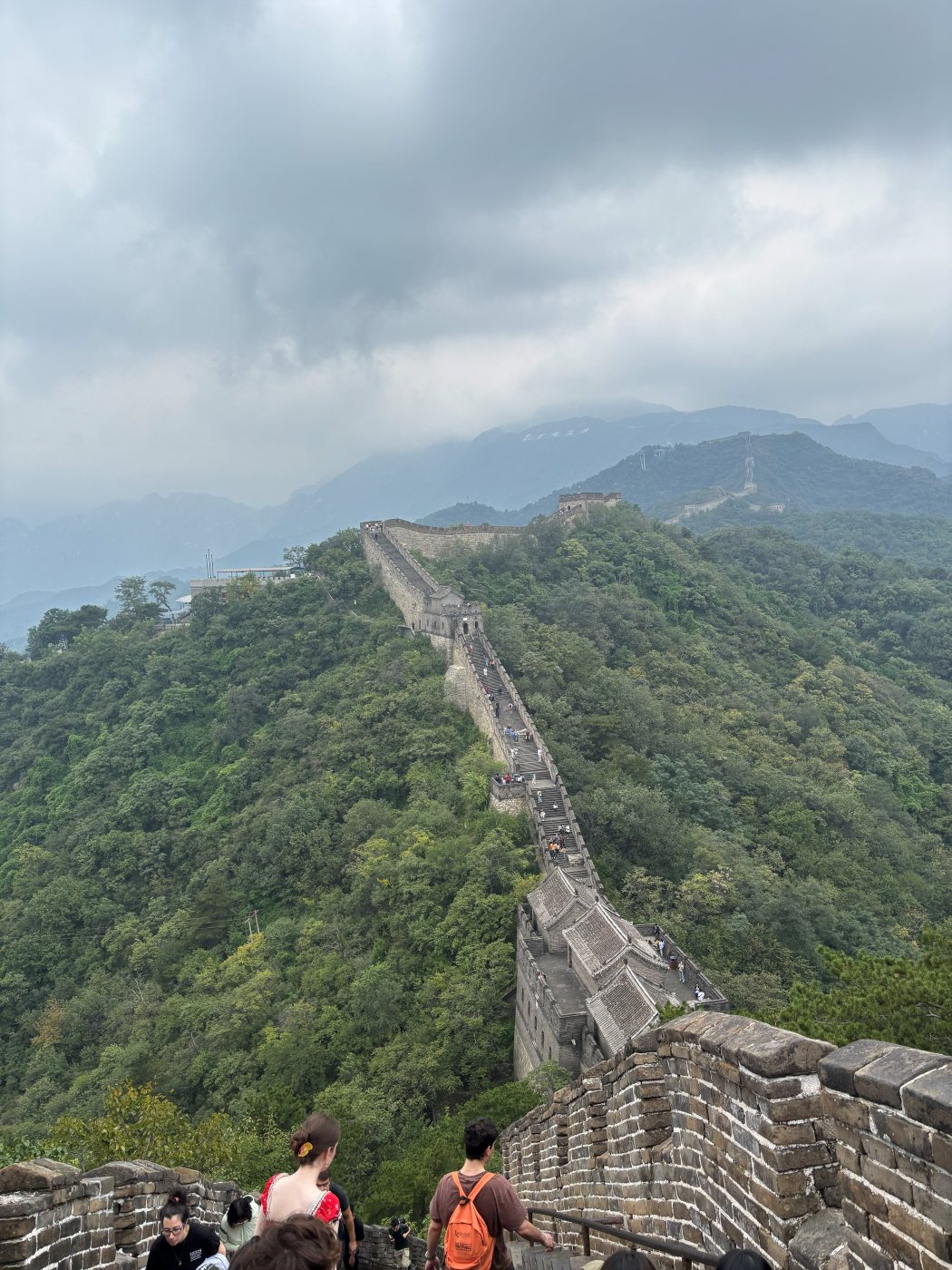
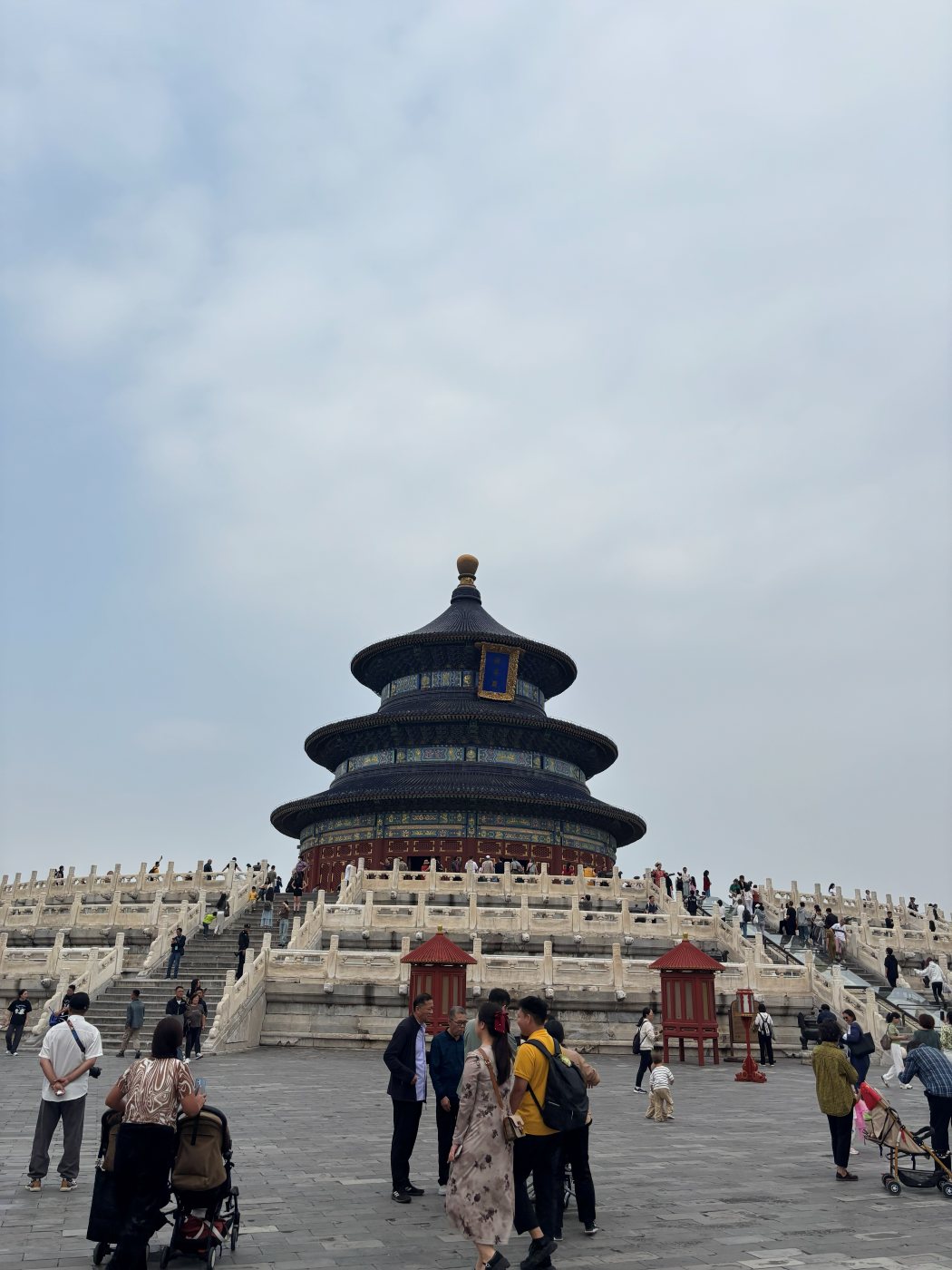
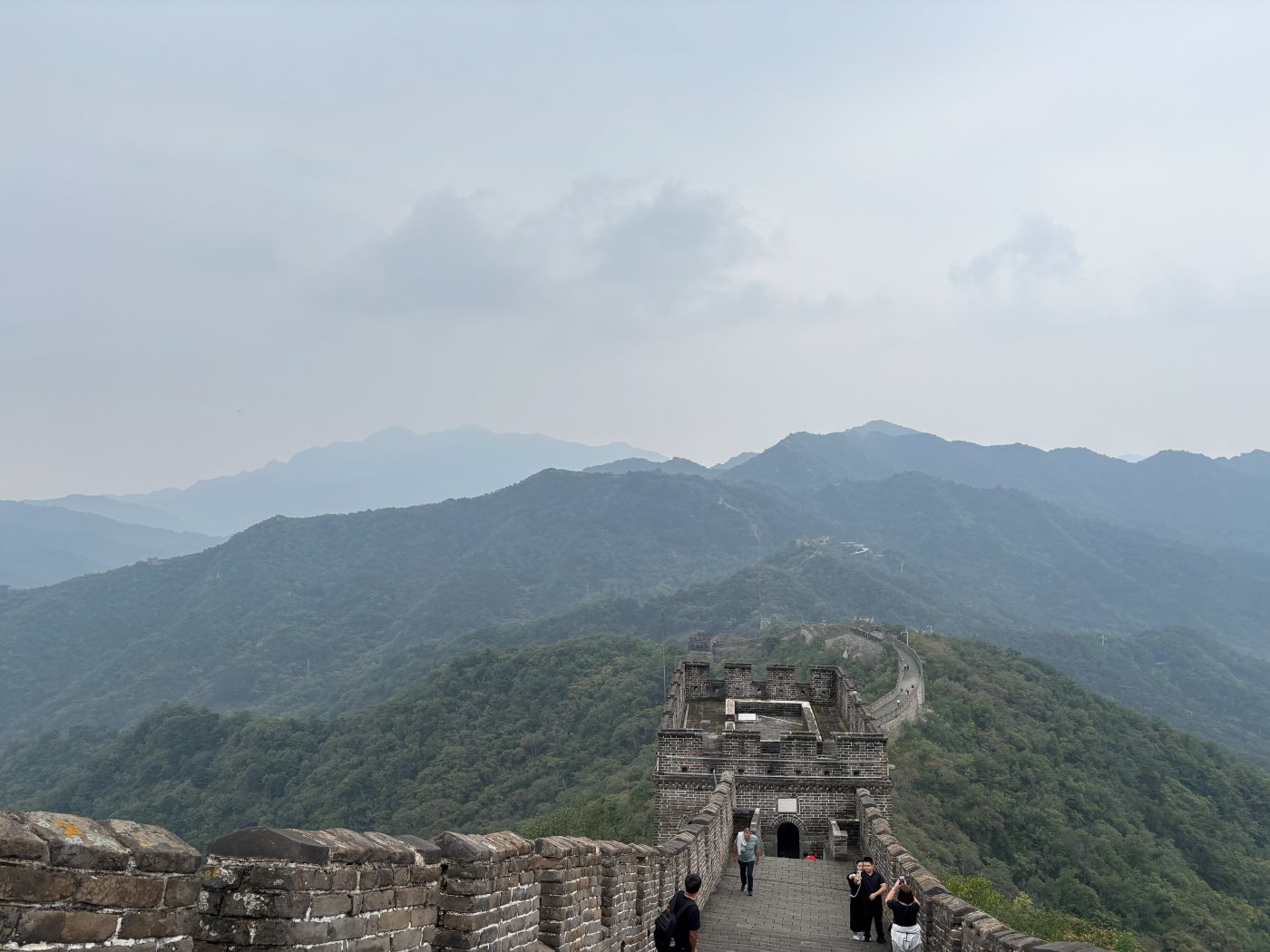
Beijing has the Forbidden City, the Temple of Heaven, the hutongs and the Great Wall; Xi'an has the Terracotta Army and a bike ride on the city walls; Shanghai has the Bund and the skyscrapers of Pudong. You travel between cities by bullet train. Metro signs and announcements are in English too, which makes this the easiest route to start with.
Downsides: crowds, especially at weekends and during Chinese holidays. Tickets for the main sights have to be booked in advance.
Best time: April–May and September–October (avoiding 1–7 October).
Our itineraries: China's Golden Triangle+ (11 days, Beijing → Shanghai, with Ningbo and China's "Paris" at the end) and Emperors & Hotpot (10 days, Beijing → Chongqing: instead of Shanghai you finish in a futuristic city on the hills).
2. Sichuan and Chongqing: pandas, mountains and spicy food
Who it's for: a one-week trip, or anyone going to China mainly for the food.
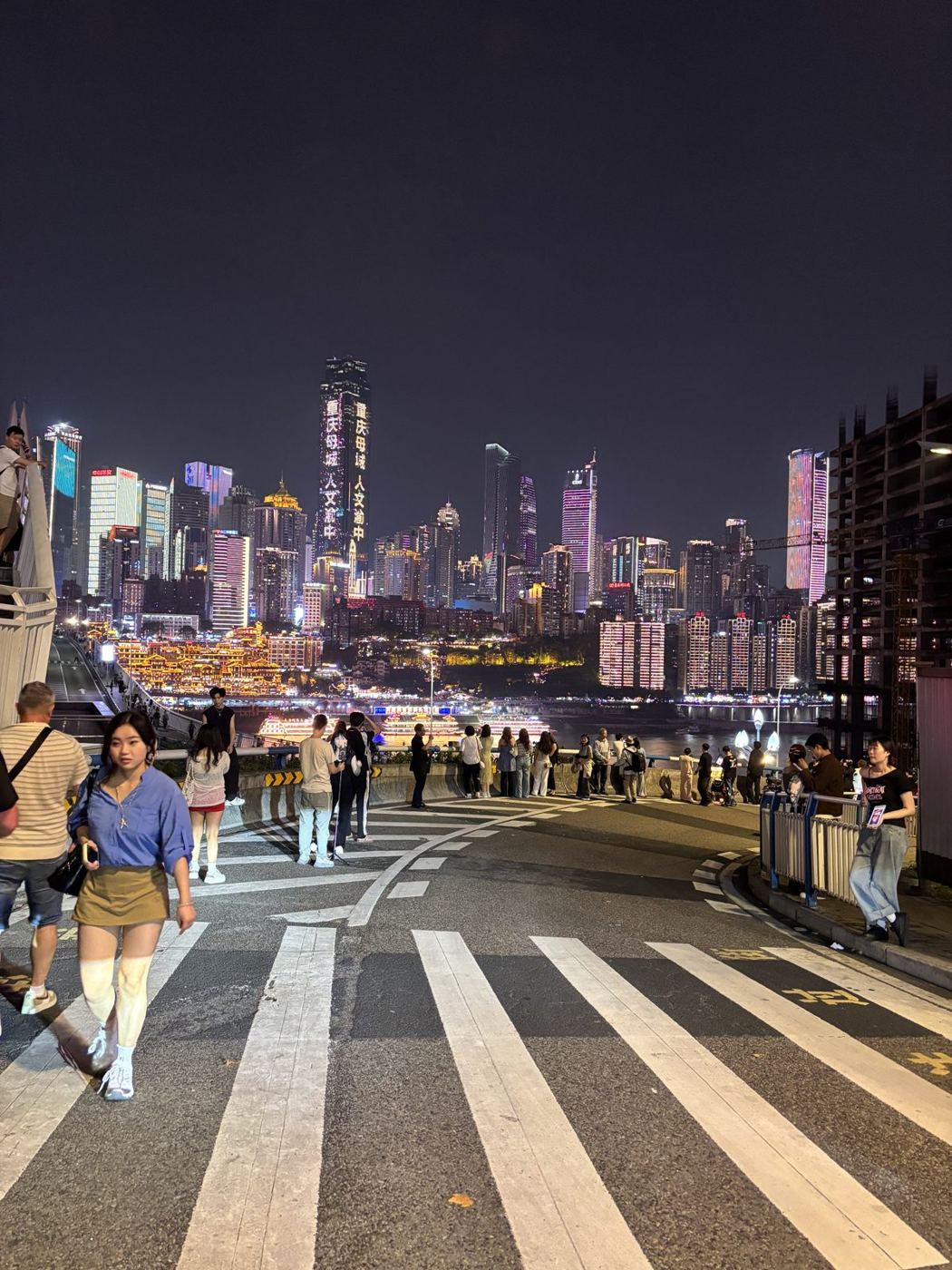
Chengdu means giant pandas (best early in the morning, before it gets hot), teahouses in the parks and Sichuan opera with its face-changing. An hour away by bullet train is the 71-metre Leshan Giant Buddha, and next to it sacred Mount Emei, where at the summit, over 3,000 m up, you can watch the sun rise over a sea of clouds. Chongqing is a city on hills above the Yangtze: multi-level flyovers, the neon lights of Hongyadong and a metro line that runs through an apartment block. From Chengdu to Chongqing the bullet train takes about 1–1.5 hours.
Downsides: the food really is spicy (though you can always ask for a milder version). In summer Chongqing often goes above 35°C.
Best time: March–May and September–November.
Our itineraries: Spicy Chengdu (4 days, Chengdu only), Pandas, Buddha & a Sea of Clouds (6 days with Leshan and Emei) and Cyberpunk & Pandas (8 days, Chongqing → Chengdu).
3. Shanghai and the Yangtze east
Who it's for: a short break in one city, or a second, slower-paced trip.
Shanghai is the easiest city to start with: you ride the Maglev from the airport, the metro takes you everywhere, and in the evening you walk along the Bund looking across at the towers of Pudong. In five days you'll also see Yu Garden, the Former French Concession and the water town of Zhujiajiao, without moving hotels. Further west lie Hangzhou with its West Lake and Longjing tea, Wuxi, Nanjing and Wuhan: less famous abroad, but very easy to explore by bullet train.
Downsides: summers are hot and humid. Wuhan and Nanjing, together with Chongqing, have long been known in China as the "furnaces".
Best time: March–May and October–November (September can still be hot and humid).
Our itineraries: Shanghai in 5 Days and Along the Yangtze (11 days, Shanghai → Wuhan).
4. Peaks and karst: Zhangjiajie and Guilin
Who it's for: nature lovers with two weeks and a good level of fitness.
In the Zhangjiajie mountains you'll see the stone pillars that inspired the makers of "Avatar", Heaven's Gate on Tianmen Mountain and the glass bridge over the canyon (what to see in Zhangjiajie). Further south flows the Li River, lined with the karst hills of Guilin and Yangshuo, familiar from Chinese paintings and the 20-yuan banknote (what to see in Guilin and Yangshuo).
Downsides: lots of stairs and walking, and national park tickets with their buses and cable cars are expensive (around ¥900 (about 523 PLN) in total in Zhangjiajie). Cloud and mist can hide the views for half a day, so it's worth having a spare day.
Best time: April–May and September–November.
Our itineraries: From the Avatar Mountains to Hong Kong (13 days, Chongqing → Hong Kong) and Sichuan Deluxe (14 days, Chengdu → Chongqing, with the lakes of Jiuzhaigou).
5. Yunnan: old towns, minorities and Tibetan Shangri-La
Who it's for: if you prefer landscapes and cultures to big cities.
The route starts in Kunming, the "city of eternal spring", and leads through Dali on Erhai Lake and the Naxi old town of Lijiang all the way to Tibetan Shangri-La with its Songzanlin Monastery (what to see in Yunnan). Yunnan is home to 25 of China's 55 officially recognised ethnic minorities, so every stage looks and tastes different.
Downsides: this is a high-altitude route. Shangri-La sits above 3,000 m and the glacier on Jade Dragon Snow Mountain at about 4,500 m, so be prepared for altitude sickness. You'll almost always need a connecting flight to get here.
Best time: March–May and October–November (Kunming itself is mild all year).
Our itinerary: The Road to Shangri-La (10 days, starting and ending in Kunming).
6. The south: Guangzhou, Hong Kong, Macau and Sanya
Who it's for: a winter trip, or if you want to combine cities with a beach.
Guangzhou is the home of dim sum, Shenzhen means skyscrapers and the huge Huaqiangbei electronics market, and Hong Kong offers Victoria Peak, the Star Ferry and the Big Buddha on Lantau Island. In Macau you'll eat Portuguese custard tarts in a UNESCO-listed old town, and at the end you relax on the tropical beaches of Sanya on Hainan Island. English is widely spoken in Hong Kong, so it's a gentle first step into Asia.
Downsides: summers are very hot and humid, and typhoons are possible from July to September. Hong Kong and Macau have their own borders and currencies, and hotels there cost 2–3 times more than on the mainland.
Best time: October–April.
Our itinerary: Dim Sum & Palm Trees (11 days, Guangzhou → Sanya; the border crossings are explained step by step).
All our routes in one table
| Itinerary | Days | Route | Best for |
|---|---|---|---|
| Spicy Chengdu | 4 | Chengdu only | a long weekend, food |
| Shanghai in 5 Days | 5 | Shanghai only | a short break, one hotel |
| Pandas, Buddha & a Sea of Clouds | 6 | Chengdu → Leshan → Emei → Chengdu | city and mountains in a week |
| Cyberpunk & Pandas | 8 | Chongqing → Chengdu → Leshan → Emei | two western cities and a sacred mountain |
| Emperors & Hotpot | 10 | Beijing → Tianjin → Xi'an → Chongqing | the classics with a cyberpunk finale |
| The Road to Shangri-La | 10 | Kunming → Dali → Lijiang → Shangri-La | mountains, old towns, cultures |
| China's Golden Triangle+ | 11 | Beijing → Xi'an → Shanghai → Ningbo | the classics for a first trip |
| Along the Yangtze | 11 | Shanghai → Hangzhou → Nanjing → Wuhan | lesser-known eastern cities |
| Dim Sum & Palm Trees | 11 | Guangzhou → Hong Kong → Macau → Sanya | winter, cities and a beach |
| From the Avatar Mountains to Hong Kong | 13 | Chongqing → Zhangjiajie → Guilin → Hong Kong | from mountains to the sea |
| Sichuan Deluxe | 14 | Chengdu → Jiuzhaigou → Zhangjiajie → Chongqing | nature above all |
How many days for a first trip to China?
- 4–8 days: one city or one region, such as Chengdu, Shanghai or Sichuan with Chongqing. See 7 days in China.
- 10–11 days: the most popular length for a first trip. Enough for the classic Beijing – Xi'an – Shanghai route, or one big region at a relaxed pace (10 days in China).
- 13–14 days: two or three very different regions, for example from the Zhangjiajie mountains all the way to Hong Kong. You can also combine two shorter itineraries (2 weeks in China).
A few rules that help when planning a route:
- at least 2 nights in every city, and 3–4 in Beijing and Shanghai,
- a travel day is half a sightseeing day, even if the train only takes 2–3 hours,
- keep your first day light: China is on UTC+8 all year, so from Europe that's 6–7 hours ahead, and from North America 12–16.
TipStart wherever your flight is cheapest and finish in a different city. Flying into Beijing and out of Shanghai, Chongqing or Hong Kong usually costs about the same as a standard return, and you don't lose a day going back. Most of our routes are designed exactly like this.
5 mistakes when planning a first route
- Too many cities. Beijing, Xi'an, Shanghai, Chengdu, Guilin and Hong Kong in 10 days means half your time on trains and in airports. Better to see less, but properly.
- Going back to where you started. If you fly into Beijing and finish in Shanghai, don't travel back to Beijing for your flight. Book a ticket home from your last city.
- Travelling during Chinese holidays. During Golden Week (1–7 October), the May Day holiday (1–5 May) and Lunar New Year (6 February in 2027), hundreds of millions of people travel within China. Hotels and trains are pricier and full, and there are queues at the sights. Over Lunar New Year many small restaurants and shops also close.
- The wrong season for the region. July and August bring heat to Chongqing, Wuhan and Nanjing, and typhoons to the south. In January Beijing can drop to −10°C at night, and Shangri-La is colder still. Winter, on the other hand, is a great time for the south.
- Not booking ahead. Forbidden City tickets go on sale 7 days in advance at 8 pm Beijing time and in high season sell out within minutes (the museum is usually closed on Mondays). Train tickets go on sale 15 days before departure. In our itineraries, for every sight that needs booking, we tell you when and where to buy tickets.
Before you go: what else to sort out
The route is half the preparation. The other half is everything that works differently in China:
- Visa: citizens of 50 countries, including most of the EU, the UK, Canada and Australia, can currently enter China visa-free for up to 30 days, until 31 December 2026. Details and the 240-hour transit: China visa-free.
- Payments: almost everything is paid by phone, with Alipay or WeChat Pay: How to pay in China.
- Internet: Google, WhatsApp and Instagram are blocked, and an eSIM solves most of the problems: Internet in China.
- Maps: Google Maps gets things wrong in China, so use Amap or Apple Maps: China without Google Maps.
- Hotels and trains: everything is booked with your passport number: Hotels, trains and flights.
- Budget: how much you'll spend on each of our routes: How much does a trip to China cost?
Frequently asked questions
Where should I go on my first trip to China?
We usually recommend the classics: Beijing, Xi'an and Shanghai in 10–11 days. That gives you the most famous sights, easy bullet-train connections and the widest choice of flights. If you only have a week, choose Chengdu and Sichuan, or Shanghai on its own.
Beijing or Shanghai first?
Beijing if history interests you most: the Forbidden City, the Great Wall and the temples. Shanghai if you prefer a modern city, night views and an easy first few days in China. With 10–11 days you don't have to choose: start in Beijing and finish in Shanghai.
Is China a good choice for a first independent trip to Asia?
Yes. China is safe, the metro and trains run on time and are signposted in English, and you can pay for almost everything with your phone. Only the preparation is harder than in Europe: payments, internet and maps, so sort them out before you fly.
Can I get by in China without speaking Chinese?
Yes, although outside hotels and major sights few people speak English. Translation apps help (including translating a menu from a photo), as do addresses written in Chinese that you can show a taxi driver. Every one of our itineraries has the addresses of sights and restaurants in Chinese.
How many cities can I see in 10 days?
Three, four at most. Allow 2–4 nights for each big city, and count every journey as roughly half a day. For example: 4 days in Beijing, 2 in Xi'an and 4 in Shanghai.
Is an organised tour better for a first trip?
A tour gives you comfort and a guide, but on fixed dates and a route set for the whole group. On your own you get freedom and usually a lower cost, and China today is easy to explore independently. Price comparison: How much does a trip to China cost?
Sources
- Hungary Today: Air China daily Budapest – Beijing flights from 29 March 2026 and Daily News Hungary: Budapest – Guangzhou
- Aviation A2Z: China Eastern launches Vienna – Xi'an (April 2026)
- Prague Airport: Hainan Airlines Prague – Beijing
- 12306: China Railway's official website
- Routes, journey times and seasons from our 11 itineraries (as of October 2026)
Not sure which route to choose?
Each of our itineraries gives you a day-by-day route, connections between cities with prices, a budget in two versions and addresses in Chinese to show your taxi driver. See all our China itineraries or write to us: we'll suggest which route suits your dates and budget, and if none of them fits, we'll put together a custom itinerary.