Destinations and inspiration · 15 min read
Hong Kong in 2–4 days: Victoria Peak, the Star Ferry and the Big Buddha
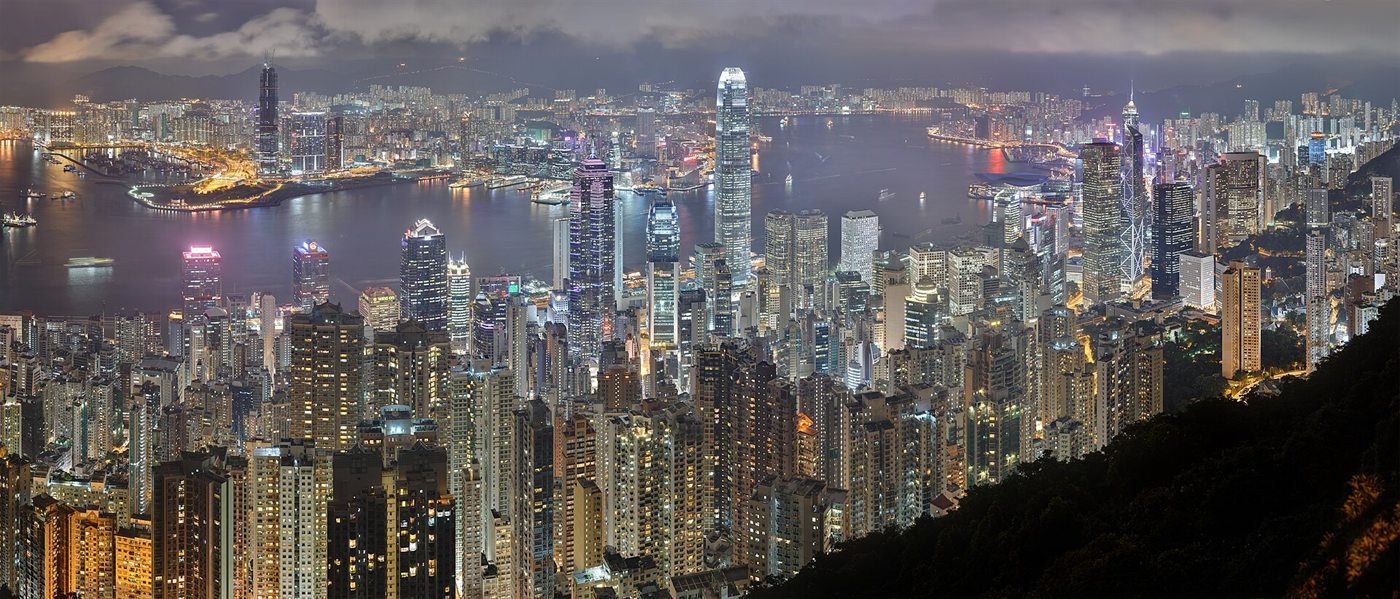
In short: Hong Kong is a city of skyscrapers above Victoria Harbour, green mountains and British traces: double-decker trams, driving on the left and English street names. The highlights are the view from Victoria Peak, the Star Ferry across the harbour, the Big Buddha on Lantau Island and an evening at the Mong Kok markets. You need 2–3 days, or 4–5 days with a trip to Macau. Hong Kong has its own currency (the Hong Kong dollar, HK$) and its own entry rules: most European and North American travellers enter visa-free for 90 days, and Google and WhatsApp work without a VPN. The best months are October to December.
What surprised us most in China was its diversity – and Hong Kong, where British trams roll past temples full of incense smoke, is its most concentrated version.
Correct as of 15 October 2026. Check ticket prices before you travel. Amounts in Hong Kong dollars (HK$) and yuan are converted at the National Bank of Poland rate into the currency you pick in the site menu.
Hong Kong is not mainland China
Hong Kong is part of China, but it runs its own system: border, currency and internet. If you combine it with a trip around China, keep this in mind:
| Mainland China | Hong Kong | |
|---|---|---|
| Entry | visa-free stays for many nationalities (30 days for EU citizens until 31.12.2026) | visa-free for 90 days for most European and North American passports, a slip instead of a stamp |
| Currency | yuan (¥) | Hong Kong dollar (HK$), pegged at about HK$7.8 to US$1 |
| Payments | Alipay and WeChat Pay | contactless cards, Octopus card |
| Internet | Google, WhatsApp and Instagram blocked | everything works without a VPN |
| Traffic | drives on the right | drives on the left |
| Plugs | types A and I | type G (British) |
| Language and script | Mandarin, simplified characters | Cantonese and English, traditional characters |
| Prices | low | hotels and food clearly more expensive |
NoteLeaving the mainland for Hong Kong ends your visa-free stay in China, and coming back is a new entry. You show your passport at the border both ways, so don't plan anything tight around it. Details: China visa-free.
What to see in Hong Kong: 10 places
1. Victoria Peak and the Lugard Road walk
The most famous view in Asia: the forest of towers on Hong Kong Island, Victoria Harbour and Kowloon across the water. The Peak Tram has climbed its steep line to the top since 1888. A return ticket costs HK$116 (about 57 PLN) and a single HK$82 (about 41 PLN) (fares from 29 December 2025). At the top you don't need to pay for the Sky Terrace 428 (HK$80 (about 40 PLN)): the best view is free from Lugard Road (盧吉道), a flat loop of about 3.5 km that takes an hour.
TipIn the afternoon the Peak Tram queues are long. Go in the morning or buy your ticket online, and come down on bus 15 to Central. It's most beautiful just after sunset, when the towers light up.
2. The Star Ferry across Victoria Harbour
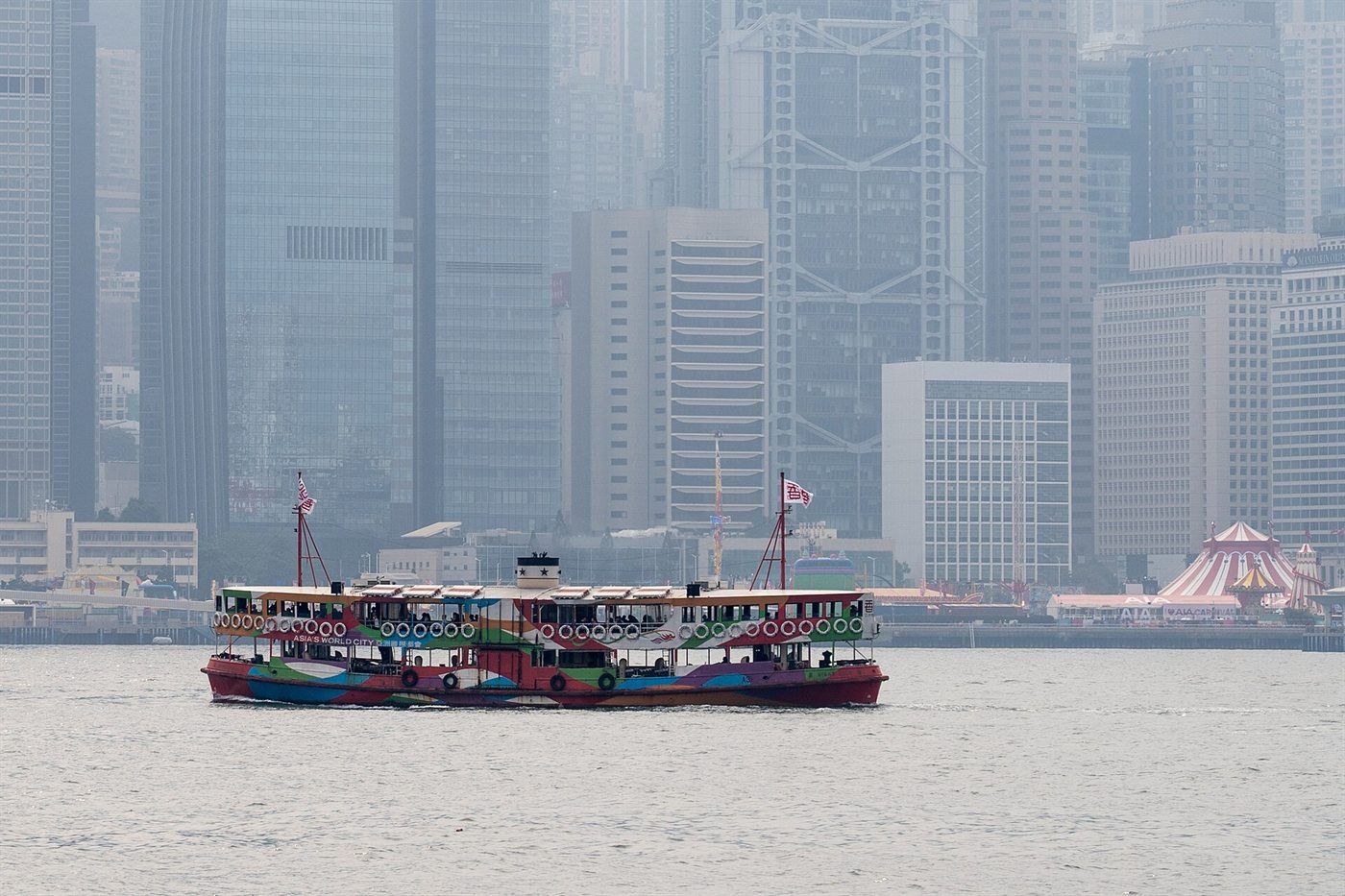
The green-and-white Star Ferry boats (天星小輪) have sailed between Tsim Sha Tsui and Central since 1888. The crossing takes about 10 minutes and an upper-deck ticket costs HK$5 (about 2 PLN), or HK$6.50 (about 3 PLN) at weekends – the cheapest sightseeing trip in town. The operator has applied for a fare rise of around 30%, so prices may go up soon. Sit on the side facing the island.
3. The Tsim Sha Tsui waterfront
A harbourside promenade with the Avenue of Stars (星光大道), the clock tower of the old railway terminus and the best view of Hong Kong Island's towers. Since 2004 a free, roughly 10-minute light show on the skyscrapers, "A Symphony of Lights", has run here every night at 8 pm. The government has announced that in the second half of 2026 it will be replaced by festive light shows at different places around the city – check whether it is still on before you go. The harbour at night is worth the walk either way.
4. The tram across the island and the Central escalators
The double-decker "ding ding" trams (叮叮車) have run along the north shore of the island since 1904. A ride costs HK$3.30 (about 2 PLN) whatever the distance – sit upstairs and ride from Causeway Bay to Central. From there the roughly 800-metre covered Mid-Levels Escalator (中環至半山自動扶梯) carries you uphill through SoHo, an area of bars and galleries. It's free.
5. Man Mo Temple and Sheung Wan
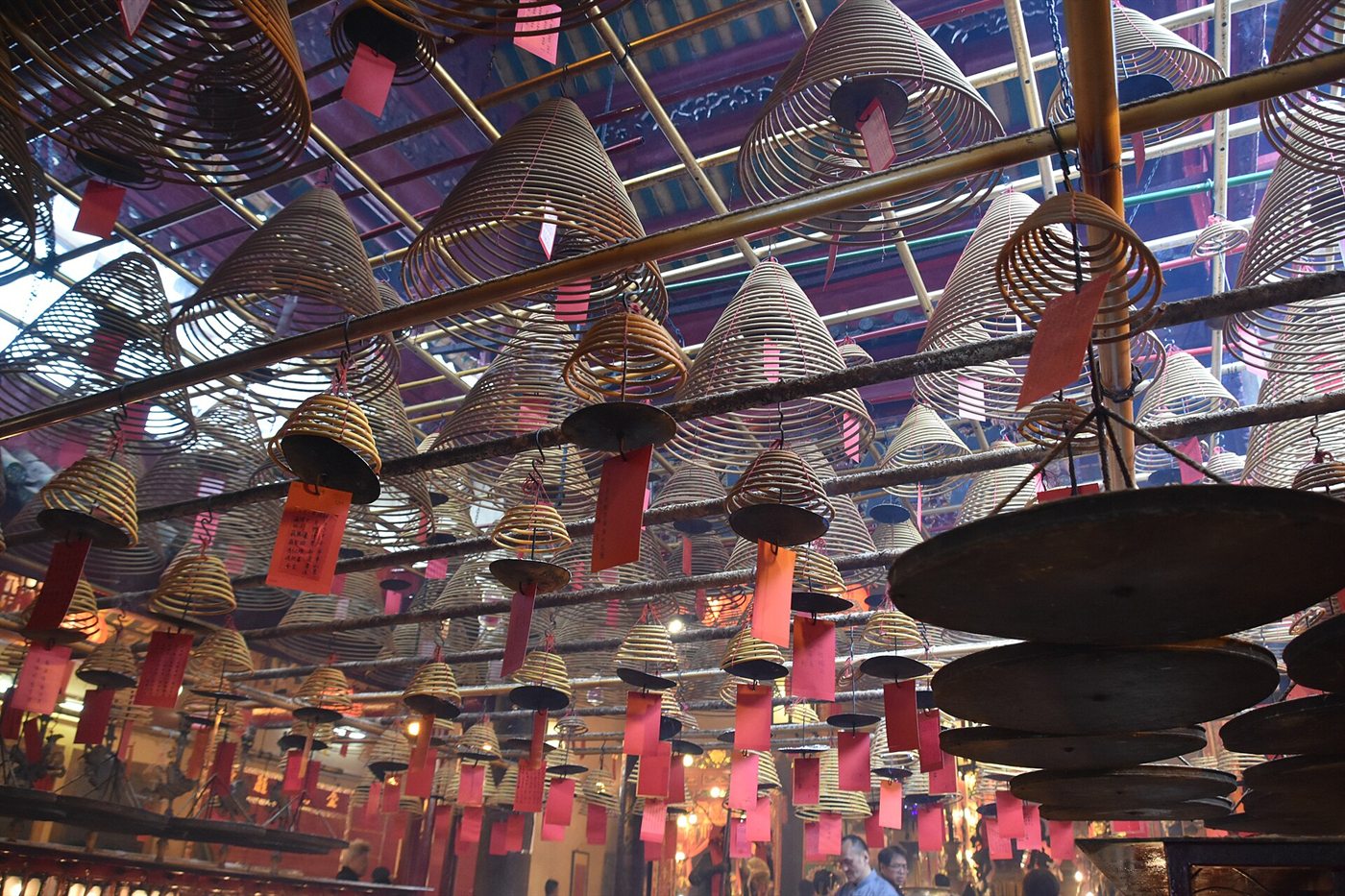
In Man Mo Temple (文武廟), built in 1847–1862, hundreds of spiral incense coils hang from the ceiling, each burning for up to several weeks. Entry is free. Around it, on Hollywood Road and Cat Street, are antique shops, and in Sheung Wan – shops selling dried seafood and herbs.
6. The Big Buddha and Po Lin Monastery on Lantau
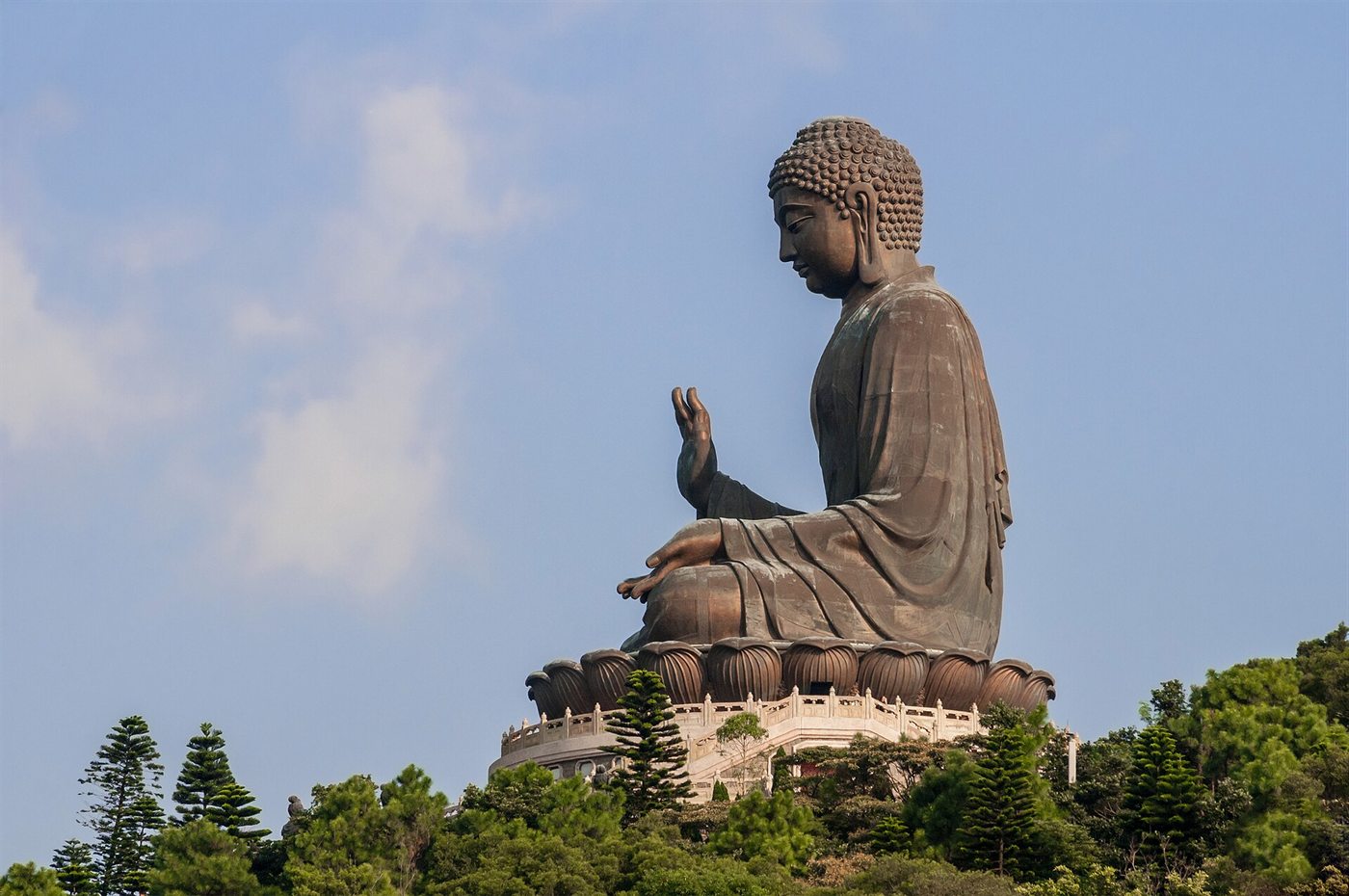
On a hilltop on Lantau Island sits the 34-metre bronze Tian Tan Buddha (天壇大佛), completed in 1993. 268 steps lead up to it, with views over mountains and sea. The best way up is the 25-minute Ngong Ping 360 cable car (昂坪360) from Tung Chung MTR station: a return ticket costs HK$295 (about 146 PLN), or about HK$365 (about 181 PLN) in a glass-floored Crystal cabin. Cheaper and slower is bus 23 from Tung Chung (about 45 minutes). The Buddha and the colourful Po Lin Monastery (寶蓮禪寺) are free, and the monastery canteen serves a vegetarian lunch for about HK$100 (about 49 PLN)–HK$150 (about 74 PLN).
7. Tai O fishing village
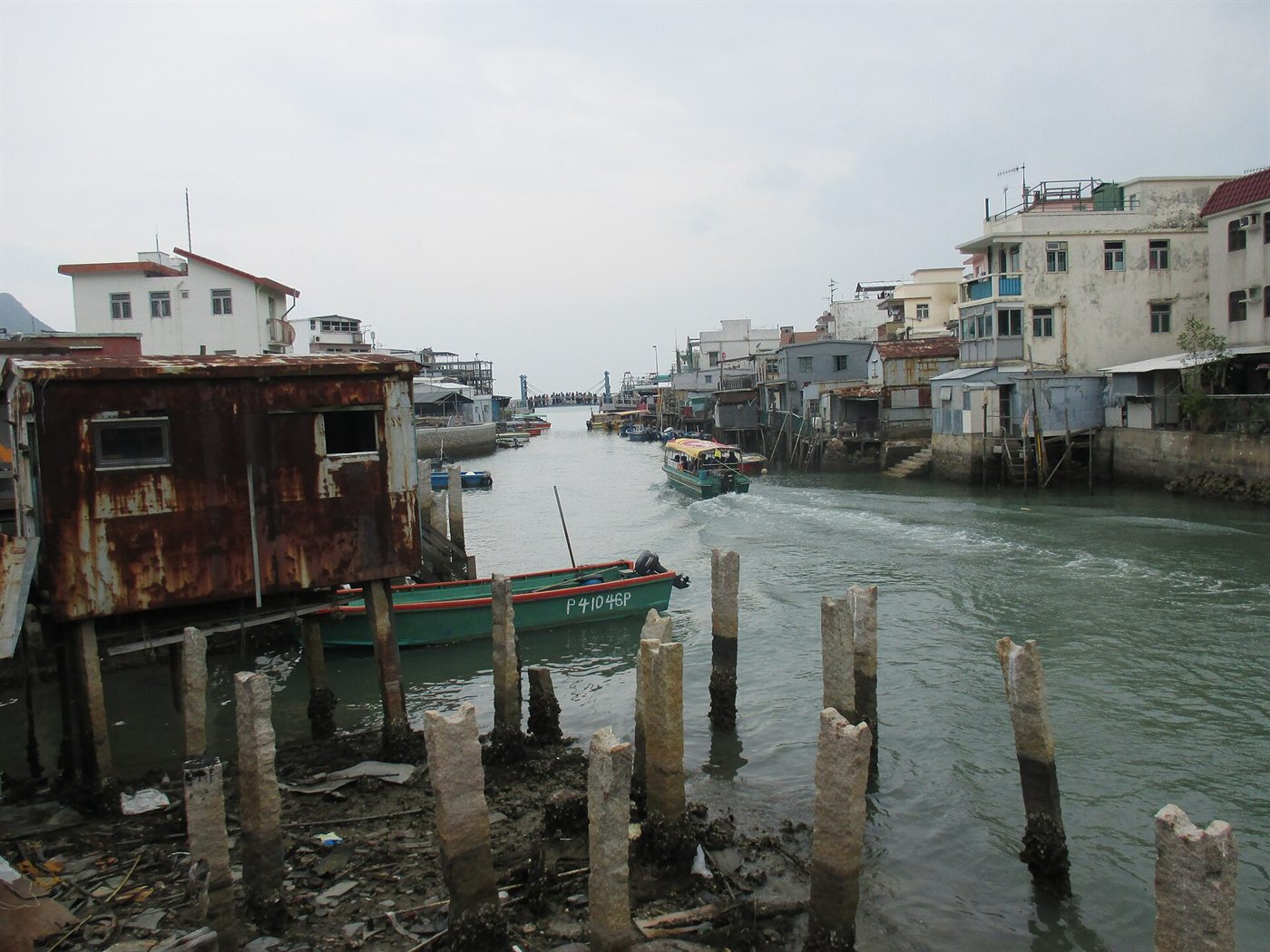
From Ngong Ping, bus 21 takes about 20 minutes to Tai O (大澳) – a fishing village of the Tanka people with stilt houses over the creeks and a market of dried fish and shrimp paste. It's a completely different Hong Kong from the skyscrapers. Short boat trips leave the pier for the open sea – with a bit of luck you'll see pink dolphins.
8. Mong Kok and the Temple Street night market
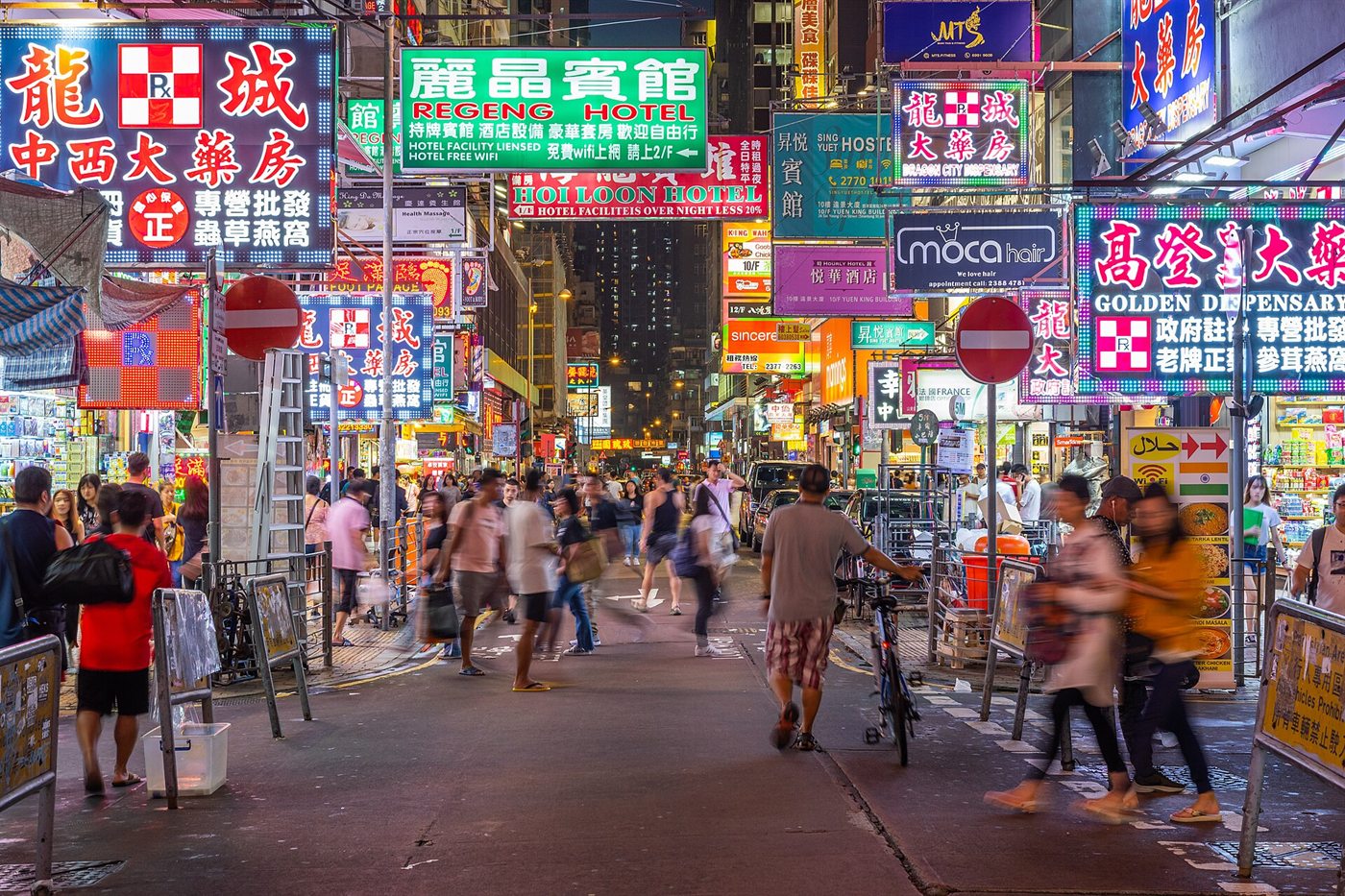
Mong Kok is one of the most densely populated places on Earth: neon, electronics shops and several markets, each selling something different. At the Ladies' Market (女人街, Tung Choi Street) you'll find souvenirs and clothes from noon until late, and a few blocks away are the goldfish and bird markets. In the evening, walk on to Temple Street (廟街) in Jordan: from about 6 pm it's a night market with street food, fortune tellers and Cantonese opera. Bargain at the markets – the first price can be double.
9. West Kowloon: M+ and the Palace Museum
A new harbourside cultural district with a park and a free promenade facing the island. M+ is one of the world's largest museums of contemporary Asian art and design (ticket HK$190 (about 94 PLN), closed on Mondays). The Hong Kong Palace Museum shows treasures from Beijing's Forbidden City, on loan from the Palace Museum there (ticket HK$70 (about 35 PLN)). A good choice for a very hot or rainy day.
10. The Dragon's Back trail
More than 40% of Hong Kong is green country park. The most popular trail, Dragon's Back (龍脊), follows a ridge above the sea on the east of the island: about 3 hours on foot with no difficult climbs, views over the bays and Big Wave Bay beach at the end, where you can swim. Get there on bus 9 from Shau Kei Wan MTR station. The best time is October to March – in summer it's very hot and humid.
Day trips from Hong Kong: Macau and Shenzhen
- Macau: a former Portuguese colony with baroque churches, wavy cobbles and the best custard tarts in Asia – its old town is a UNESCO World Heritage Site. The TurboJET ferry from the Sheung Wan terminal takes about 1 hour (HK$175 (about 87 PLN)–HK$215 (about 106 PLN), more in the evening), and the bus across the Hong Kong–Zhuhai–Macau Bridge from Lantau takes about 40 minutes (HK$65 (about 32 PLN)). Most European visitors enter Macau visa-free for 90 days too, and Hong Kong dollars are accepted everywhere. Macau gets two days in our Dim Sum & Palm Trees itinerary.
- Shenzhen: a tech city of 17 million just across the border, with the world's largest electronics market, Huaqiangbei. A high-speed train from West Kowloon reaches Shenzhen Futian in about 15 minutes (Shenzhen to Hong Kong by train). This is an entry into mainland China, so the mainland's visa rules apply.
Tickets and prices
| Place | Price | How to buy |
|---|---|---|
| Peak Tram | HK$116 (about 57 PLN) return / HK$82 (about 41 PLN) single | online or on the spot |
| Sky Terrace 428 | HK$80 (about 40 PLN) (HK$182 (about 90 PLN) with the Peak Tram) | online or on the spot |
| Star Ferry | HK$5 (about 2 PLN) (HK$6.50 (about 3 PLN) at weekends) | Octopus or a token from the machine |
| "Ding ding" tram | HK$3.30 (about 2 PLN) per ride | Octopus or exact change when you get off |
| Ngong Ping 360 | HK$295 (about 146 PLN) return (Crystal about HK$365 (about 181 PLN)) | online in advance |
| Big Buddha and Po Lin Monastery | free | – |
| M+ | HK$190 (about 94 PLN) | online or on the spot |
| Palace Museum | HK$70 (about 35 PLN) | online or on the spot |
| Ferry to Macau | HK$175 (about 87 PLN)–HK$215 (about 106 PLN) | online or at the terminal |
TipYou can enter the MTR by tapping a Visa or Mastercard card at the gate (you pay the standard adult fare). For ferries, trams and buses an Octopus card is handier – buy it at the airport and MTR stations (HK$50 (about 25 PLN) deposit, refunded when you return the card), or on an iPhone in the Octopus for Tourists app with a card in Apple Pay. Octopus also works in 7-Eleven shops and many cafés.
How many days in Hong Kong
- 1 day: the Tsim Sha Tsui waterfront, the Star Ferry and an evening on Temple Street, then Victoria Peak in the morning – as in our From the Avatar Mountains to Hong Kong itinerary, which ends in Hong Kong.
- 2 days: a day in Kowloon and a day on Hong Kong Island (the tram, Central, Man Mo, Victoria Peak).
- 3 days: add Lantau with the Big Buddha and Tai O – as in our Dim Sum & Palm Trees itinerary.
- 4–5 days: add Macau, the Dragon's Back trail or the West Kowloon museums.
What to eat in Hong Kong
- Dim sum (點心): har gow shrimp dumplings, char siu bao buns, cheung fun rice rolls. The cheapest famous ones are at Tim Ho Wan (添好運), a chain recognised by the Michelin Guide for years.
- Roast goose (燒鵝): with crispy skin, on rice – for example at Yat Lok (一樂燒鵝) in Central.
- Wonton noodles (雲吞麵): thin egg noodles in broth with shrimp dumplings – for example at Mak's Noodle (麥奀雲吞麵世家).
- Cha chaan teng (茶餐廳): Hong Kong diners serving milk tea, French toast and the "pineapple" bun bo lo bao (no pineapple – the name comes from its crunchy crust).
- Egg waffles (雞蛋仔): a bubble-shaped street snack, about HK$25 (about 12 PLN)–HK$35 (about 17 PLN).
More about Cantonese food in China has no single cuisine – a map of Chinese flavours.
Getting there and getting around
- By air: Hong Kong International Airport (HKG) on Chek Lap Kok island is one of Asia's main hubs, with direct flights from many European cities. The Airport Express train reaches Hong Kong station in Central in 24 minutes and costs about HK$120 (about 59 PLN)–HK$130 (about 64 PLN). On your way back, you can check in your bags early at the Airport Express station in town.
- By train from mainland China: high-speed trains arrive at West Kowloon station – about 15 minutes from Shenzhen Futian, about 50 minutes from Guangzhou South and about 3–3.5 hours from Guilin. Mainland and Hong Kong border controls are both inside the station. Cheaper but slower: the metro to the Futian / Lok Ma Chau crossing in Shenzhen, then the MTR East Rail line (about 1–1.5 hours in total). Details: Shenzhen to Hong Kong by train.
- Getting around: the MTR metro goes almost everywhere, and the Star Ferry also links the island and Kowloon. Taxis are metered (red in the city, blue on Lantau). Google Maps works, but have addresses in Chinese too, as not every driver speaks English.
Where to stay in Hong Kong
The most convenient area is Tsim Sha Tsui or Jordan in Kowloon: you can walk to the waterfront, the Star Ferry and Temple Street, and the metro and West Kowloon station are close by. Mong Kok is cheaper. On Hong Kong Island, Central, Sheung Wan and Wan Chai are the best areas – close to the trams and Victoria Peak, but pricier. Hong Kong rooms are small and expensive: budget hotels usually cost about HK$450 (about 223 PLN)–HK$900 (about 445 PLN) a night, mid-range about HK$900 (about 445 PLN)–HK$1,800 (about 890 PLN), and since 2025 a 3% hotel tax is added to the bill. Book ahead, especially around Chinese holidays.
When to visit Hong Kong
The best time is October to December: dry and sunny, about 28°C by day in October, with the clearest views from Victoria Peak. January and February are cool (about 19°C by day and 15°C at night) and can be grey, and March and April are humid and misty. From May to September it's hot (about 31°C in July) with heavy downpours, and typhoons are a risk especially from July to September: under signal no. 8 the city shuts down and ferries and some transport stop. Avoid 1–7 October and Lunar New Year, when crowds arrive from the mainland. More: When is the best time to visit China?
Hong Kong in our itineraries
| Itinerary | Days | Route |
|---|---|---|
| Dim Sum & Palm Trees | 11 | Guangzhou → Shenzhen → Hong Kong → Macau → Sanya |
| From the Avatar Mountains to Hong Kong | 13 | Chongqing → Zhangjiajie → Guilin → Guangzhou → Hong Kong |
In Dim Sum & Palm Trees, Hong Kong gets three days (Kowloon and the harbour, the island with Victoria Peak, Lantau with the Big Buddha and Tai O), followed by two days in Macau. From the Avatar Mountains to Hong Kong ends in Hong Kong: in through Shenzhen, an evening by the harbour, Victoria Peak in the morning and the Airport Express to your flight. Both include step-by-step border crossings, prices and addresses in Chinese.
Frequently asked questions
Do I need a visa for Hong Kong?
Most European and North American travellers don't: they enter Hong Kong visa-free for 90 days, and Macau too. Instead of a passport stamp you get a small landing slip – keep it until you leave. Hong Kong's rules are separate from mainland China's: going back to the mainland is a new entry (China visa-free).
How many days do you need for Hong Kong?
Two days are enough for Kowloon, the Star Ferry, Hong Kong Island and Victoria Peak. With the Big Buddha and Tai O on Lantau, plan three days, and with a trip to Macau – four or five.
Do Google and WhatsApp work in Hong Kong?
Yes. Hong Kong doesn't block the internet like mainland China: Google, WhatsApp, Instagram and Facebook all work without a VPN. An eSIM covering both China and Hong Kong is handy (internet in China).
Octopus card or bank card?
For a short stay a contactless bank card is enough – it works on the MTR and in most shops. Octopus is useful for ferries, trams and buses and in small eateries. Mainland Alipay also works in many places in Hong Kong.
How do I get from Hong Kong to Guangzhou?
The fastest way is the high-speed train from West Kowloon to Guangzhou South (about 50 minutes), or to Shenzhen Futian (about 15 minutes) and on by train to Guangzhou. Buy tickets on Trip.com with your passport (hotels, trains and flights).
Is Hong Kong expensive?
Yes, clearly more than mainland China: hotels usually cost two to three times as much, and a restaurant meal about HK$100 (about 49 PLN)–HK$200 (about 99 PLN). But cha chaan teng diners, the Star Ferry and the trams are cheap, and many sights – the Big Buddha, the temples, the waterfronts and the trails – are free. More: How much does a trip to China cost?
Sources
- The Peak Tramways: fare adjustment from 29.12.2025 and Ngong Ping 360: ticket prices (2026)
- Hong Kong Transport Department: trams, The Standard: Star Ferry fare rise application (2026) and China Daily HK: Airport Express fares
- Hong Kong Free Press: the end of A Symphony of Lights in 2026
- Hong Kong Immigration Department: visa-free entry and Hong Kong Observatory: climate normals
- Wikipedia: Victoria Peak, Tian Tan Buddha, Tai O and Star Ferry
- Our Dim Sum & Palm Trees and From the Avatar Mountains to Hong Kong itineraries (as of October 2026); photos from Wikimedia Commons (authors and licences in the captions)
Hong Kong in a ready-made itinerary
Our itineraries plan Hong Kong hour by hour: the border crossing from Shenzhen step by step, the Star Ferry, Victoria Peak, the Big Buddha, ticket prices, recommended food and addresses in Chinese for the taxi driver. Dim Sum & Palm Trees gives you three days in Hong Kong and two in Macau, and From the Avatar Mountains to Hong Kong finishes in Hong Kong after the Zhangjiajie mountains and the Li River.