Planning your route · 11 min read
When is the best time to visit China? Weather and holidays
In short: for most of China the best seasons are spring (April–May) and autumn (September–October). It's warm but not hot, and there's less rain than in summer. Avoid Chinese holidays: 1–7 October, 1–5 May and Lunar New Year (6 February in 2027), when the whole country is on the move. Summer is hot and wet, with typhoons in the south, but the mountains of Yunnan stay pleasantly cool. In winter, head south: to Guangzhou, Hong Kong and the beaches of Sanya.
What surprised us most in China was its diversity, and that includes the weather. In January Harbin can drop below −20°C at night, while at the same time it's 27°C on the beach in Sanya. So the answer to "when should I go?" depends above all on where you're going.
Correct as of 11 October 2026. Temperatures and rainfall are 1991–2020 averages from the China Meteorological Administration and the Hong Kong Observatory. Holiday dates for 2027 are provisional: China usually publishes the official schedule in November.
When to visit China: the seasons at a glance
| Season | Weather | Where to go |
|---|---|---|
| Spring (March–May) | 13–27°C by day, little rain in the north | almost anywhere; avoid 1–5 May |
| Summer (June–August) | 30–34°C, downpours, typhoons in the south | Yunnan and the mountains; avoid the Yangtze cities |
| Autumn (September–November) | warm, sunny, less rain | almost anywhere; avoid 1–7 October |
| Winter (December–February) | north: freezing and dry; south: 19–27°C by day | Guangzhou, Hong Kong, Sanya, Kunming; Beijing without crowds |
Calendar: when to visit each region
The regions are the same as in our article First time in China, and the ratings match the "When to go" box in our itineraries.
Temperatures in China: 13 cities in 4 seasons
Average daytime high / night-time low in °C, and the wettest months.
| City | January | April | July | October | Wettest months |
|---|---|---|---|---|---|
| Beijing | 2 / −7 | 21 / 9 | 32 / 23 | 19 / 9 | Jul–Aug |
| Xi'an | 5 / −4 | 22 / 9 | 33 / 22 | 19 / 10 | Jul–Sep |
| Shanghai | 9 / 3 | 21 / 13 | 33 / 26 | 24 / 17 | Jun–Sep |
| Chengdu | 10 / 3 | 23 / 14 | 31 / 23 | 21 / 15 | Jul–Aug |
| Chongqing | 10 / 6 | 24 / 16 | 34 / 25 | 22 / 17 | May–Sep |
| Zhangjiajie | 10 / 3 | 23 / 14 | 34 / 24 | 23 / 15 | May–Jul |
| Guilin | 12 / 6 | 24 / 17 | 33 / 25 | 26 / 18 | Apr–Jul |
| Kunming | 16 / 4 | 24 / 12 | 25 / 18 | 21 / 13 | Jun–Sep |
| Lijiang | 14 / 1 | 21 / 9 | 23 / 15 | 20 / 9 | Jun–Sep |
| Shangri-La | 7 / −9 | 13 / 1 | 19 / 11 | 15 / 2 | Jul–Aug |
| Guangzhou | 19 / 11 | 26 / 20 | 33 / 26 | 29 / 21 | Apr–Sep |
| Hong Kong | 19 / 15 | 26 / 21 | 32 / 27 | 28 / 24 | May–Sep |
| Sanya | 27 / 20 | 31 / 25 | 32 / 27 | 31 / 24 | May–Oct |
Spring (March–May): the best time almost everywhere
- Beijing and Xi'an: most pleasant in April and May, 21–27°C by day. In March and April dust storms occasionally blow in from the Gobi Desert.
- Shanghai, Hangzhou and Wuhan: cherry trees and magnolias are in bloom. Around East Lake in Wuhan the cherry blossom usually peaks in mid-March, and near Hangzhou the first and finest Longjing tea is picked from late March.
- Sichuan and Chongqing: warm but not yet hot. There may still be snow on the summit of Mount Emei in March.
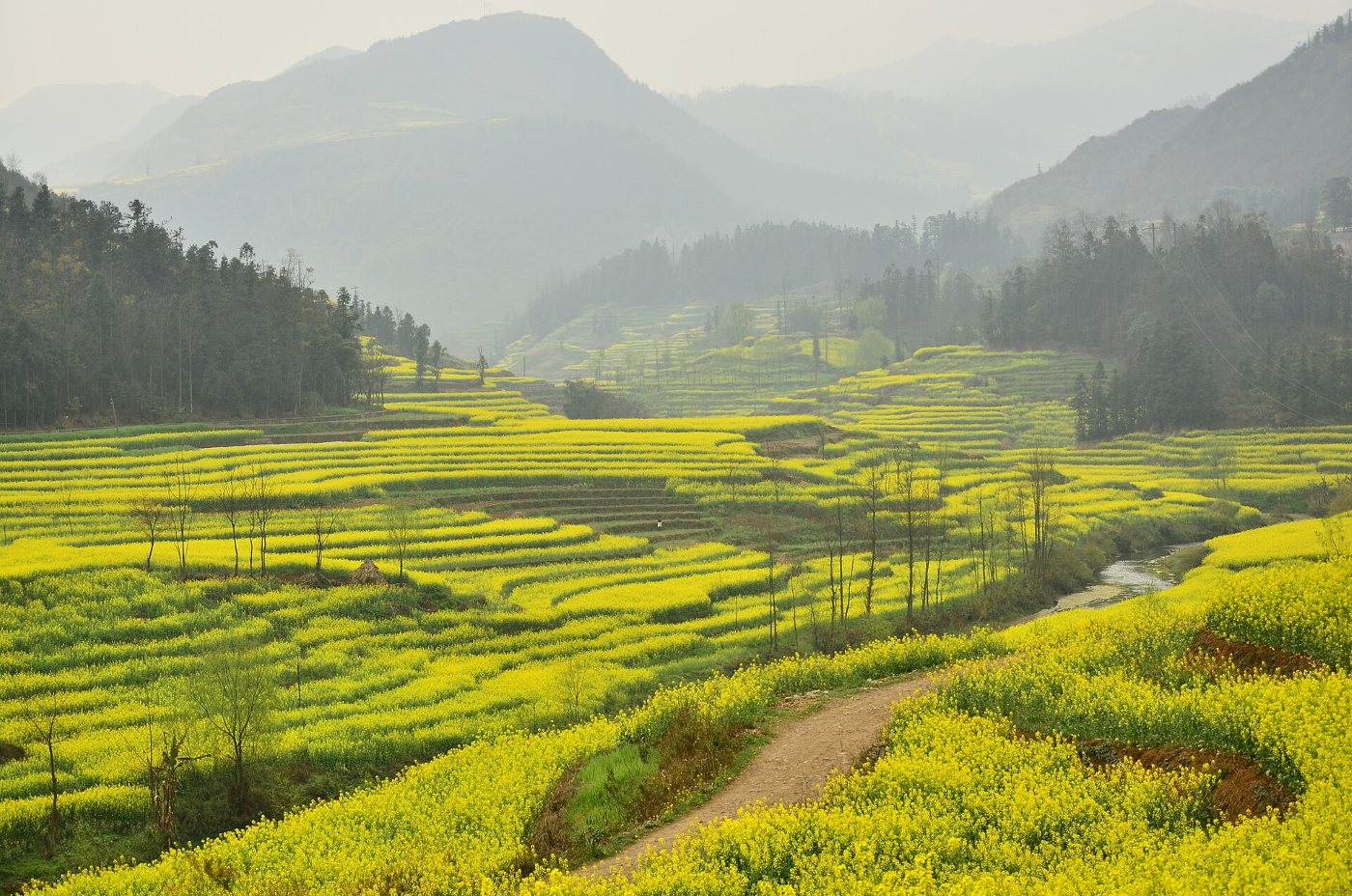
- Yunnan: the sunny dry season lasts until May, and from Lijiang you can see the snowy peaks of Jade Dragon Snow Mountain.
- Zhangjiajie and Guilin: April and May, although from May it rains more and more often.
- The south: still pleasant in March and April, though rain becomes more frequent. In May it turns humid and the rainy season begins.
Watch out for: 1–5 May (Labour Day) and the Qingming long weekend in early April.
Summer (June–August): heat, rain and crowds
- Heat: in July and August Beijing, Shanghai, Chongqing and Zhangjiajie average 32–34°C by day and 23–26°C at night. Chongqing, Wuhan and Nanjing are China's traditional "furnaces": Chongqing's record is 43.7°C.
- Rainy season: from mid-June to mid-July the lower Yangtze (Shanghai, Hangzhou, Nanjing) has its "plum rain": weeks of drizzle and downpours in high humidity. Guilin gets most of its rain in May and June, when the Li River can flood.
- Typhoons: in the south (Hong Kong, Guangzhou, Hainan) they can arrive from May to November, most often from July to September. When a typhoon approaches, ferries stop and sometimes flights and trains too.
- School holidays: in July and August Chinese families travel with their children, so the biggest sights are crowded and train tickets sell out fast.

If summer is your only option: choose Yunnan. Lijiang is around 23°C by day, Shangri-La around 19°C. It's the rainy season, but everything is green and the markets are full of wild mushrooms. In the cities, sightsee in the morning and evening, and spend the hottest hours in air-conditioned museums and malls.
Autumn (September–November): the best time, with one exception
- Beijing and Xi'an: Beijing is sunny and dry in September and October, 19–27°C by day. In Xi'an, September is the wettest month of the year, but October is settled.
- Sichuan: in Jiuzhaigou the trees usually turn autumn colours from mid-October to early November. It's the most beautiful time for our Sichuan Deluxe itinerary.
- Shanghai and the east: best from October, as September can still be around 29°C and humid.
- Yunnan: the rainy season ends in late September, and October and November are sunny.
- The south: pleasant from October, although Sanya still gets quite a lot of rain in October.
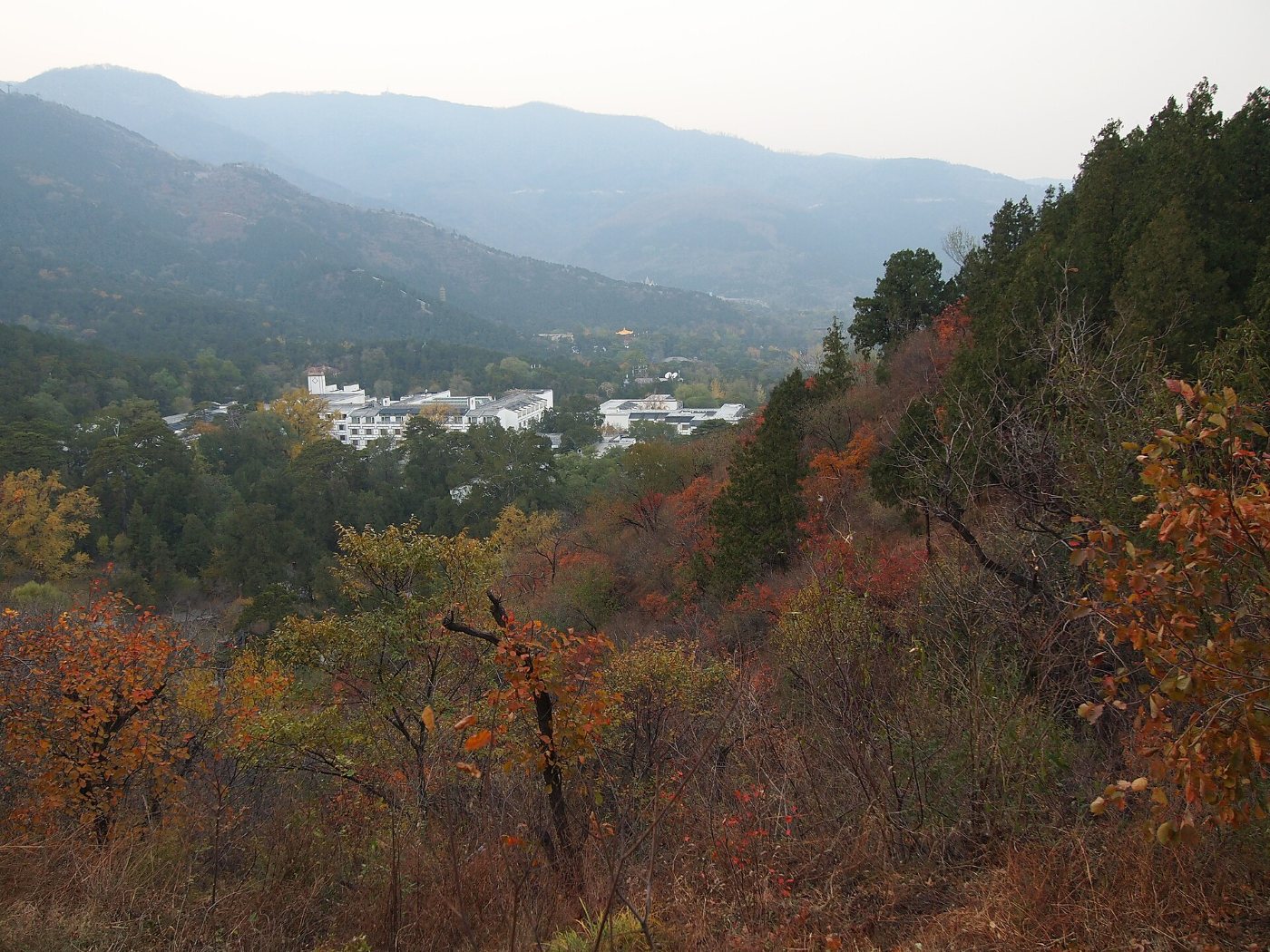
The exception: 1–7 October is Golden Week, the worst time of the whole year. Trains are sold out, hotels are much more expensive, and you queue on the Great Wall or in Jiuzhaigou.
Winter (December–February): cheaper and quieter, but not everywhere
- Beijing and Xi'an: in January Beijing is around 2°C by day and −7°C at night, but dry, often sunny and empty. A Forbidden City ticket costs ¥40 (about 23 PLN) in winter instead of ¥60 (about 35 PLN).
- Harbin: the Ice and Snow World, with sculptures made of ice and snow, usually runs from the second half of December to February, with night-time temperatures below −20°C.
- The south: the best season. Hong Kong and Guangzhou are around 19°C by day and Sanya 27°C, and you can swim in the sea all year.
- Kunming: sunny and around 16°C by day, which is why it's called the "city of eternal spring". Shangri-La, on the other hand, drops to around −9°C at night.
- Shanghai, Sichuan and Chongqing: 3–10°C, grey and damp. South of the Qinling Mountains and the Huai River, buildings usually have no central heating, so restaurants and temples can be chilly. Hotels heat rooms with air conditioning.

Watch out for Lunar New Year (Spring Festival), which falls in January or February. Around it, the year's biggest migration lasts about 40 days: in 2026 it ran from 2 February to 13 March. Train tickets vanish within minutes, and in the first days of the holiday many small restaurants and shops close. In 2027 Lunar New Year falls on 6 February.
Chinese holidays in 2027: when not to go
| Holiday | Date in 2027 | Days off (provisional) | What it means for you |
|---|---|---|---|
| Lunar New Year (Spring Festival) | 6 February | about 5–11 February | the worst time in winter: mass travel for about 40 days, some places closed |
| Qingming (Tomb-Sweeping Day) | 5 April | about 3–5 April | long weekend, busier parks and sights |
| Labour Day | 1 May | 1–5 May | crowds everywhere and higher prices |
| Dragon Boat Festival | 9 June | about 9–11 June | long weekend, dragon boat races |
| Mid-Autumn Festival | 15 September | about 3 days | long weekend, mooncakes |
| National Day (Golden Week) | 1 October | 1–7 October | the worst time of the year: crowds and much pricier hotels |
China makes up some of its days off at weekends, so a Saturday or Sunday around a holiday is sometimes a working day. The most popular sights are crowded on ordinary weekends too, so plan the Forbidden City or the Terracotta Army for a weekday.
TipDuring Golden Week and Lunar New Year, mainland tourists also head to Hong Kong and Macau, so they get crowded too.
When are flights to China cheapest?
Usually in spring and autumn, outside Chinese holidays. Fares rise in July and August, around Christmas and New Year, and during Lunar New Year. Compare several departure airports: in Central Europe, for example, flights from Budapest, Prague or Vienna are often much cheaper than from Poland (nonstop routes). We've worked out the full trip budget in How much does a trip to China cost?
Which route for which month?
- January and February: Dim Sum & Palm Trees: Guangzhou, Hong Kong, Macau and the beaches of Sanya (avoiding Lunar New Year). If you don't mind the cold, Beijing will be almost empty.
- March: Along the Yangtze (cherry blossom), Spicy Chengdu, The Road to Shangri-La and Dim Sum & Palm Trees.
- April and May: every itinerary, especially China's Golden Triangle+, Emperors & Hotpot, From the Avatar Mountains to Hong Kong and Sichuan Deluxe. Avoid 1–5 May.
- June: the Sichuan itineraries, such as Pandas, Buddha & a Sea of Clouds (around 29°C in Chengdu), and in the first half of the month Beijing and Xi'an too.
- July and August: The Road to Shangri-La, with 19–25°C by day in the mountains of Yunnan. Avoid the south and Chongqing.
- September: China's Golden Triangle+, Emperors & Hotpot and the Sichuan itineraries.
- October: almost everything except 1–7 October: Sichuan Deluxe (autumn in Jiuzhaigou), Along the Yangtze, The Road to Shangri-La, and in the south Dim Sum & Palm Trees.
- November: Shanghai in 5 Days, From the Avatar Mountains to Hong Kong, The Road to Shangri-La and Dim Sum & Palm Trees.
- December: Dim Sum & Palm Trees, and if you don't mind the chill, Shanghai in 5 Days.
Frequently asked questions
When is the best time to visit China?
Spring (April–May) or autumn (September–October), avoiding the 1–5 May and 1–7 October holidays. For the south, Guangzhou, Hong Kong and Sanya, the best time is October to April.
What is the worst time to visit China?
Golden Week (1–7 October) and Lunar New Year (6 February in 2027). Hundreds of millions of people travel, so trains and hotels are full and more expensive, and there are queues at the sights.
Is it worth visiting China in summer?
You can, but it's the hardest season: heat, downpours, typhoons in the south and holiday crowds. Yunnan works best in summer, at around 19–25°C by day in the mountains. If you choose Beijing or Shanghai, sightsee in the morning and evening.
Is it worth visiting China in winter?
Yes, if you head south: Hong Kong and Guangzhou are around 19°C by day and Sanya 27°C. Winter is also cheaper and quieter at the sights, even in freezing Beijing. Just avoid Lunar New Year.
When is Chinese New Year 2027?
6 February 2027. The days off will run roughly from 5 to 11 February, and the travel rush will start about two weeks earlier and continue for several weeks after the holiday. China usually publishes the exact schedule in November 2026.
When is the rainy season in China?
In most of the country it's summer: from May–June to September. The lower Yangtze gets most rain from mid-June to mid-July, Guilin in May and June, and Yunnan from June to September. In the north, in Beijing for example, rain is concentrated in July and August.
Sources
- China Meteorological Administration (CMA): 1991–2020 climate normals, via Wikipedia's climate tables, e.g. Beijing, Shanghai, Chengdu, Chongqing, Kunming
- Hong Kong Observatory: 1991–2020 normals and the climate of Hong Kong (typhoons)
- China Briefing: China's 2026 public holiday schedule
- Hong Kong Government: general holidays in 2027
- Shanghai Government: 2026 Spring Festival travel
- The "When to go" boxes in our 11 itineraries (as of October 2026)
An itinerary for every season
Each itinerary page shows the best months for that route, and the itinerary itself has a "When to go" box covering the weather and the holidays to avoid. See our China itineraries or write to us if you'd like help matching a route to your dates.