
Destinations and inspiration · 17 min read
Yunnan in 7–10 days: Kunming, Dali, Lijiang and Shangri-La
In short: Yunnan is a mountain province in south-west China, larger than Germany, and home to 25 ethnic groups. The classic route runs from Kunming (the Stone Forest) through Dali on Erhai Lake and the old town of Lijiang below Jade Dragon Snow Mountain to Tibetan Shangri-La at 3,300 m. High-speed trains link all of them. You need 7 days for Kunming, Dali and Lijiang, or 10 days with Shangri-La. The best times are March to May and October to November, and you should be ready for the altitude.
What surprised us most in China was its technology, and in Yunnan you see it where you least expect it: since 2023 a high-speed train has climbed through the mountains to Tibetan Shangri-La, and you pay for your butter tea in a mountain village with your phone.
Correct as of 15 October 2026. Check ticket prices before you travel. Amounts in yuan are converted at the National Bank of Poland rate into the currency you pick in the site menu.
What to see in Yunnan: 10 places
1. The Stone Forest (Shilin)
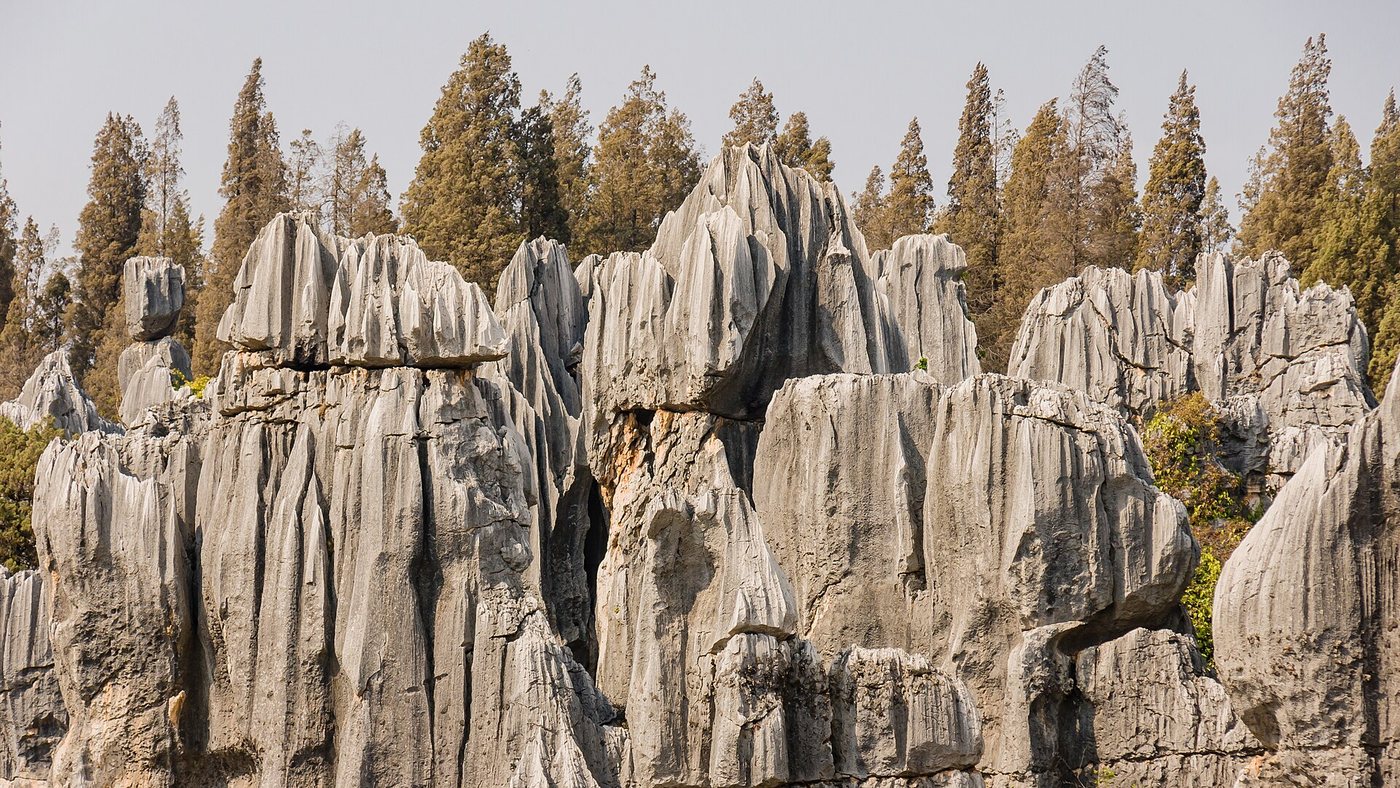
A maze of grey limestone pinnacles up to 30 metres tall, carved by water over some 270 million years. The Stone Forest (石林) is part of the "South China Karst" UNESCO World Heritage Site. Paths squeeze through narrow gaps between the rocks of the Major and Minor Stone Forest – allow about 3 hours. A ticket costs ¥130 (about 75 PLN), and the electric cart around the site ¥25 (about 15 PLN). From Kunming South station the train to Shilin West takes about 30 minutes, then it's about 20 minutes by bus or taxi to the entrance.
TipArrive at opening time and turn straight onto the side paths – tour groups gather at the main viewpoints right by the entrance.
2. Kunming: Green Lake and the Dragon Gate
Kunming (昆明) sits at about 1,900 metres and is known as the "City of Eternal Spring": it's around 15–25°C all year. In Green Lake Park (翠湖公园, Cuihu) in the centre, locals dance and play music, and from November to March thousands of gulls arrive from Siberia. West of the city a path cut into the cliffs of the Western Hills leads to the Dragon Gate (西山龙门), with views over Dian Lake (about ¥30 (about 17 PLN); take the chairlift up). In the centre, look into the Buddhist Yuantong Temple (圆通寺), which sits below street level, with a pavilion in the middle of a pond (about ¥6 (about 3 PLN)).
3. Dali Old Town
Dali (大理) lies between the Cangshan mountains (up to about 4,100 m) and Erhai Lake. It's the homeland of the Bai people: white houses with painted gables and carved gateways. The walled old town with its South and North Gates is free to enter. Stroll along Renmin Road with its cafés and Yangren Jie ("Foreigner Street"), and in a tea house try the Bai three-course tea (白族三道茶) – bitter, sweet and "aftertaste", a symbol of life (a show costs about ¥50 (about 29 PLN)–¥100 (about 58 PLN)). Dali station is in the new town of Xiaguan, about 30 minutes by taxi from the old town.
4. The Three Pagodas
The tallest of the three pagodas of Chongsheng Temple (崇圣寺三塔), Qianxun, is 69 metres high and has stood since the 9th century, surviving several earthquakes. Behind the pagodas a large temple complex stretches up towards the mountains. They look best in the morning, with the snowy Cangshan behind them. A ticket costs about ¥75 (about 44 PLN).

5. Erhai Lake and Xizhou village
Erhai (洱海) is Yunnan's second-largest lake, high in the mountains and shaped like an ear – hence the name. The nicest way to see it is from a saddle: rent a bike or an e-scooter (about ¥50 (about 29 PLN)–¥100 (about 58 PLN) a day) and ride the eco path along the west shore, past fields and Bai villages. On the way, stop in Xizhou (喜洲古镇), the best-preserved Bai village, with the courtyards of wealthy merchants (the Yan family compound) and crispy Xizhou baba flatbreads for lunch. The most photographed spot on the lake is the Panxi S-bend (磻溪S湾) in the path. With more time, take a cable car up into the Cangshan mountains (about ¥100 (about 58 PLN)–¥250 (about 145 PLN)) – the Jade Belt trail along the slopes looks out over the whole lake.

6. Lijiang Old Town
The Dayan old town in Lijiang (丽江古城) has been a UNESCO site since 1997: a maze of canals fed by mountain water, stone bridges and the wooden houses of the Naxi people, who have their own Dongba pictographic script – the only one still in use in the world. The main lanes are packed with shops, but turn into a side street and it goes quiet. Visit the Mu Residence (木府), the palace of the old Naxi rulers, and at sunset climb the wooden Wangu Tower (万古楼) on Lion Hill (about ¥50 (about 29 PLN)) for a view over a sea of roofs and Jade Dragon Snow Mountain. Quieter Naxi old towns are Shuhe and Baisha, north of the city.
NoteSince 1 August 2025 the Lijiang Old Town maintenance fee has been ¥50 (about 29 PLN), valid for 365 days (it used to be ¥80 (about 46 PLN) for a week). It covers Dayan, Shuhe and Baisha. Nobody usually checks it in the lanes, but you have to pay at the entrance to Black Dragon Pool park and at the Jade Dragon Snow Mountain ticket counters. You can pay at service points, through your guesthouse or online.

7. Jade Dragon Snow Mountain and Blue Moon Valley
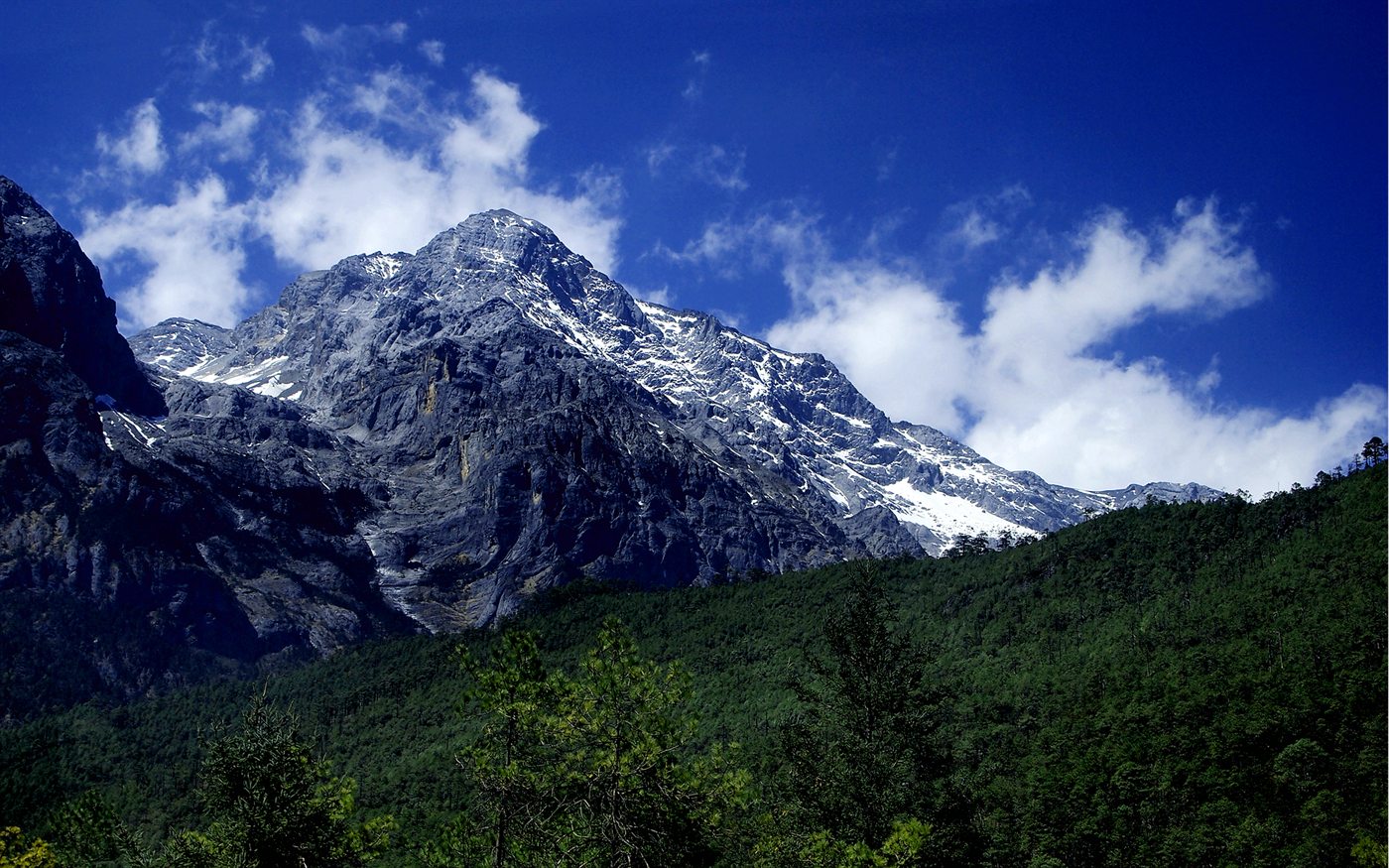
The Yulong Xueshan massif (玉龙雪山) rises about 30 km north of Lijiang. Its highest peak, Shanzidou (5,596 m), has been climbed only once, in 1987. The big cable car takes you to about 4,500 metres, where wooden stairs lead up to a viewpoint at 4,680 m, just below the glacier. Admission costs ¥100 (about 58 PLN) (it also covers Blue Moon Valley, 蓝月谷, with its turquoise water terraces at the foot of the mountain), the shuttle bus to the cable car ¥20 (about 12 PLN) and the big cable car ¥120 (about 70 PLN). An electric cart runs through the valley for about ¥50 (about 29 PLN).
TipThe big cable car has a daily cap. Tickets are issued in your name (on your passport) with a set boarding time, go on sale about 7 days ahead and sell out within minutes in high season – buy them online straight away, e.g. on Trip.com. Walk very slowly at the top; you can buy a bottle of oxygen (氧气瓶) at the bottom. If you don't handle altitude well, take the small cable car to Spruce Meadow (Yunshanping, about 3,200 m) instead. The Yak Meadow cable car was closed for rebuilding in 2026.
8. Tiger Leaping Gorge
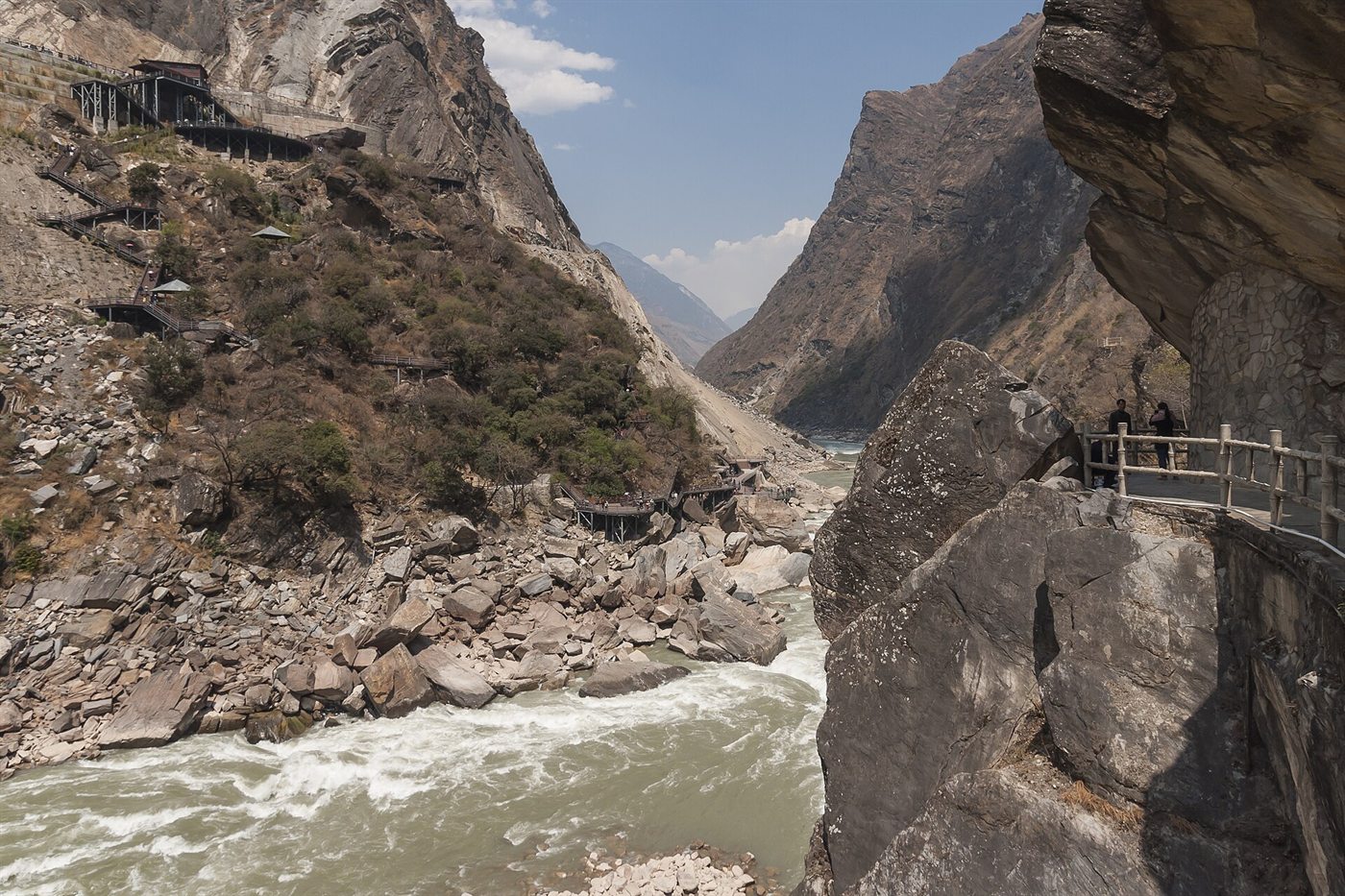
Between Jade Dragon Snow Mountain and the Haba massif, the Jinsha River – the upper Yangtze – squeezes through Tiger Leaping Gorge (虎跳峡), one of the deepest gorges in the world: it's almost 4 km from the water to the peaks. The name comes from the legend of a tiger that escaped a hunter by leaping across the river on a rock at its narrowest point. You can walk down to that rock above the raging water in a quarter of an hour from the road on the Lijiang side (about ¥65 (about 38 PLN)) or the Shangri-La side (about ¥45 (about 26 PLN)). Tickets are issued in your name and booked online. The famous route, though, is the two-day, roughly 22 km High Trail with a night in a guesthouse on the slope – one of the finest treks in Asia. In 2026 the descent into the Middle Gorge was closed or open only with a guide – ask in Qiaotou which sections are open.
The gorge isn't in our itinerary, but the train from Lijiang to Shangri-La crosses it on a bridge. If you like hiking, add a day or two between Lijiang and Shangri-La.
9. Shangri-La and Dukezong Old Town
Shangri-La (香格里拉), formerly Zhongdian, sits at about 3,300 metres, already on the Tibetan Plateau: yaks, prayer flags and monasteries. The town took its name in 2001 from the mythical land in James Hilton's novel "Lost Horizon". The wooden Tibetan old town of Dukezong (独克宗古城) burned down in 2014 and has been rebuilt – in the evening locals dance in a circle on the main square, and visitors are welcome to join in. On Guishan Hill stands one of the largest prayer wheels in the world (21 m): it takes several people to turn it, clockwise.
10. Songzanlin Monastery and the parks around Shangri-La
Songzanlin (松赞林寺), founded in 1679 and nicknamed the "Little Potala", is the largest Tibetan monastery in Yunnan, home to hundreds of monks. Come in the morning, when prayers are under way in the main hall; the best photo of the whole complex is from the small Lamuyangcuo lake at its foot. A ticket with the shuttle bus costs about ¥90 (about 52 PLN). In the afternoon, head for the meadows around seasonal Napa Lake (纳帕海), where black-necked cranes winter, or to Pudacuo National Park (普达措) with its lakes and forests at about 3,500 m (ticket with park bus about ¥140 (about 81 PLN)).

More of Yunnan
Yunnan isn't just the route north. If you have more time, or you've been before:
- Xishuangbanna (西双版纳): the tropical south on the borders with Laos and Myanmar – the Dai people, Buddhist temples that look like Thailand's, tea plantations and jungle. From Kunming the China–Laos Railway gets you there in about 3 hours, and the same line continues to Luang Prabang in Laos.
- Yuanyang rice terraces (元阳梯田): thousands of terraces built by the Hani people on the mountainsides, a UNESCO site since 2013. They're most beautiful from December to March, when they're flooded and reflect the sunrise. About 5–6 hours by road from Kunming.
- Lugu Lake (泸沽湖): a lake on the Sichuan border, home to the Mosuo people, known for a tradition in which women head the family. About 4 hours by bus from Lijiang.
- Meili Snow Mountain (梅里雪山): with Yunnan's highest peak, Kawagebo (6,740 m), sacred to Tibetans and never climbed. A few hours' drive north of Shangri-La.
Altitude: getting ready for the mountains
On the classic route, every town is higher than the last:
| Place | Altitude |
|---|---|
| Kunming | about 1,900 m |
| Dali | about 2,000 m |
| Lijiang | about 2,400 m |
| Shangri-La | about 3,300 m |
| Pudacuo National Park | about 3,500 m |
| Jade Dragon Snow Mountain (cable car) | about 4,500–4,680 m |
This order lets your body adjust gradually. Even so, headaches, breathlessness and poor sleep are common in Shangri-La and on the glacier. Spend your first afternoon at each new altitude quietly, drink plenty of water, go easy on the alcohol and don't rush up stairs. Keep your time on the glacier short – an hour is enough. If symptoms get worse (a severe headache, vomiting, breathlessness at rest), go down and see a doctor. In Chinese, "I have altitude sickness" is 我有高原反应 (wǒ yǒu gāoyuán fǎnyìng).
Tickets and prices
| Place | Price | How to buy |
|---|---|---|
| Stone Forest | ¥130 (about 75 PLN) + cart ¥25 (about 15 PLN) | online or on site, with your passport |
| Dragon Gate (Western Hills) | about ¥30 (about 17 PLN) + chairlift | on site |
| Three Pagodas | about ¥75 (about 44 PLN) | online or on site |
| Cangshan cable car | about ¥100 (about 58 PLN)–¥250 (about 145 PLN) | online or on site |
| Lijiang Old Town fee | ¥50 (about 29 PLN), valid 365 days | service points, guesthouse or online |
| Wangu Tower | about ¥50 (about 29 PLN) | on site |
| Jade Dragon Snow Mountain | ¥100 (about 58 PLN) admission + ¥20 (about 12 PLN) bus + ¥120 (about 70 PLN) big cable car | online, in your name, about 7 days ahead |
| Tiger Leaping Gorge | about ¥65 (about 38 PLN) (Lijiang side) / about ¥45 (about 26 PLN) (Shangri-La side) | online, in your name |
| Songzanlin Monastery | about ¥90 (about 52 PLN) with shuttle bus | online or on site |
| Pudacuo National Park | about ¥140 (about 81 PLN) with park bus | online or on site |
TipIn Yunnan you enter almost every sight with your passport – tickets bought on Trip.com or on site are linked to your passport number, which you scan at the gate. Carry it with you at all times. How to pay with your phone: How to pay in China.
How many days in Yunnan
- 4–5 days: Kunming with the Stone Forest, Dali and Lijiang – fast, without the mountains.
- 7 days: Kunming (1–2 days), Dali (2 days with Erhai Lake), Lijiang (2 days with Jade Dragon Snow Mountain) and back to Kunming.
- 10 days: add Shangri-La and Songzanlin Monastery – just like our Road to Shangri-La itinerary.
- 12–14 days: add a two-day trek through Tiger Leaping Gorge or tropical Xishuangbanna.
What to eat in Yunnan
- Crossing-the-bridge noodles (过桥米线): you add thinly sliced meat, vegetables and rice noodles to a boiling-hot broth yourself. Legend has it a wife carried soup across a bridge to her husband, who was studying on an island.
- Wild mushroom hotpot (菌子火锅): from June to September Yunnan lives for mushrooms. Only eat them in reputable restaurants and stick to the cooking time the staff give you – undercooked jianshouqing mushrooms (见手青) can cause hallucinations.
- Cheese – rare in China: rubing goat's cheese (乳饼) fried with chilli, and Dali's rushan (乳扇) – grilled cheese "fans" with rose jam.
- Flower cakes (鲜花饼): pastries filled with rose petals, Yunnan's favourite souvenir.
- Erkuai rice cakes (饵块) and baba flatbreads: grilled or stir-fried; try Xizhou baba in Dali and the layered Lijiang baba in Lijiang.
- Tibetan food in Shangri-La: yak hotpot, butter tea (酥油茶), tsampa made from roasted barley flour and thick yak-milk yoghurt.
- Pu-erh tea (普洱茶): Yunnan is its homeland – pressed into cakes, and the older it is, the pricier.
More about Yunnan's food in There's no such thing as "Chinese food" – a map of China's flavours.
Getting there and getting around
- By air: Kunming Changshui airport (KMG) is one of the largest in China. From Europe you'll fly with a connection, for example in Beijing, Shanghai, Chengdu or another Asian hub. The metro (line 6, changing to line 2 or 3) gets you to the centre in about an hour (¥6 (about 3 PLN)–¥8 (about 5 PLN)).
- From elsewhere in China: high-speed trains from Chengdu, Guilin or Guangzhou take several hours (usually 5–8); for longer distances it's easier to fly.
- Between Yunnan's towns: high-speed trains. Kunming to Dali takes about 2 hours (¥140 (about 81 PLN)–¥160 (about 93 PLN), Kunming to Dali by train), Dali to Lijiang about 1.5 hours (¥70 (about 41 PLN)–¥90 (about 52 PLN), Dali to Lijiang by train) and Lijiang to Shangri-La about 1.5 hours (¥50 (about 29 PLN)–¥65 (about 38 PLN), Lijiang to Shangri-La by train). There are only a few trains a day to Shangri-La – book as soon as tickets go on sale (15 days before departure). From Shangri-La you can get back to Kunming on a direct train (about 5–6 hours, ¥170 (about 99 PLN)–¥245 (about 142 PLN)) or fly from Diqing airport (about 1 hour; flights are sometimes cancelled in bad weather). How to buy tickets: hotels, trains and flights.
- On the ground: only Kunming has a metro. In Dali, Lijiang and Shangri-La you get around by DiDi taxi, bus and bike. Google Maps doesn't work in China – use Amap (China without Google Maps).
Where to stay in Yunnan
- Kunming: in the centre near Green Lake or the Nanqiang Street pedestrian area – close to the metro to the airport and Kunming South station.
- Dali: in a guesthouse in the old town or by its gates – you can walk everywhere. Guesthouses right on Erhai Lake (e.g. in Shuanglang) have views, but without a scooter it's hard to get anywhere from them.
- Lijiang: in Dayan Old Town, in a wooden courtyard house – near the bar streets it can be noisy until late. Shuhe is quieter.
- Shangri-La: in or right next to Dukezong. Nights at 3,300 m are cold all year, so check that your room has heating or an electric blanket.
A double room in a guesthouse usually costs about ¥200 (about 116 PLN)–¥350 (about 203 PLN) a night, and in a comfortable hotel about ¥500 (about 290 PLN)–¥800 (about 464 PLN). Prices peak in July, August and the first week of October.
When to visit Yunnan
The best times are March to May and October to November: sunny, with clear skies and good views of the snowy peaks. June to September is the rainy season – Jade Dragon Snow Mountain often hides in the clouds, but it's mushroom season, and in June rhododendrons bloom on the meadows around Shangri-La. Winter is mild and sunny in Kunming and Dali, but in Shangri-La nights can drop below −10°C. Avoid 1–7 October and Chinese New Year, when crowds fill the old towns of Dali and Lijiang. More: When is the best time to visit China?
Yunnan in our itinerary
| Itinerary | Days | Route |
|---|---|---|
| The Road to Shangri-La | 10 | Kunming → Dali → Lijiang → Shangri-La → Kunming |
The itinerary follows the classic route ever higher from Kunming: two days in Kunming with the Stone Forest and the Dragon Gate, two in Dali with the Three Pagodas and Erhai Lake by bike, two in Lijiang with Jade Dragon Snow Mountain, two in Shangri-La with Songzanlin Monastery, and back to Kunming. Every day is planned hour by hour: with trains, ticket prices, altitude tips, food recommendations and addresses in Chinese for taxi drivers.
Frequently asked questions
How many days do you need in Yunnan?
A week is enough for Kunming, Dali and Lijiang. With Tibetan Shangri-La, plan 10 days, and with a trek through Tiger Leaping Gorge or a trip to Xishuangbanna, two weeks.
Is altitude sickness a risk in Yunnan?
In Kunming, Dali and Lijiang (1,900–2,400 m) usually not, though you'll tire faster. In Shangri-La (3,300 m) and on the Jade Dragon Snow Mountain glacier (about 4,500 m) mild symptoms such as a headache are common. A route that climbs gradually, a quiet first afternoon and plenty of water all help.
Do I need a permit for Shangri-La, like for Tibet?
No. Shangri-La is in Yunnan Province, not the Tibet Autonomous Region, so your passport is enough, as in the rest of China. Check the entry rules for your passport before you go: many nationalities can now enter China visa-free for 30 days (China visa-free).
Dali or Lijiang?
See both – they're only 1.5 hours apart by train. Dali is more laid-back, with the lake and Bai villages best explored by bike. Lijiang has the prettier but more touristy old town and is closer to Jade Dragon Snow Mountain.
How do I buy a cable car ticket for Jade Dragon Snow Mountain?
Online, e.g. on Trip.com, with your passport and a set boarding time. Tickets go on sale about 7 days ahead and sell out fast in high season, so buy them straight away. If you miss out, there's still the small cable car to Spruce Meadow (about 3,200 m) with a view of the glacier.
Is Yunnan worth it on a first trip to China?
Yes, if you've seen the big cities or want mountains and minority cultures rather than skyscrapers. On a first trip it pairs well with Chengdu or Guilin, and it's easy to reach by high-speed train or a short domestic flight. More: First time in China.
Sources
- Wikipedia: Jade Dragon Snow Mountain, Stone Forest, Tiger Leaping Gorge, Songzanlin Monastery and Old Town of Lijiang
- ECNS: new 50-yuan fee for Lijiang Ancient Town from 1 August 2025
- China for Travelers: Jade Dragon Snow Mountain, Lijiang Old Town and Tiger Leaping Gorge (2026 prices and rules)
- Nick Kembel: Tiger Leaping Gorge trek (2026)
- Our Road to Shangri-La itinerary (as of October 2026); photos from Wikimedia Commons (authors and licences in the captions)
Yunnan in a ready-made itinerary
In The Road to Shangri-La the whole route is planned day by day: from the Stone Forest near Kunming, through the Three Pagodas and Erhai Lake in Dali, Lijiang Old Town and the glacier on Jade Dragon Snow Mountain, to Tibetan Songzanlin Monastery in Shangri-La. With trains, ticket prices, altitude tips, food recommendations and addresses in Chinese for taxi drivers.