Before you go · 12 min read
What to pack for China: a packing list and what not to bring
In short: packing for China is much like packing for any trip, with a few twists. Bring a plug adapter for type A/I sockets (UK and European plugs don't fit), a power bank with the 3C mark in your hand luggage, a phone with an eSIM and the Chinese apps, a card plus a little cash, comfortable shoes and clothes for the region – in winter it's −20°C in Harbin and +25°C in Sanya. Bring your own medicines in their original packaging. Leave meat, cheese and fresh fruit at home: China bans them in luggage. And you can't take a lighter on a plane in China.
What surprised us most in China was its technology, and that's what changes your packing list most: the single most important thing in your bag is your phone. You pay with it, buy tickets, call taxis and translate menus, so without a charged phone and mobile data you're stuck.
Correct as of 23 October 2026. Rules on power banks, medicines and food imports can change, so check them again just before you go.
The list at a glance
| What | Essentials |
|---|---|
| Documents | passport valid for 6+ months after your return, a photo of it on your phone, bookings saved offline, travel insurance |
| Phone | an eSIM or a VPN, Alipay, WeChat, Amap, Trip.com, an offline translator |
| Electronics | type A/I plug adapter, power bank with the 3C mark, cables, a multi-port charger |
| Money | a travel-friendly card, a backup card from another bank, a little cash |
| Clothes | comfortable shoes, layers, rain gear; a warm coat for the north in winter |
| First aid | your own medicines, stomach remedies, painkillers, blister plasters, sunscreen |
| Small things | tissues, hand sanitiser, toothbrush and toothpaste, a water bottle |
| Don't bring | meat, cheese, fresh fruit, a lighter on a plane, a power bank in checked luggage |
Documents
- Passport valid for at least 6 months after your return, with blank pages. Keep a photo of it on your phone and a photocopy in your suitcase – you'll show your passport at hotels, stations and many sights, because tickets are issued in your name (attraction tickets).
- Arrival card: fill it in for free online (s.nia.gov.cn or the NIA 12367 app) or on paper at the airport. Entry rules and visas: China visa-free.
- Bookings offline: your return ticket and first night's hotel as a PDF or screenshot – border officers may ask to see them. Save your hotel addresses in Chinese to show taxi drivers.
- Travel insurance with medical cover: not required for entry, but healthcare in China has to be paid for, often up front.
Phone and electronics
Set up your phone before you leave: buy and install an eSIM or a VPN, set up Alipay and WeChat with a card, and download Amap, Trip.com and a translator with offline Chinese. Some of this is hard or impossible once you land, because Google and the Play Store don't work in China. Step by step: internet in China and China without Google Maps.
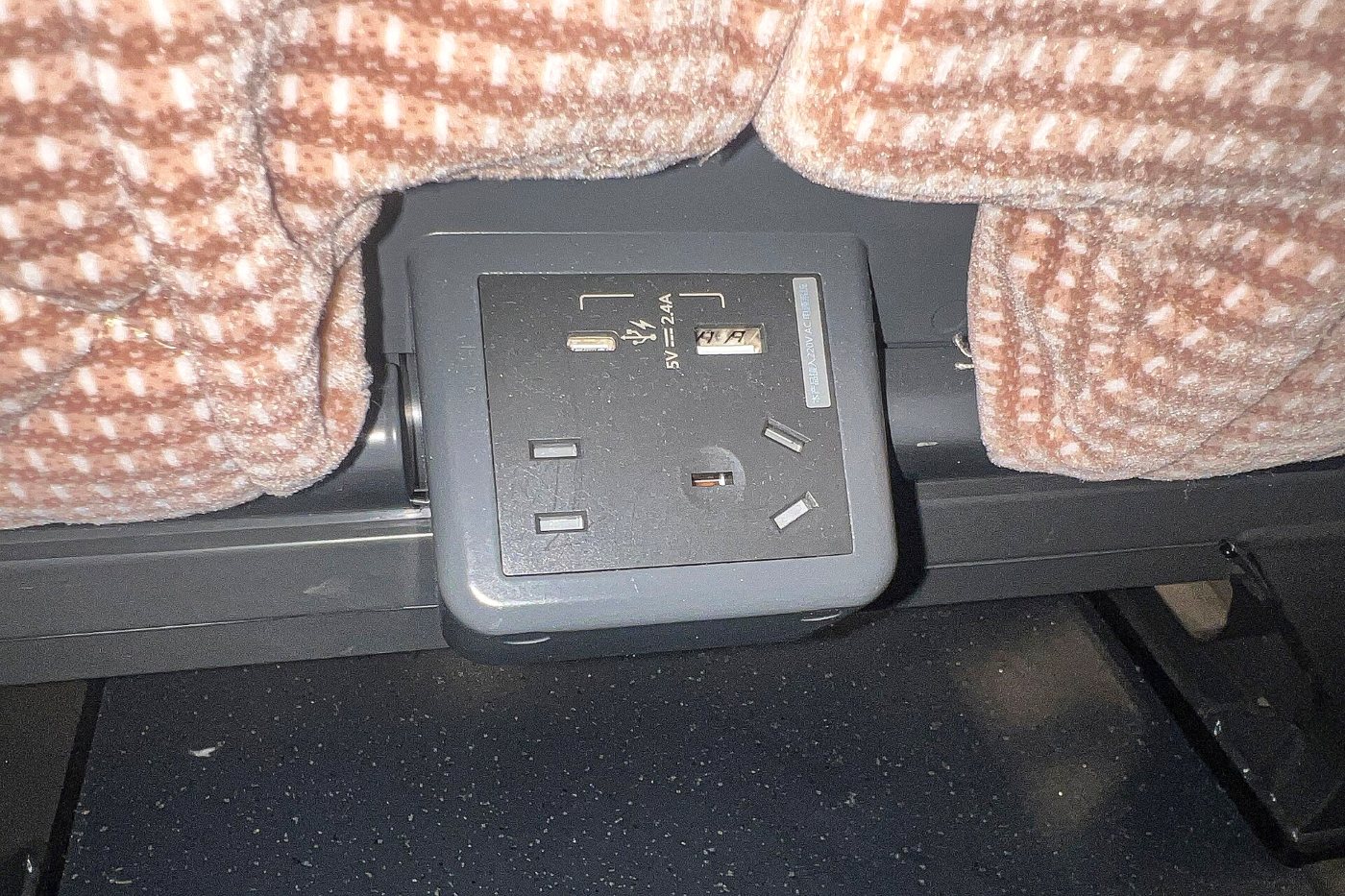
Plug adapter. China runs on 220 V, 50 Hz, with sockets that take two flat pins (type A, as in the US) or three angled pins (type I). UK plugs and European round-pin plugs don't fit – a European plug sometimes goes into an older socket, but don't count on it. US two-pin plugs fit type A sockets, but three-pin ones don't. Bring a China (type A/I) or universal adapter. Phone and laptop chargers work on 100–240 V, so you don't need a voltage converter; check anything else, such as a hair dryer from the US. Hotels and bullet trains also have USB sockets.
A power bank is a must in China, because your phone drains faster than at home: maps, translation and payments run all day. Three rules:
- Since 28 June 2025, power banks on domestic flights in China must carry a clearly visible Chinese 3C (CCC) mark. Without it, security will take it, and many power banks bought abroad don't have one (common mistakes in China). If yours doesn't, buy one in China or rent one from a machine via Alipay.
- Power banks go in your hand luggage only, never in checked bags, and you can't use them on board.
- Up to 100 Wh (about 27,000 mAh) you can carry freely, 100–160 Wh only with the airline's approval, and above 160 Wh not at all.
In Chinese转换插头 (zhuǎnhuàn chātóu) is a plug adapter and 充电宝 (chōngdiànbǎo) a power bank. If you forget your adapter, ask at hotel reception: 有转换插头吗? (yǒu zhuǎnhuàn chātóu ma?), "do you have an adapter?" Many hotels lend them.
Money: cards and cash
Day to day, you pay by phone, with Alipay or WeChat Pay linked to a foreign card (how to pay in China). Bring:
- a card with low foreign transaction fees (such as Revolut or Wise) as your main card, and a backup card from another bank in case the first is declined;
- a little cash – a few hundred yuan for emergencies: a flat phone, no signal, a small village.
You don't need to bring any particular currency. Chinese banks such as Bank of China exchange the major ones, including US dollars, euros and pounds, but the easiest option is to withdraw yuan from an ATM. At Bank of China ATMs a single withdrawal with a foreign card is limited to ¥3,000 (about 1748 PLN), and the bank usually charges a fee. If the ATM offers to convert the amount into your home currency, decline and withdraw in yuan (CNY) – the ATM's rate is worse.
NoteWhen entering China you must declare foreign currency worth more than US$5,000, or more than ¥20,000 (about 11654 PLN) in yuan. Your home country may have its own rules, for example from €10,000 in the EU and £10,000 in the UK. For a holiday you won't need that much.
Clothes for the season
China is so big that in the same week it can be −20°C in Harbin and +25°C in Sanya. Pack for the region and the season (best time to visit China):
| When | What to pack |
|---|---|
| Spring (March–May) | layers, a light rain jacket, a jumper for cool evenings |
| Summer (June–August) | light, breathable clothes, a hat, sunscreen, an umbrella or poncho, a thin jumper for air-conditioned trains and metros |
| Autumn (September–November) | layers, a jumper, a jacket for the evening – in the north, November is already wintry |
| Winter in the north (Beijing, Xi'an) | a warm coat, hat, gloves and scarf; for Harbin, proper cold-weather gear (what to wear at −20°C) |
| Winter in the south (Guangzhou, Hong Kong, Xiamen) | a jumper and a light jacket; swimwear for Sanya |
| Mountains all year (Zhangjiajie, Emei, Yunnan) | a warm layer and a poncho – it's cool and often wet on the peaks |
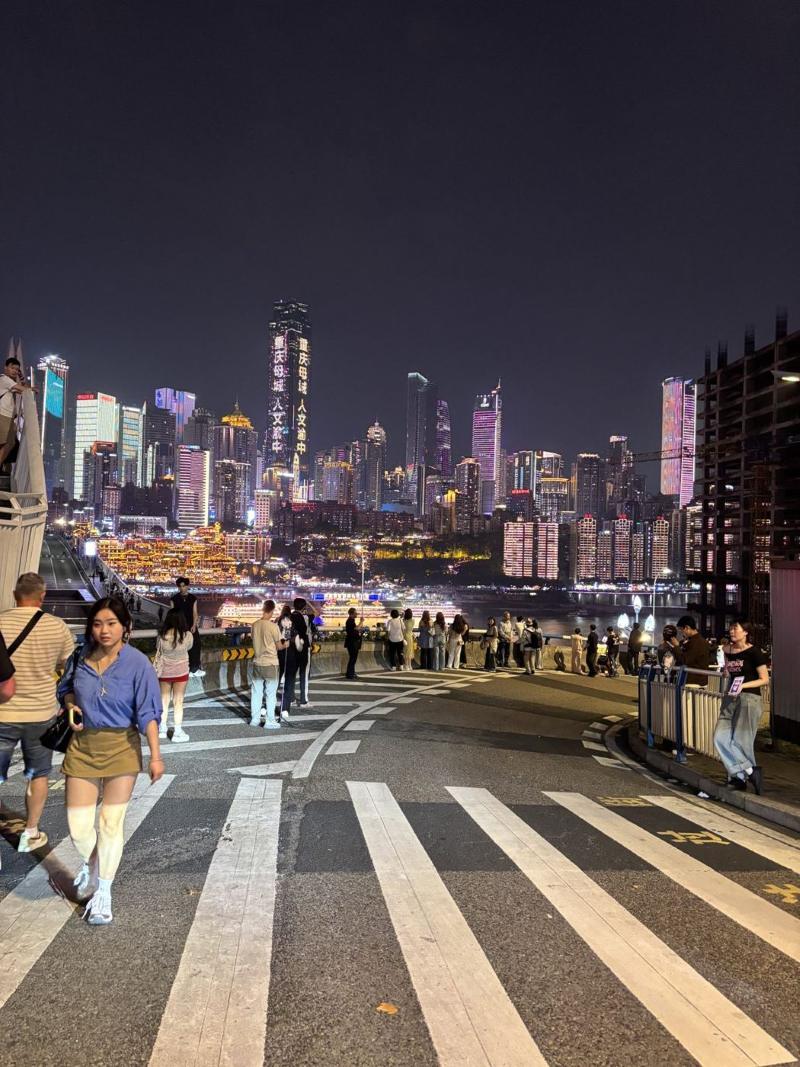
Most important of all: comfortable, broken-in shoes. On the Great Wall, in the Forbidden City and on Chongqing's endless stairs you can easily walk 20,000–30,000 steps a day. Dress modestly for temples, with your shoulders covered (etiquette in China). If you plan to use a hotel pool, bring a swim cap: many Chinese pools require one.
First aid and medicines
- Your regular medicines for the whole trip, in their original packaging, in your hand luggage. For prescription medicines, bring the prescription or a doctor's letter in English. You may not find your medicine in a Chinese pharmacy, and the leaflets are in Chinese.
- Be careful with medicines containing codeine or pseudoephedrine (found in many cold and flu remedies) and with strong painkillers, sleeping pills and ADHD medication. China controls these substances strictly: bring only what you need, with documentation from your doctor, and if in doubt, check with the Chinese embassy.
- For your stomach: charcoal tablets, rehydration salts and something for diarrhoea – the food, especially in Sichuan and Chongqing, is spicy and oily.
- Painkillers and fever reducers, blister plasters, insect repellent (in summer in the south) and motion sickness tablets for winding mountain roads.
- Sunscreen and sunglasses, especially in the mountains of Yunnan and on the beach.
Toiletries and small things
- Tissues and wet wipes – public toilets often have no paper.
- Hand sanitiser.
- Toothbrush and toothpaste – hotels in Shanghai, Shenzhen and some other cities no longer put out free disposable toiletries. You can ask at reception, but it's easier to bring your own.
- A water bottle or flask – don't drink tap water, but stations and trains have free hot water dispensers (开水), and hotel rooms have kettles.
- Tampons and your usual deodorant – you can buy them in big cities, but the choice is smaller than at home.
- A small daypack for your phone, power bank, water and tissues.
- Gifts, if you're visiting someone: small souvenirs from home. What not to give: etiquette in China.
What not to bring to China
- Meat and meat products (sausages, jerky, pâté), dairy (cheese, butter, milk) and fresh fruit and vegetables – China bans them in luggage, and customs will confiscate them.
- Lighters and matches on planes – banned on flights in China, in both hand and checked luggage. Throw them away before security; hiding one can get you fined.
- A power bank in checked luggage, or one without the 3C mark on domestic flights.
- A penknife or pepper spray in your hand luggage – bags are screened not only at airports but at every railway station and metro station.
- Lots of cash – a few hundred yuan and a card are enough.
- Too many clothes – hotels have laundry services, and you can buy clothes and small things in China, often for less than at home.
Luggage: suitcase or backpack?
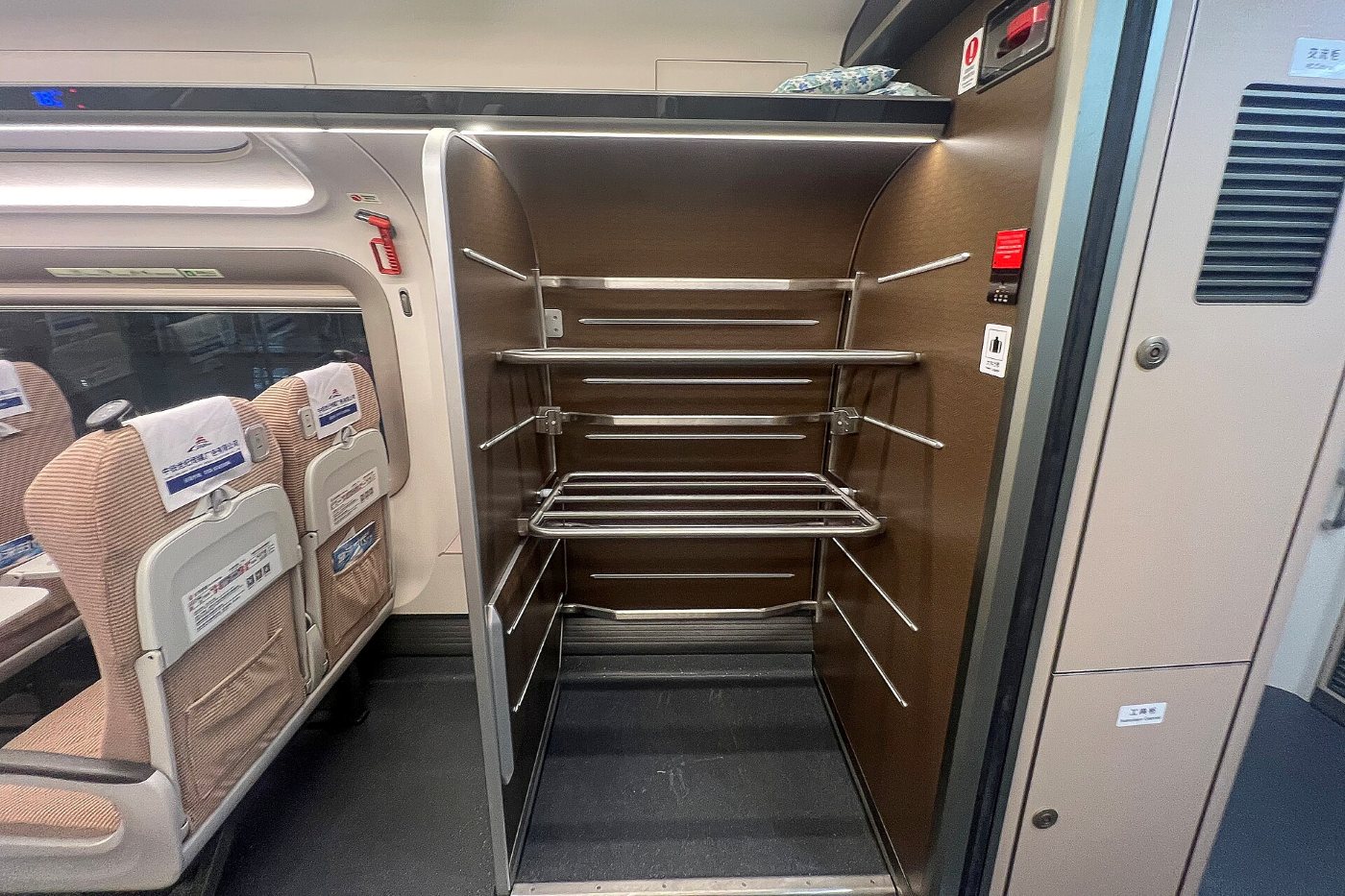
You'll mostly travel by bullet train, so the best combination is a medium suitcase or backpack plus a small daypack. Under the railway rules, adult passengers can bring up to 20 kg of luggage, and on bullet trains each item can measure up to 130 cm in total (length + width + height). Small cases fit on the rack above the seats, and there's space for bigger ones at the end of the carriage. Stations and metros have lifts and escalators, but in old towns and in the mountains you'll often carry your bag up steps.
Leave some space for shopping – tea, silk, porcelain. What's worth bringing home: what to buy in China.
Sort these out before you fly
Packing is only half of it. The other half is what you can't do once you're in China: an eSIM or VPN, Alipay with a card, a Trip.com account, train and attraction tickets booked in advance, and hotels that accept foreign guests. Start with internet in China, how to pay in China and hotels, trains and flights.
Frequently asked questions
What plug adapter do I need for China?
A type A/I or universal adapter. Chinese sockets take two flat pins (type A) or three angled pins (type I), at 220 V. UK and European plugs don't fit; US two-pin plugs fit type A sockets.
Should I bring US dollars or euros to China?
You don't need to. The easiest way to get yuan is from an ATM with your card (at Bank of China, up to ¥3,000 (about 1748 PLN) per withdrawal), and Chinese banks exchange all major currencies. Day to day, you'll pay by phone with Alipay or WeChat Pay anyway.
How much cash should I bring to China?
A few hundred yuan for emergencies, plus a card. Foreign currency worth more than US$5,000 has to be declared when you enter China.
Can I bring a power bank to China?
Yes, but only in your hand luggage. On domestic flights in China it must have a clearly visible 3C mark, and up to 100 Wh you don't need the airline's approval. You can't use it on board.
Can I bring food into China?
Meat and meat products, dairy (including cheese and butter) and fresh fruit and vegetables are banned. Sealed sweets and snacks are usually fine, but Chinese food is cheaper and more interesting anyway.
What medicines should I take to China?
Your regular medicines for the whole trip, in their original packaging and with a prescription, plus stomach remedies, painkillers, blister plasters and sunscreen. Medicines with codeine or pseudoephedrine and strong sleeping pills or painkillers are tightly controlled in China, so bring them only for personal use, with documentation from your doctor.
What should I pack for a China tour?
The same as for independent travel: passport, a phone with data and the apps, a plug adapter, a 3C power bank, a card, comfortable shoes and layers. Even on a guided tour you'll pay by phone in your free time – without Alipay it's hard to buy anything.
Sources
- Rules: Xinhua: power banks without 3C banned on domestic flights from 28 June 2025 (in Chinese), China Daily: power bank rules (in Chinese), China News Service: lighter ban on flights (in Chinese)
- Bringing things into China: People's Daily: banned animal and plant products, customs Q&A (2024, in Chinese), SAFE: declaring foreign currency (in Chinese), Guangming Daily: declaring yuan (2026, in Chinese)
- Money and electricity: Bank of China: foreign card ATM withdrawal limit, Trip.com: plugs in China
- Luggage and hotels: Ministry of Transport: railway passenger rules (2023, in Chinese), The Paper: hotels without disposable toiletries (in Chinese)
- Medicines: Travel of China: bringing medicine to China (2026); packing lists from our itineraries (October 2026)
A packing list in every itinerary
Every one of our itineraries has a packing list tailored to the route – what you need for a cold Beijing winter is different from the mountains of Yunnan – plus address cards in Chinese for taxi drivers and the most useful phrases. See all our China itineraries.