Destinations and inspiration · 16 min read
Guangzhou in 2–3 days: Canton Tower, dim sum and the Pearl River
In short: Guangzhou (广州), historically known in the West as Canton, is southern China's capital – a city of 19 million less than an hour by train from Hong Kong. The highlights are Canton Tower, an evening cruise on the Pearl River, the Chen Clan Academy, colonial Shamian Island and the old lanes of Xiguan – and above all dim sum, because Guangzhou is the home of Cantonese cooking. 2–3 days is enough for the city. Many nationalities, including most EU citizens, can enter mainland China visa-free for 30 days until 31 December 2026, and the high-speed train from Hong Kong takes about 50 minutes. The best time to go is October to April – in winter it's about 19°C here.
What surprised us most in China was its diversity – of cultures and of food – and in Guangzhou you see it best at the table: a single dim sum breakfast means dozens of kinds of dumplings, buns and rice rolls you'll never find at home.
Correct as of 22 October 2026. Check ticket prices and opening hours before you travel. Amounts in yuan are converted at the National Bank of Poland rate into the currency you pick in the site menu.
Canton or Guangzhou?
Same city. Guangzhou (广州) is the Chinese name, and Canton is the old European one, from the Portuguese "Cantão" – the name of the whole Guangdong province. It also gives us the words "Cantonese" (the language and the food) and the name of the Canton Fair. On tickets, in apps and at stations you'll only see Guangzhou.
For over 2,000 years Guangzhou has been the port through which China traded with the world: ships of the Maritime Silk Road sailed from here, and between 1757 and 1842 it was the only Chinese port open to Europeans. Today it's one of China's largest cities, with a modern centre on the river but old neighbourhoods in Liwan and Yuexiu. Twice a year tens of thousands of buyers come for the Canton Fair.
What to see in Guangzhou: 10 places
1. Canton Tower
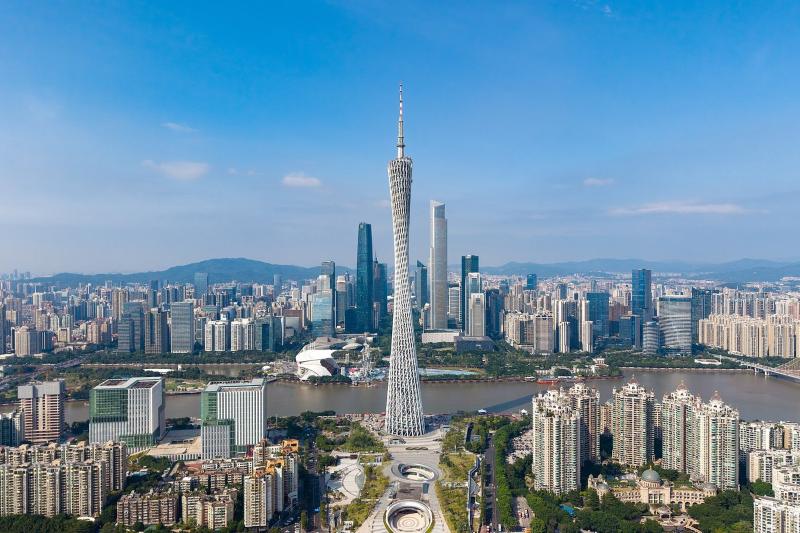
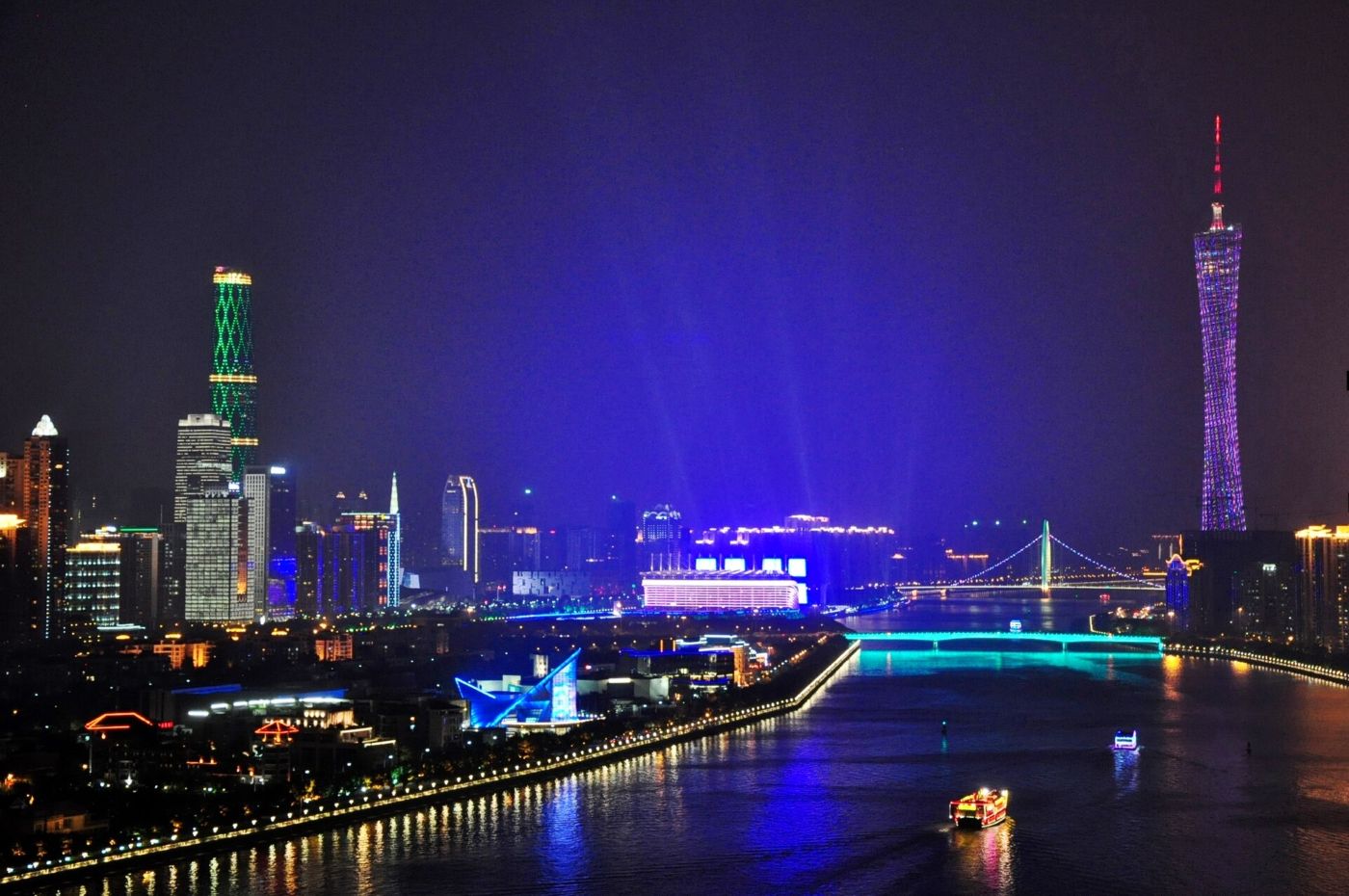
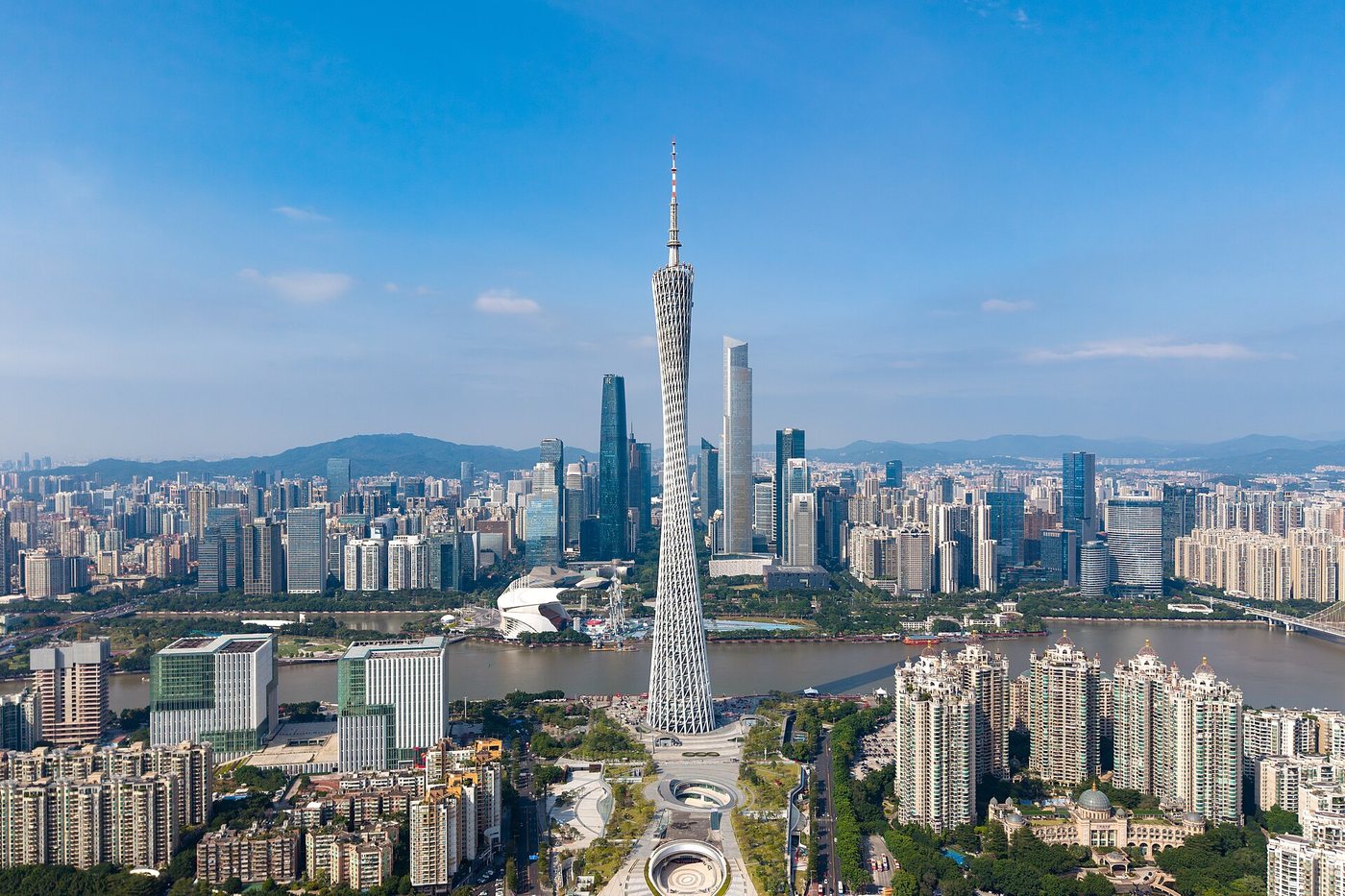
The 600-metre TV tower (广州塔) from 2010, pinched in the middle like an hourglass, is the city's symbol. Its observation decks are at 433, 450 and 488 metres, and right at the top runs the Bubble Tram – glass capsules that slowly circle the tower. Tickets cost about ¥150 (about 88 PLN) (433 m deck), ¥228 (about 134 PLN) (450 m), about ¥298 (about 175 PLN) with the Bubble Tram and about ¥328 (about 193 PLN)–¥398 (about 234 PLN) for the highest, open-air deck at 488 m. In the evening the tower glows with coloured LED lights – it looks best from below, from Huacheng Square across the river.
TipGo up an hour before sunset to see the city by day and by night. Buy tickets on Trip.com or on site (the ticket offices are by Canton Tower metro station, lines 3 and APM). On cloudy days the view from the top can be nothing at all – check the forecast.
2. A Pearl River night cruise
After dark the embankments, bridges and towers along the Pearl River (珠江) glow with thousands of lights, and the best view is from a boat. Cruises (珠江夜游) last about 1–1.5 hours and depart roughly between 18:30 and 22:30, most often from Tianzi Pier (天字码头, near Beijing Road) and Dashatou (大沙头). Tickets cost about ¥40 (about 24 PLN)–¥190 (about 112 PLN), depending on the boat, the deck and whether dinner is included. The longest routes go all the way to Canton Tower.
3. The Chen Clan Academy
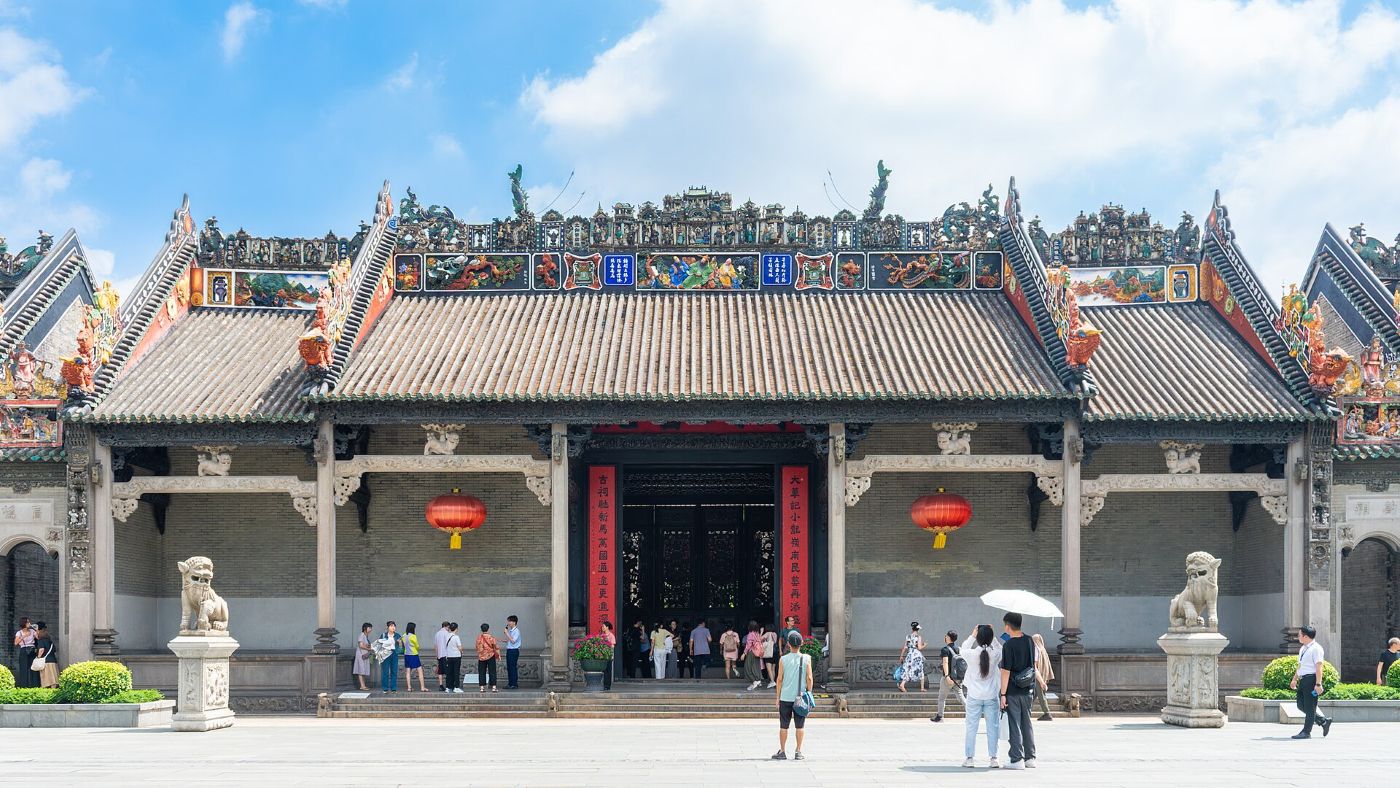
The Chen Clan Ancestral Hall (陈家祠), also called the Chen Clan Academy, was built in 1888–1894 by families named Chen from 72 counties of the province. Young Chens stayed here when they came to Guangzhou for the imperial exams. It's the most lavishly decorated building in the city: hundreds of ceramic figures stand on the roofs, and the walls, beams and doors are covered in wood, stone and brick carvings. Inside is the Guangdong Folk Art Museum. A ticket costs ¥10 (about 6 PLN), and a visit takes about an hour. Chen Clan Academy metro station (陈家祠站, lines 1 and 8) is right next to it.
4. Shamian Island
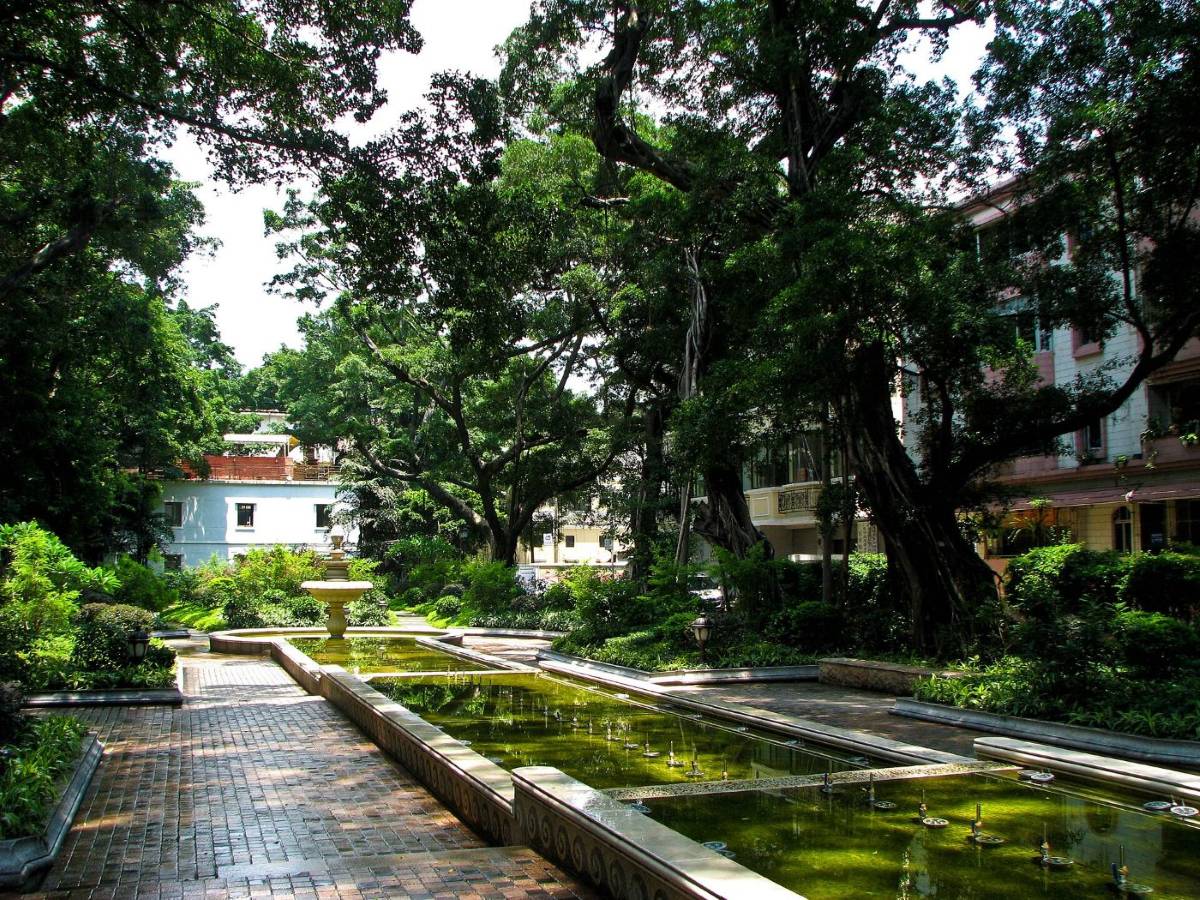
A small island in the river (沙面), split between the British and the French from 1859 until the 1940s. They left behind consulates, banks, villas and the little Our Lady of Lourdes Chapel, all shaded by huge banyan trees. There's almost no traffic, which makes it the nicest walk in Guangzhou – especially in the morning or towards evening. At weekends couples pose here for wedding photos. Entry is free, and the nearest metro station is Huangsha (黄沙, lines 1 and 6).
5. Old Guangzhou: Yongqing Fang, Enning Road and Shangxiajiu
In Liwan district, the old Xiguan (西关), you'll find qilou (骑楼) shophouses with arcades that shelter passers-by from the rain and sun. The prettiest are on Enning Road (恩宁路) and in the restored Yongqing Fang (永庆坊) lanes with cafés, craft workshops and Bruce Lee's ancestral home (李小龙祖居). A few minutes away begins Shangxiajiu (上下九步行街), a shopping street with over a kilometre of arcades, where you should try shuangpi nai (双皮奶), a steamed milk pudding.
6. The Sacred Heart Cathedral
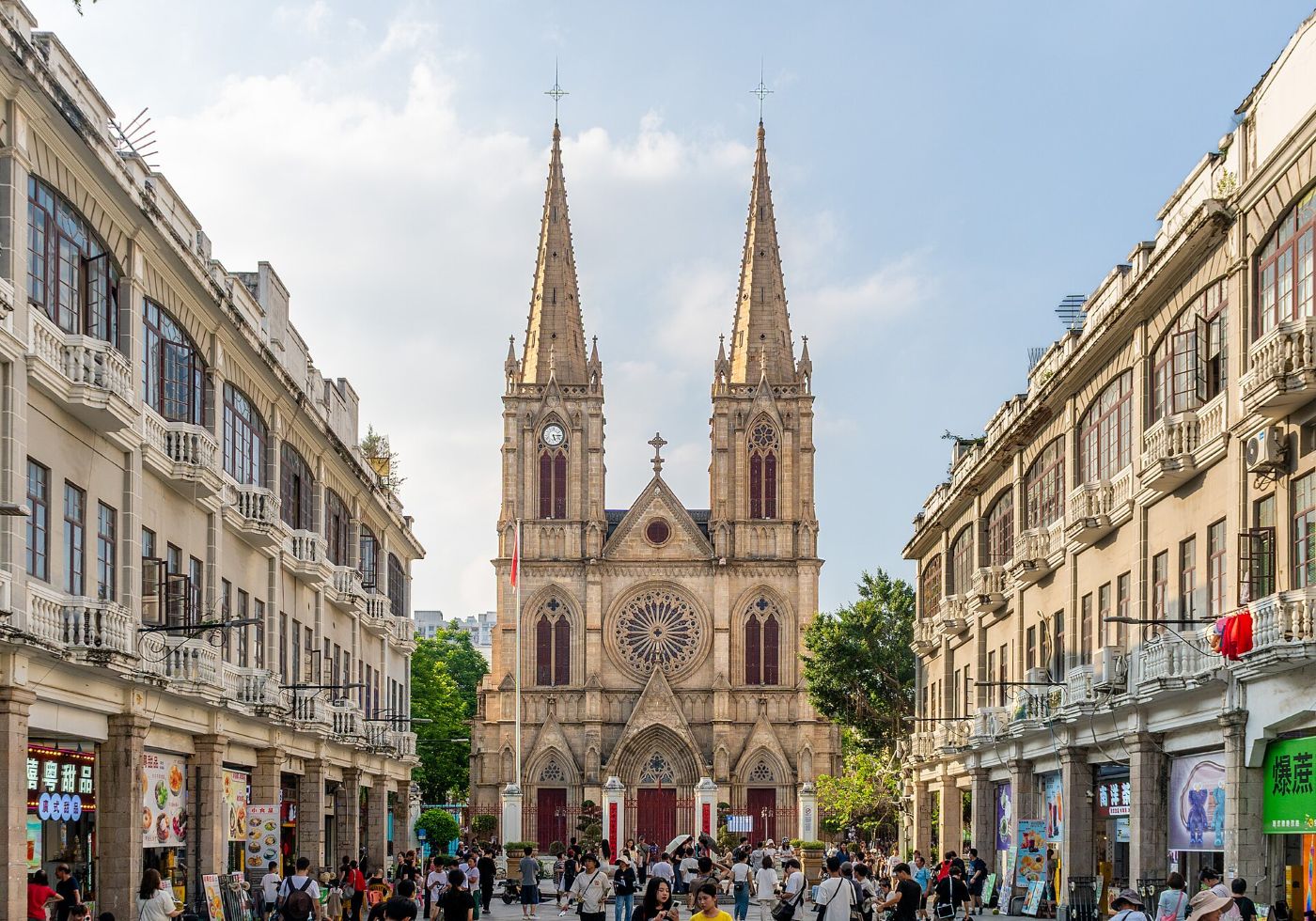
The neo-Gothic cathedral (石室圣心大教堂) from 1863–1888 looks as if it had been moved here from France – and French architects did design it. It's built entirely of granite, which is why locals call it the "Stone House" (石室), and its two towers are about 58 metres tall. Entry is free, but tourists aren't let in during Mass or outside opening hours. Around it lies Yide Road (一德路), a wholesale street of dried seafood, toys and Christmas decorations, and a few blocks away is the Beijing Road (北京路) pedestrian street, where you can see layers of the old road under glass – the oldest over a thousand years old.
7. Yuexiu Park and the Five Rams
The largest park in the centre (越秀公园), with lakes, hills and a stretch of the old city wall. Here stands the Five Rams Statue (五羊石像): legend says five immortals rode into Guangzhou on rams and brought rice that saved the city from famine – hence its nickname, the "City of Rams" (羊城). On the hill is the five-storey Zhenhai Tower (镇海楼) from 1380, home to the city history museum (separate ticket). The park is free and open from 6:00 to 22:00.
8. The Nanyue King Museum
In 1983, workers digging foundations for a hotel found the intact tomb of Zhao Mo, the second king of Nanyue, who died around 122 BC. Its greatest treasure is his burial suit made of 2,291 jade plates sewn together with silk thread. The museum (南越王博物院) was built over the tomb, and you can walk down into the burial chambers. A ticket costs about ¥10 (about 6 PLN), and the museum is usually closed on Mondays. Entry to the excavated Nanyue palace site by Beijing Road is free.
9. Zhujiang New Town and Huacheng Square
Guangzhou's new centre (珠江新城) is glass towers around the wide, green Huacheng Square (花城广场), from which you can see Canton Tower lit up across the river in the evening. Around the square stand the opera house designed by Zaha Hadid (2010), the city library and the Guangdong Museum (广东省博物馆) – with porcelain, wood and ivory carvings and exhibitions on the province's history. Entry to the museum is free (bring your passport), and it's closed on Mondays. It's a good option for a hot or rainy day.
10. Baiyun Mountain
"White Cloud Mountain" (白云山) in the north of the city is green hills with viewpoints, gardens and temples – locals come here at weekends to escape the heat. Entry costs ¥5 (about 3 PLN). You can walk up (about 1.5 hours) or take the cable car (about ¥25 (about 15 PLN) up and ¥20 (about 12 PLN) down), and from the highest peak, Moxing Ridge (摩星岭), you can see the whole city. A taxi from the centre takes about 20–30 minutes.
Day trips from Guangzhou: Foshan, Shenzhen and Hong Kong
- Foshan (佛山): the neighbouring city, which has grown into one conurbation with Guangzhou. See the Zumiao ancestral temple (祖庙) with halls dedicated to the kung fu masters Ip Man and Wong Fei-hung, and lion dance shows. Take the Guangfo metro line (广佛线) or a high-speed train – about 30–60 minutes.
- Shenzhen: a tech city of 17 million on the Hong Kong border, with the huge Huaqiangbei electronics market. The high-speed train takes about 30–40 minutes (Guangzhou to Shenzhen by train).
- Hong Kong: about 50 minutes by high-speed train from Guangzhou South to West Kowloon – a different system, currency and entry rules (Hong Kong: what to see). From there you can continue to Macau, and from Guangzhou you can also fly to tropical Hainan Island (Sanya).
Tickets and prices
| Place | Price | How to buy |
|---|---|---|
| Canton Tower | about ¥150 (about 88 PLN)–¥398 (about 234 PLN) depending on the deck, with Bubble Tram about ¥298 (about 175 PLN) | Trip.com or on site |
| Pearl River cruise | about ¥40 (about 24 PLN)–¥190 (about 112 PLN) | Trip.com or at the pier |
| Chen Clan Academy | ¥10 (about 6 PLN) | on site |
| Nanyue King Museum | about ¥10 (about 6 PLN) | on site, usually closed on Mondays |
| Guangdong Museum | free (with passport) | closed on Mondays |
| Shamian, Yongqing Fang, the cathedral, Yuexiu Park | free | – |
| Baiyun Mountain | ¥5 (about 3 PLN) + cable car about ¥20 (about 12 PLN)–¥25 (about 15 PLN) one way | on site |
| Metro | about ¥2 (about 1 PLN)–¥8 (about 5 PLN) per ride (from the airport about ¥7 (about 4 PLN)–¥8 (about 5 PLN)) | Alipay or ticket machine |
TipOn the metro it's easiest to pay with Alipay's transit QR code, and for taxis use DiDi inside Alipay. How to set up payments before you fly: how to pay in China.
How many days in Guangzhou
- 1 day: dim sum in the morning, then the Chen Clan Academy, Shamian and the old lanes of Yongqing Fang, and a Pearl River cruise in the evening – as in our From the Avatar Mountains to Hong Kong itinerary, where Guangzhou is the stop between Yangshuo and Hong Kong.
- 2 days: add the cathedral, Beijing Road, Yuexiu Park or the Nanyue King Museum, and Canton Tower and Huacheng Square in the evening – as in our Dim Sum & Palm Trees itinerary, which starts in Guangzhou.
- 3 days: add Baiyun Mountain or a trip to Foshan.
What to eat in Guangzhou
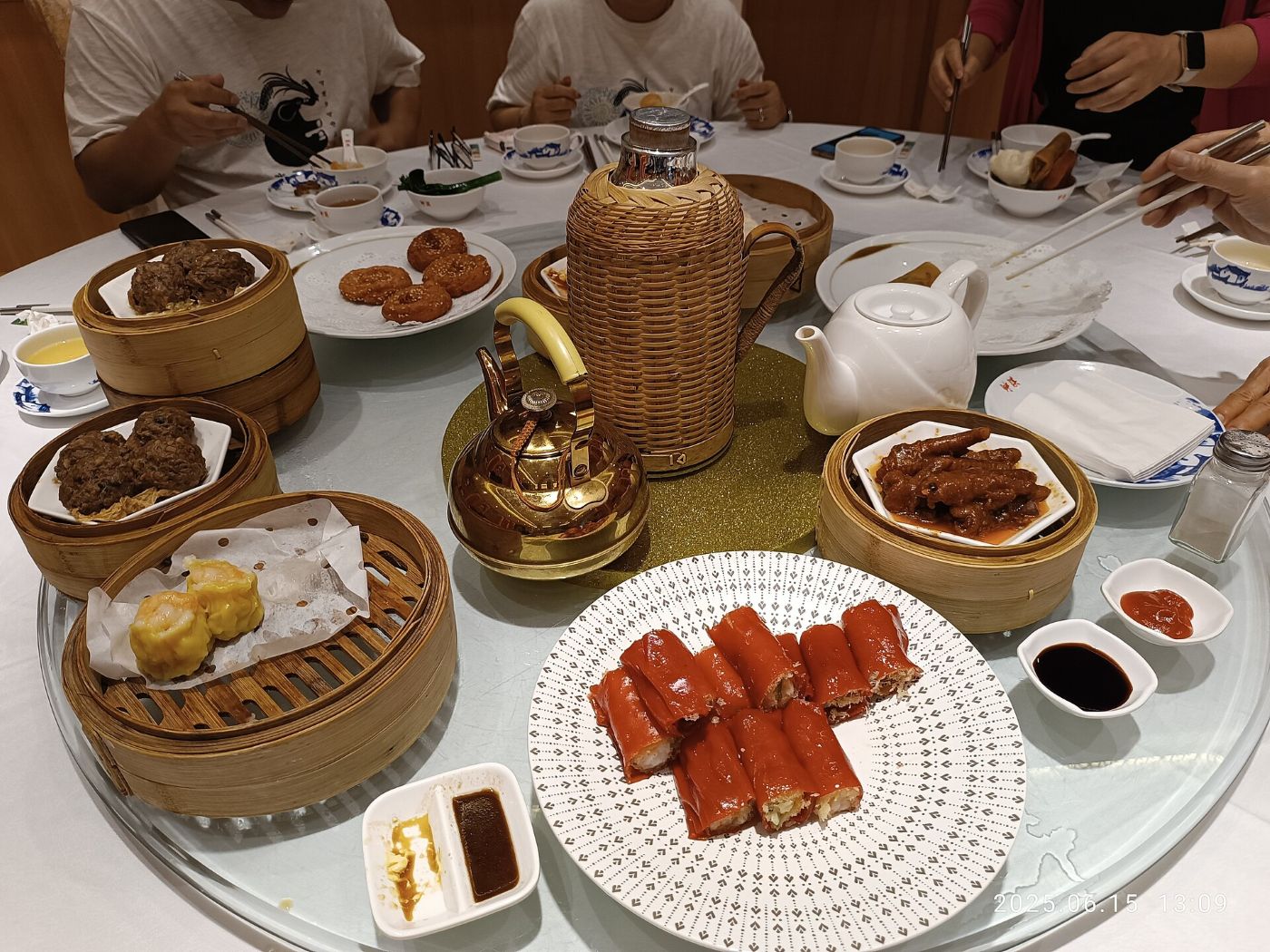
"To eat, go to Guangzhou" (食在广州), goes the Chinese saying. Cantonese cooking is all about freshness and gentle seasoning, and its heart is yum cha (饮茶): a morning get-together over tea and dim sum – small portions served in bamboo steamers. Dim sum usually costs about ¥60 (about 35 PLN)–¥150 (about 88 PLN) per person.
- Where to go for dim sum: the classic restaurants Taotaoju (陶陶居), Guangzhou Restaurant (广州酒家) and Panxi (泮溪酒家, with a garden and pond in Liwan), or the cheaper Diandude (点都德) chain. At weekends there are queues in the morning – arrive before 9:00 or take a number.
- What to order: har gow shrimp dumplings (虾饺), siu mai (烧卖), char siu bao buns (叉烧包), cheung fun rice rolls (肠粉), chicken feet in black bean sauce and egg tarts.
- Beyond dim sum: char siu pork (叉烧) in a sweet glaze, roast goose (烧鹅), wonton noodles (云吞面), "sampan" congee (艇仔粥) for breakfast and shuangpi nai (双皮奶) for dessert.
TipDim sum restaurants add a tea charge (茶位费) to the bill, usually a few to a dozen or so yuan per person. When someone tops up your tea, say thanks by tapping two fingers on the table.
More on Cantonese food in Chinese food doesn't exist – a map of China's flavours.
Getting there and getting around
- By air: Baiyun Airport (CAN) is about 30 km north of the centre. China Southern flies here non-stop from several European cities, and from most of Europe you'll fly with one connection (flights to China). Metro line 3 gets you to the centre in about 40–50 minutes (to Tiyu Xilu, about ¥7 (about 4 PLN)–¥8 (about 5 PLN)), or take a taxi or DiDi – about 45 minutes and ¥100 (about 59 PLN)–¥150 (about 88 PLN).
- By train: high-speed trains mostly arrive at Guangzhou South (广州南站) in the south of the city – from Hong Kong (West Kowloon) in about 50 minutes, from Shenzhen in about 30 minutes and from Guilin and Yangshuo in 2–3 hours (Guilin to Guangzhou by train). Guangzhou East (广州东站) is closer to the centre. Book tickets on Trip.com with your passport (hotels, trains and flights).
- Getting around: the metro has more than a dozen lines and reaches every place on this list. Signs and announcements are in English too. Taxis and DiDi are cheap, but have your address in Chinese.
Where to stay in Guangzhou
- Tianhe and Zhujiang New Town (天河 · 珠江新城): the modern district with skyscrapers, malls and views of Canton Tower, on metro lines 3 and 5. The most convenient if Guangzhou is a stop before Hong Kong.
- Yuexiu (越秀), around Beijing Road and Tianzi Pier: the historic centre, close to the cathedral, Yuexiu Park and the river cruises.
- Liwan and Shamian (荔湾 · 沙面): the most atmosphere – the colonial island, old lanes and the best dim sum around.
Hotels are cheaper than in Beijing and Shanghai: budget hotels usually cost about ¥200 (about 118 PLN)–¥350 (about 206 PLN) a night and mid-range ones about ¥400 (about 235 PLN)–¥800 (about 471 PLN). The exception is Canton Fair season (mid-April to early May and mid-October to early November): prices can multiply and rooms sell out weeks in advance. More: Canton Fair.
Guangzhou weather and when to go
Guangzhou lies just below the Tropic of Cancer: winters are mild, and summers are long, hot and humid.
| Month | Day / night | What it's like |
|---|---|---|
| January | 19°C / 11°C | dry and sunny, occasional cool days |
| April | 26°C / 20°C | warm, more and more rain |
| July | 33°C / 26°C | hot, downpours, possible typhoons |
| October | 29°C / 21°C | warm and dry, the best time |
The best time to go is October to April. The rainy season runs from April to September, and typhoons can hit from May to November (most often July to September) – cruises stop, and sometimes flights and trains too. Avoid 1–7 October and Chinese New Year, when the whole country travels, and if you're not going to the Canton Fair, check its dates too. More: When is the best time to visit China?
Guangzhou in our itineraries
| Itinerary | Days | Route |
|---|---|---|
| Dim Sum & Palm Trees | 11 | Guangzhou → Shenzhen → Hong Kong → Macau → Sanya |
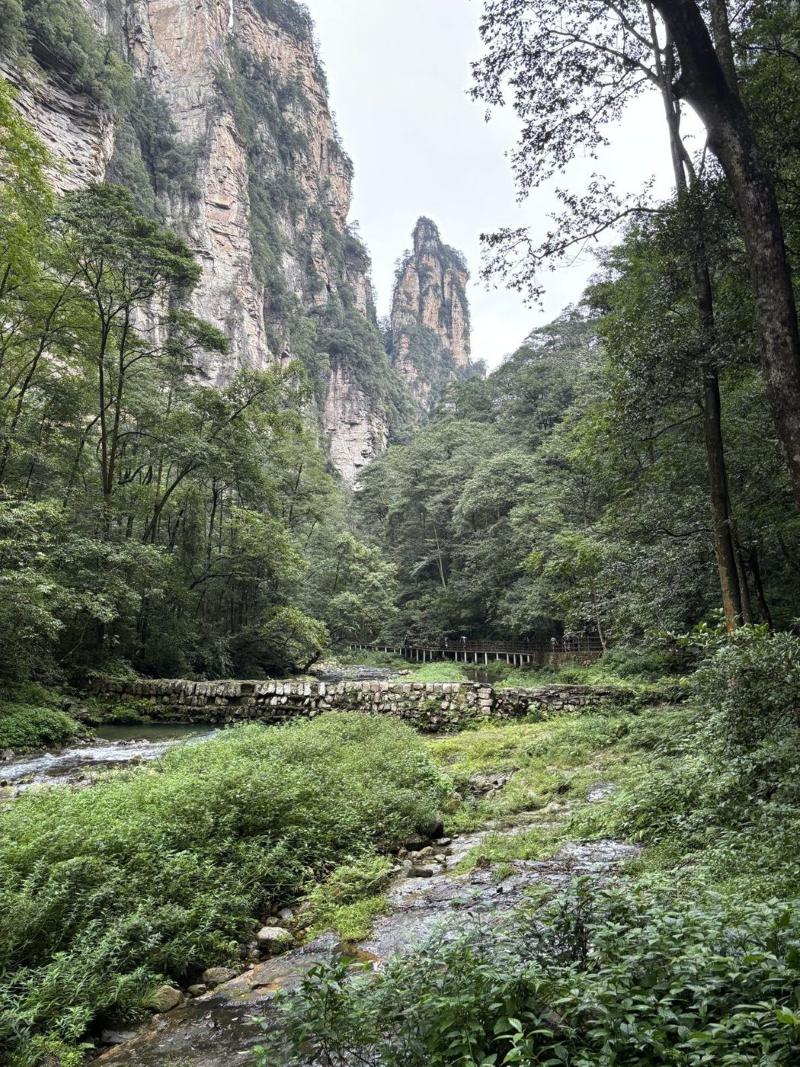
| From the Avatar Mountains to Hong Kong | 13 | Chongqing → Zhangjiajie → Guilin → Guangzhou → Hong Kong |
Dim Sum & Palm Trees starts in Guangzhou: a day to arrive and have your first dim sum, a day for Canton Tower, the Chen Clan Academy, Shamian and the river cruise, and a train to Shenzhen on day three. In From the Avatar Mountains to Hong Kong you arrive in Guangzhou by train from Yangshuo and have a full day in the city before Hong Kong. Both include step-by-step transfers, prices and addresses in Chinese.
Frequently asked questions
Are Canton and Guangzhou the same city?
Yes. Guangzhou (广州) is the Chinese name, and Canton is the old European one, taken from the name of Guangdong province. On plane and train tickets, on Trip.com and in apps you'll only see Guangzhou, and the airport code is CAN.
Do I need a visa for Guangzhou?
Not if your country is on China's visa-free list – most EU countries, including Poland, can stay 30 days without a visa until 31 December 2026. If you're flying on to a third country, you can also use the 240-hour visa-free transit. Note: going to Hong Kong ends your stay in mainland China, and coming back counts as a new entry (China visa-free).
How many days do you need for Guangzhou?
Two days are enough for Canton Tower, the river cruise, the Chen Clan Academy, Shamian, the old lanes and dim sum. With Baiyun Mountain or a trip to Foshan, plan three days.
What's the weather like in Guangzhou?
Mild in winter (in January about 19°C by day and 11°C at night), hot and humid in summer (about 33°C in July) with downpours and possible typhoons. It's most pleasant from October to April.
How do I get from Hong Kong to Guangzhou?
The fastest way is the high-speed train from West Kowloon to Guangzhou South – about 50 minutes. Border control is at the station in Hong Kong. Cheaper but slower: cross at Lok Ma Chau / Futian into Shenzhen and take a train from there (Shenzhen to Hong Kong by train).
How much does Canton Tower cost?
From about ¥150 (about 88 PLN) for the 433 m deck to about ¥328 (about 193 PLN)–¥398 (about 234 PLN) for the highest, open-air deck at 488 m. The Bubble Tram comes in a package for about ¥298 (about 175 PLN). Prices depend on the day and the package, so check Trip.com before you go.
Do people speak Cantonese in Guangzhou?
Yes, locals speak Cantonese, but everyone understands and speaks Mandarin, and signs use simplified characters as in the rest of mainland China. Few people speak English – a translation app on your phone helps (internet in China).
Sources
- Chinatravel: Canton Tower – decks and ticket prices and China Xian Tour: Pearl River cruise
- eTrip China: Chen Clan Academy – tickets and hours and eTrip China: Nanyue King Museum
- Guangzhou city government: Guangdong Museum and Wander in China: Baiyun Mountain (2026)
- Wander in China: Hong Kong to Guangzhou by train and Trip.com: Guangzhou attractions
- Wikipedia: Canton Tower, Shamian, Sacred Heart Cathedral and Museum of the Mausoleum of the Nanyue King
- Our Dim Sum & Palm Trees and From the Avatar Mountains to Hong Kong itineraries (as of October 2026); average temperatures from When is the best time to visit China?; photos from Wikimedia Commons (authors and licences in the captions)
Guangzhou in a ready-made itinerary
Our itineraries plan Guangzhou hour by hour: the airport transfer step by step, dim sum restaurants, Canton Tower, the Pearl River cruise, ticket prices and addresses in Chinese for the taxi driver. Dim Sum & Palm Trees links Guangzhou, Hong Kong, Macau and the beaches of Sanya, and From the Avatar Mountains to Hong Kong brings you to Guangzhou after the Zhangjiajie mountains and the Li River. Going to the Canton Fair and want to stay a few days longer? We'll build you a custom plan.