Destinations and inspiration · 16 min read
Xiamen travel guide: Gulangyu Island, Nanputuo Temple and the Fujian tulou
In short: Xiamen (厦门, historically Amoy) is a city of 5.4 million in Fujian province, on the Taiwan Strait, with mild winters, palm trees and long seafront promenades. The highlight is Gulangyu Island – car-free, lined with villas from its days as an international settlement and a UNESCO World Heritage Site – followed by Nanputuo Temple, the Xiamen University campus, Zhongshan Road and the seaside Huandao Road. 2–3 days is enough for the city; add a fourth for the round earthen tulou houses, also on the UNESCO list. You need to book the Gulangyu ferry, the temple and the university online in advance. Many nationalities, including most EU citizens, can enter mainland China visa-free for 30 days until 31 December 2026. The best time to go is October to December.
What surprised us most in China was how clean it is, and Xiamen is one of the best-kept cities we've seen there: swept promenades, neatly trimmed palms and litter-free beaches, even with thousands of people strolling along them every day.
Correct as of 22 October 2026. Check ticket prices, opening hours and booking rules before you go. Amounts in yuan are converted at the National Bank of Poland rate into the currency you pick in the site menu.
Xiamen at a glance
| Question | Answer |
|---|---|
| Where? | Fujian province on China's south-east coast, facing Taiwan; the city centre is on Xiamen Island |
| How many days? | 2–3 for the city, 4 with a day trip to the tulou |
| Highlights | Gulangyu, Nanputuo Temple, Xiamen University, Zhongshan Road, Huandao Road |
| Gulangyu ferry | ¥35 (about 20 PLN) return, booked online with your passport up to 15 days ahead |
| Weather | about 18°C by day in January, about 33°C in July; typhoons possible in summer |
| Best time | October to December |
| Getting there | non-stop from Amsterdam, Paris and London; from Hong Kong by bullet train from about 3.5 hours, from Shanghai from about 5 hours |
| Airport | Gaoqi (XMN), about 10 km from the centre; due to be replaced by the new Xiang'an airport at the end of 2026 |
Gulangyu: the island of villas and pianos
Gulangyu (鼓浪屿) is an islet of less than 2 km², a few hundred metres off central Xiamen. From 1903 it was an international settlement: consulates, banks, missionaries and wealthy Chinese returning from South-East Asia built villas, churches and schools here in styles from all over the world, and since 2017 it has been a UNESCO World Heritage Site as "Kulangsu, a Historic International Settlement". There are no cars, so you explore on foot, up and down narrow lanes. Thanks to its musical tradition, the Chinese call it the island of pianos.
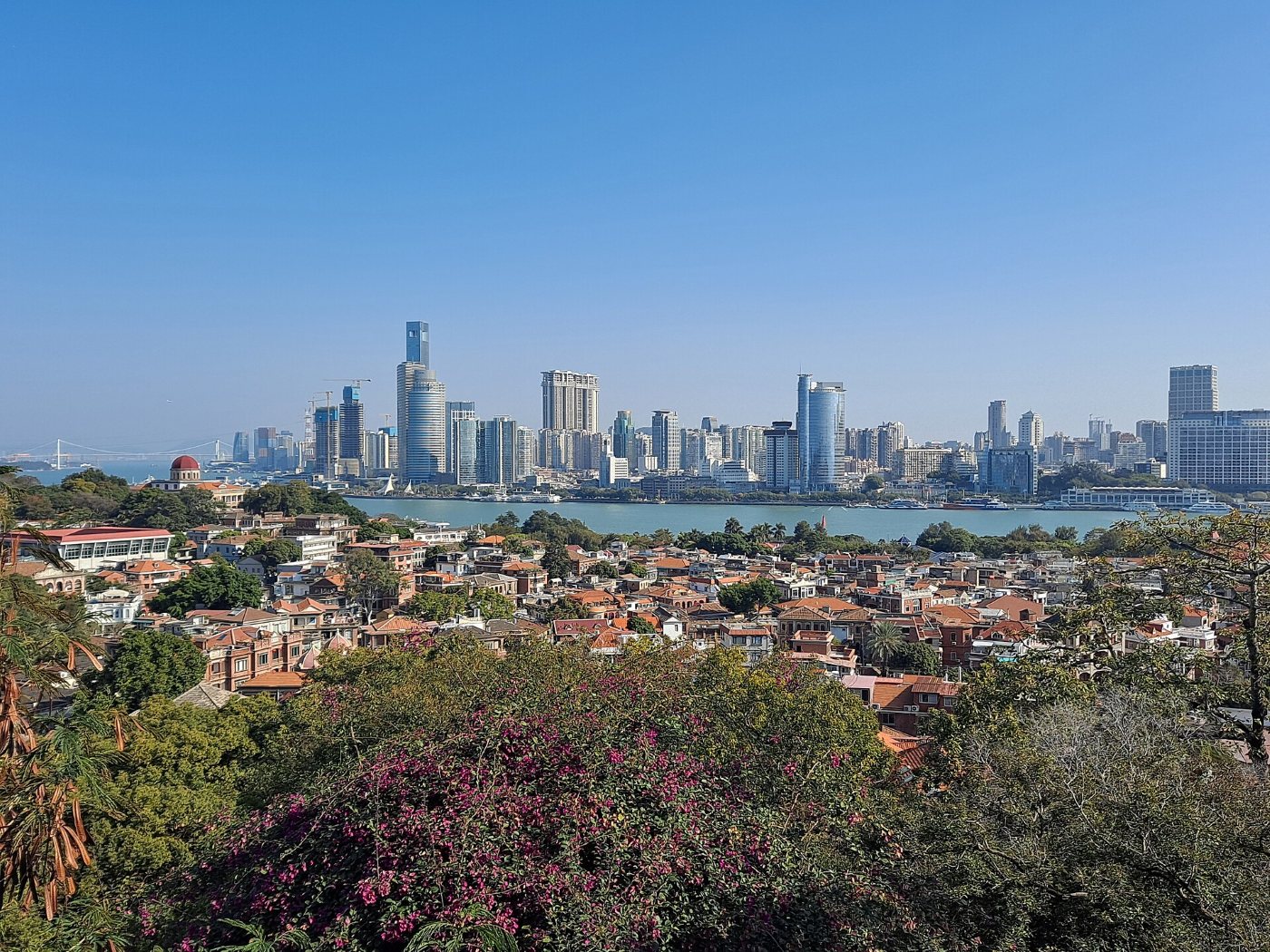
- Sunlight Rock (日光岩): the highest point on the island, about 93 m above sea level. From the top you see Gulangyu's red roofs and Xiamen's skyscrapers across the strait – the view in the photo at the top of this page. A ticket costs about ¥50 (about 29 PLN). In peak season the narrow steps to the top get crowded, so go early.
- Shuzhuang Garden (菽庄花园): a seaside garden built in 1913 by a wealthy merchant from Taiwan, with zigzag bridges over the water, rockeries and the Piano Museum. About ¥30 (about 17 PLN).
- Organ Museum (风琴博物馆) in the grand, red-domed Bagualou (八卦楼) – about ¥20 (about 12 PLN)–¥30 (about 17 PLN).
- A walk around the island: former consulates, Trinity Church (三一堂), the villas along Fujian Road and Huangyan Road, and finally Longtou Road (龙头路) with its shops and snacks. Landing on the island is free – you only pay for the ferry and for the gardens and museums you choose.
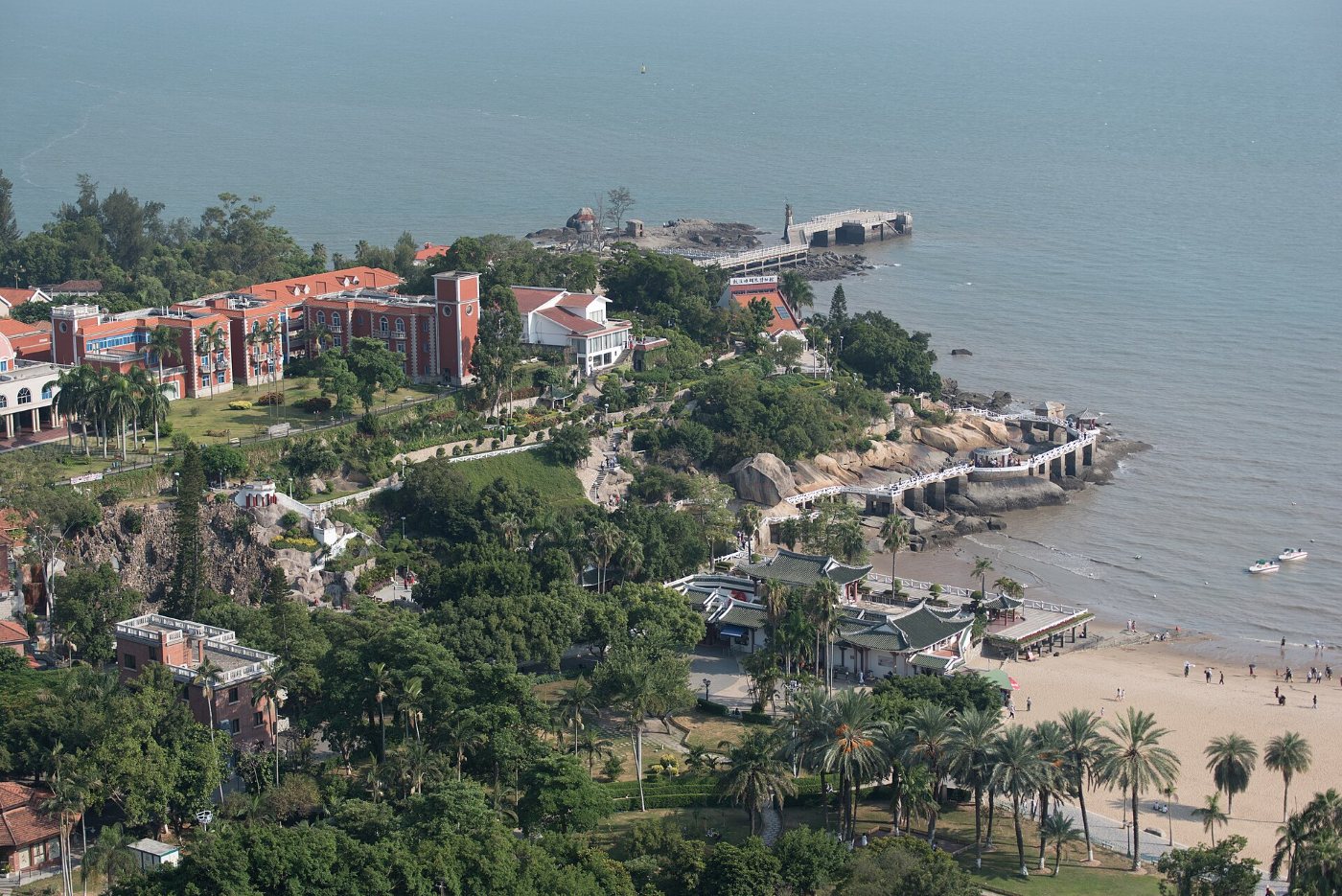
The ferry. There's no bridge to Gulangyu, so you take a ferry. The ¥35 (about 20 PLN) ticket covers both ways: you can come back any time within 20 days, day or night, as ferries leave the island around the clock. By day, visitors sail from the Dongdu terminal (东渡邮轮中心厦鼓码头) to Sanqiutian or Neicuo'ao pier; in the evening and at night, from the ferry terminal at the end of Zhongshan Road (厦门轮渡码头). Tickets are in your name: you book with your passport, which then works as your ticket at the gate. Book in the 屿见厦门 mini-program in WeChat or Alipay (up to 15 days ahead, with new tickets released daily at 9 am) or through an agent such as Klook. The island lets in at most 50,000 people a day, so tickets sell out fast at weekends, in school holidays and on public holidays.
TipArrive at the terminal 45–60 minutes before your sailing: check-in opens 20 minutes before departure and closes 5 minutes before. Cross as early as you can in the morning and come back in the evening – after sunset, when the tour groups have left, Gulangyu goes quiet.
What to see in Xiamen: 6 places
1. Nanputuo Temple
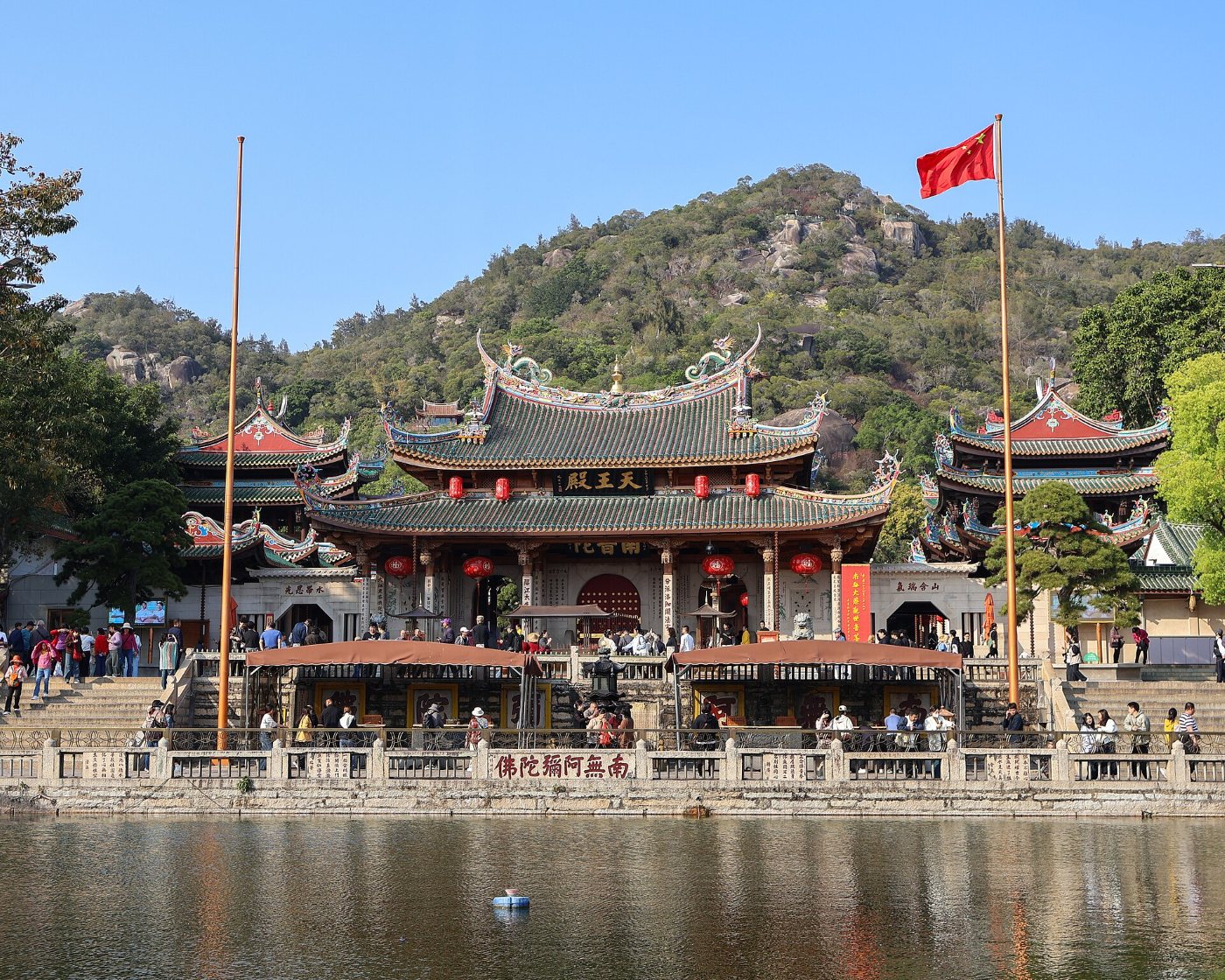
Nanputuo Temple (南普陀寺) dates back to the Tang dynasty (7th–10th centuries) and sits at the foot of the Wulao hills (五老峰), right next to Xiamen University. In front of the first hall there's a lotus pond, and beyond it pavilions with carved roofs, full of locals burning incense. Entry is free, but you need a timed booking in your name in the "南普陀寺预约服务平台" WeChat mini-program. The temple is open roughly 8 am to 6 pm. Paths behind it climb the hills, with views over the campus and the sea. A popular souvenir is the temple's vegetarian pastries (素饼).
2. Xiamen University
Xiamen University (厦门大学) was founded in 1921 by Tan Kah Kee (陈嘉庚), a Singapore businessman born in Xiamen. Its seaside campus is often called one of the most beautiful in China: pale granite buildings with red Chinese roofs, Furong Lake (芙蓉湖) and the Furong Tunnel, its walls covered in student graffiti. Visitors can only get in with a booking, and places are allocated by lottery: you apply through the "厦门大学访客预约系统" WeChat account, and results for the next 3 days are published daily at 4 pm. There are about 2,000 places on weekdays and about 8,000 at weekends. With a passport, you're checked in at the staffed desk in the visitor centre (访客中心) rather than at the automatic gates.
3. Zhongshan Road and the old town
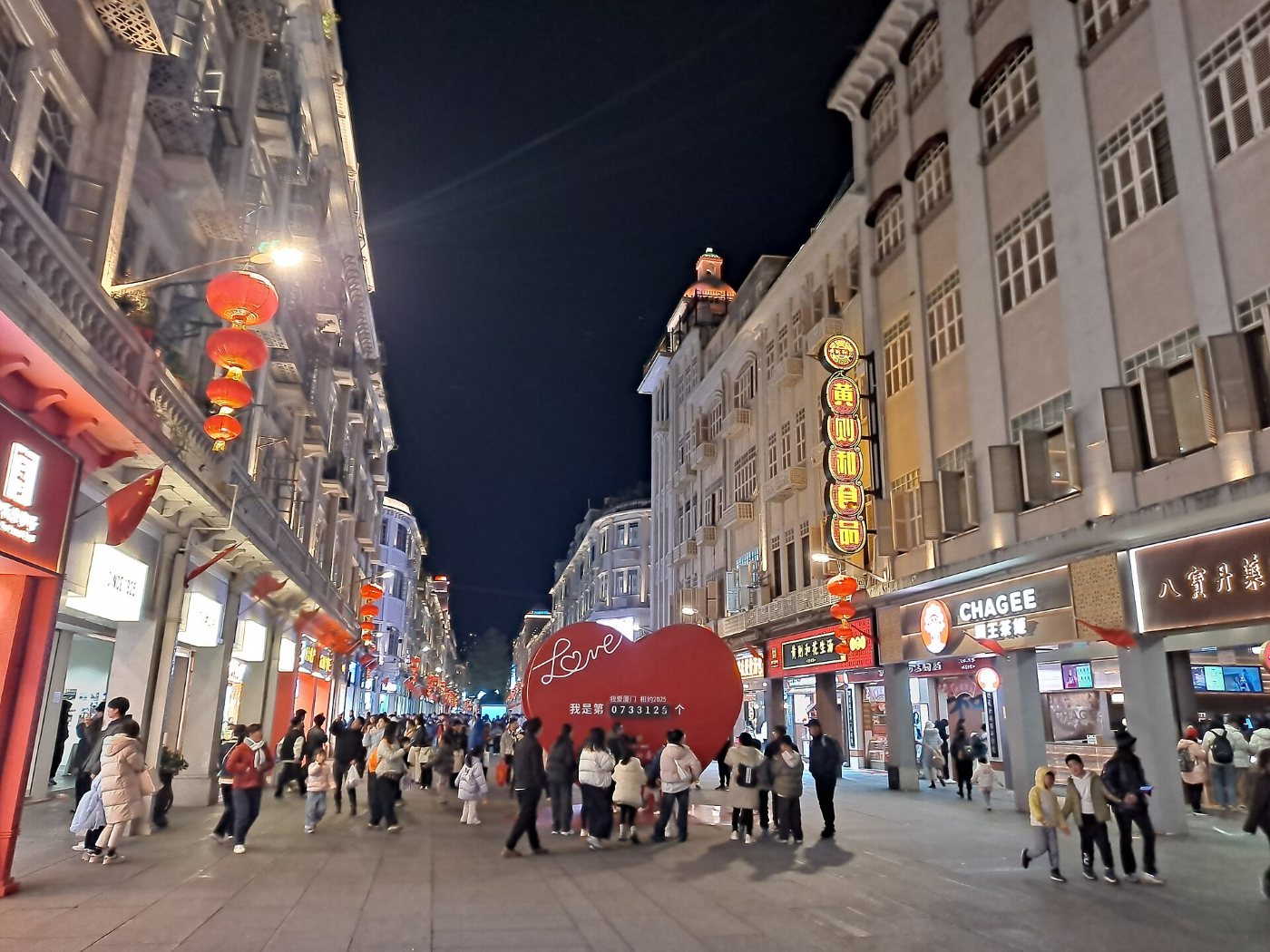
Zhongshan Road (中山路) is Xiamen's oldest shopping street, lined with arcaded buildings (骑楼, qilou) from the first half of the 20th century. In the evening the facades are lit up, and the street runs straight down to the waterfront and the ferry terminal for Gulangyu. Along it you'll find Huang Zehe (黄则和), serving peanut soup since the 1940s, and a few blocks away the Bashi seafood market (第八市场).
4. Shapowei and Zengcuo'an
Shapowei (沙坡尾), an old fishing harbour between the centre and the university, is now a neighbourhood of cafés, galleries and craft shops in old warehouses. A few kilometres further along Huandao Road, Zengcuo'an (曾厝垵) is a former fishing village whose narrow lanes have filled up with snack stalls, bars and guesthouses. Both are free and busiest in the evening.
5. Huandao Road and Hulishan Fortress
Huandao Road (环岛路) runs along the south-east shore of Xiamen Island, with beaches, palm trees and a cycle path beside the road; you can rent a shared bike through Alipay. From the shore you can see Taiwan's Kinmen islets a few kilometres away, and facing them stands a huge sign reading "One Country, Two Systems – Unify China" (一国两制 统一中国). Along the road, Hulishan Fortress (胡里山炮台) dates from the 1890s and still has its 280 mm Krupp gun. A ticket costs ¥25 (about 15 PLN); it's open roughly 8 am to 5:30 pm.
6. Jimei
Jimei (集美), on the mainland north of the island, is Tan Kah Kee's home town. He founded a whole "school village" here (集美学村), with buildings in a style named after him (嘉庚风格): Chinese roofs on European-style walls. By the bay, Aoyuan Park (鳌园) holds his tomb and stone reliefs. Take metro line 1 to Jimei Xuecun (集美学村) station.
Day trips from Xiamen: the tulou, Quanzhou and Kinmen
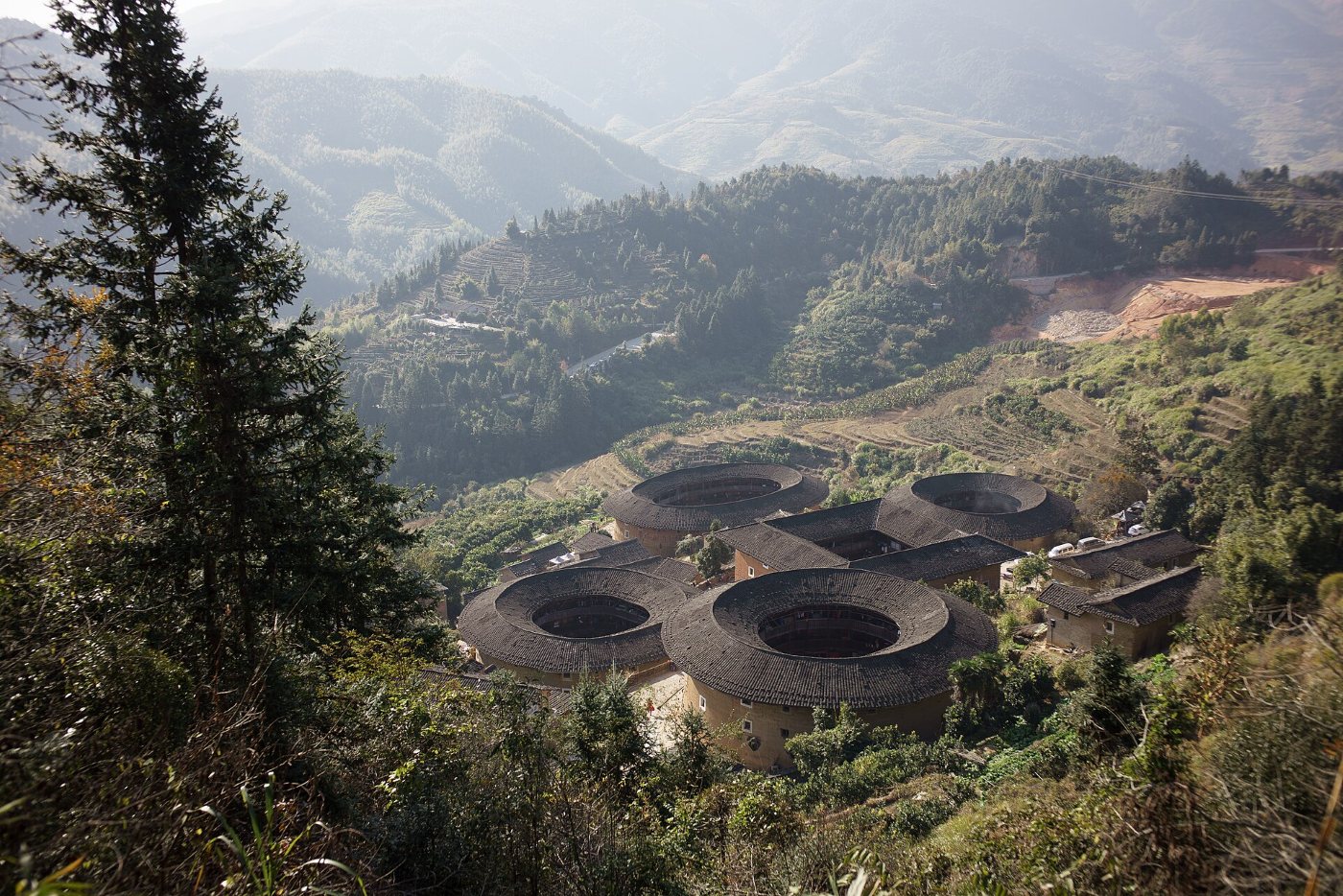
- The Fujian tulou (福建土楼): huge, usually round houses of rammed earth where whole clans lived – dozens of families in one building, with a single entrance and a courtyard in the middle. They've been a UNESCO World Heritage Site since 2008. The closest to Xiamen are in Nanjing county (南靖): the Tianluokeng cluster (田螺坑) – four round and oval houses around a square one, nicknamed "four dishes and a soup" (四菜一汤) – and Yunshuiyao village (云水谣). According to Trip.com, each site costs ¥90 (about 52 PLN), plus ¥15 (about 9 PLN) for the shuttle bus. It's about 2–2.5 hours each way from Xiamen, so the easiest option is a tour (from about ¥180 (about 105 PLN) with transport) or a car with a driver.
- Quanzhou (泉州): in the Song and Yuan dynasties one of the world's biggest ports, and a UNESCO World Heritage Site since 2021. See Kaiyuan Temple (开元寺) with its two stone pagodas (free), West Street (西街), the Qingjing Mosque (¥3 (about 2 PLN)) and the Maritime Museum (free, bring your passport). The bullet train from Xiamen takes 30–50 minutes.
- Kinmen (金门): from Wutong terminal (五通) a ferry takes about 30 minutes to Taiwan's Kinmen island. Foreigners can use this route, but it means leaving mainland China: you go through Taiwanese immigration, and coming back to Xiamen counts as a new entry into China. Check the rules before you go.
Tickets and prices
| Place | Price | How to buy |
|---|---|---|
| Gulangyu ferry | ¥35 (about 20 PLN) return | 屿见厦门 mini-program (WeChat, Alipay) or Klook, with your passport |
| Sunlight Rock | about ¥50 (about 29 PLN) | on site or on Trip.com |
| Shuzhuang Garden and Piano Museum | about ¥30 (about 17 PLN) | on site |
| Nanputuo Temple | free | booking in WeChat |
| Xiamen University | free | lottery in WeChat |
| Hulishan Fortress | ¥25 (about 15 PLN) | on site |
| Tianluokeng tulou | ¥90 (about 52 PLN) + ¥15 (about 9 PLN) shuttle bus | on site or on a tour |
| Taxi from Gaoqi airport to the centre | about ¥30 (about 17 PLN)–¥50 (about 29 PLN) | DiDi or the taxi rank |
TipIn Xiamen you need WeChat and Alipay for bookings, payments and bike rental. Install them and link your card before you fly: how to pay in China.
How many days in Xiamen
- 1 day: the morning ferry to Gulangyu, Sunlight Rock, Shuzhuang Garden and a walk among the villas, then Zhongshan Road in the evening.
- 2 days: add Nanputuo Temple and Xiamen University (book both in advance), Shapowei and sunset on Huandao Road or in Zengcuo'an.
- 3 days: add a bike ride along Huandao Road with Hulishan Fortress, Jimei or a day trip to Quanzhou.
- 4 days: add a full day at the tulou.
What to eat in Xiamen
Xiamen's food is Minnan (southern Fujian) cooking: plenty of seafood, soups and sweet desserts. Fujian is also the home of oolong teas such as Tieguanyin from Anxi and Da Hong Pao from the Wuyi Mountains, and in Xiamen people still drink them the traditional way, in tiny cups, gongfu style (tea in China).
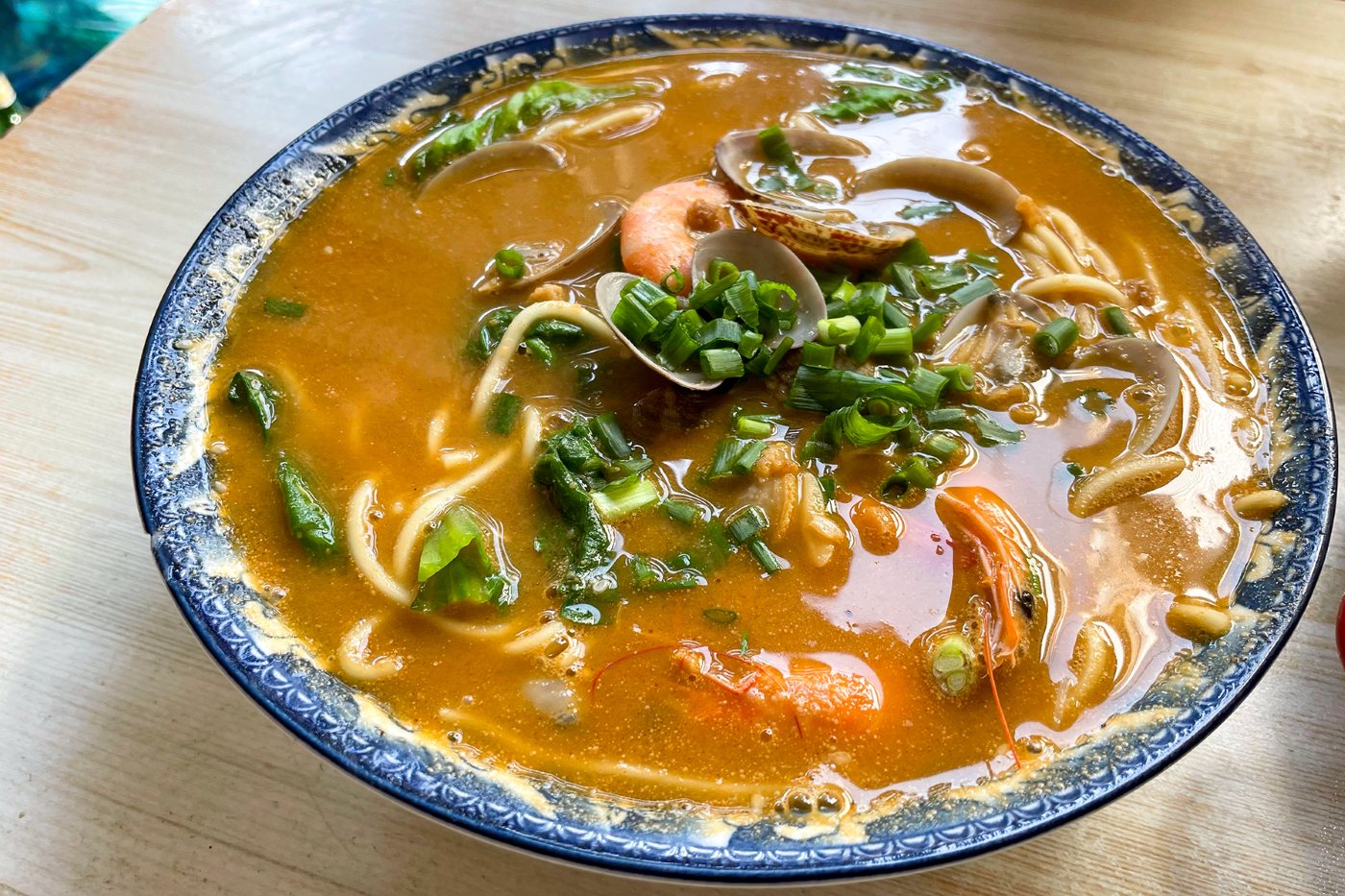
- Shacha noodles (沙茶面): in a thick, mildly spicy broth made with shacha paste (peanuts, dried shrimp and spices), with toppings of your choice – seafood, tofu or offal. A bowl costs from about ¥15 (about 9 PLN).
- Oyster omelette (海蛎煎): small oysters fried with egg and starch, served with a spicy sauce.
- Peanut soup (花生汤): a sweet dessert of soft-cooked peanuts, most famously at Huang Zehe on Zhongshan Road.
- Pork zongzi (烧肉粽): sticky rice parcels with pork and mushrooms wrapped in leaves, for a few yuan.
- Tusundong (土笋冻): a cold jelly made from sea worms, eaten with vinegar and mustard – for the adventurous.
More on China's regional food: China's regional cuisines.
Getting there and getting around
- By air: Xiamen Airlines is the only airline flying non-stop from Europe to Xiamen – from Amsterdam, Paris and, since 6 September 2026, London Heathrow. From elsewhere you'll connect, for example in Beijing or Shanghai, from where it's a 2–3 hour flight (flights to China).
- The airport: today you land at Gaoqi (XMN), about 10 km from the centre, 20–30 minutes by taxi or DiDi. At the end of 2026 – on 24 December, according to current plans – all flights are due to move to the new Xiang'an airport (翔安) on Dadeng Island, about 25 km from the centre, served by metro lines 3 and 4. The XMN code moves with the flights, so for tickets from late December onwards, check which airport you're using and allow more time to get there.
- By train: Xiamen has two main stations: Xiamen (厦门站) on the island and Xiamen North (厦门北站) on the mainland, on metro line 1. From Hong Kong (West Kowloon) it takes from about 3.5 hours, with a few direct trains a day, and from Shanghai (Hongqiao) from about 5 hours. Buy tickets on Trip.com with your passport (hotels, trains and flights).
- In the city: use the metro, buses and taxis or DiDi. Enter your destination in Chinese (China without Google Maps).
In Chinese鼓浪屿 (Gǔlàngyǔ) is Gulangyu, 东渡邮轮中心 (Dōngdù Yóulún Zhōngxīn) is the Dongdu ferry terminal, and 南普陀寺 (Nán Pǔtuó Sì) is Nanputuo Temple. Show the characters to a taxi driver or type them into DiDi.
Where to stay in Xiamen
- Around Zhongshan Road (思明区 · 中山路): walking distance to the shopping street, the Bashi market and the terminal for the evening ferries to Gulangyu.
- Around the university, Shapowei and Zengcuo'an: closer to the beaches, Nanputuo Temple and Huandao Road, with lots of small guesthouses (民宿).
- On Gulangyu: guesthouses in historic villas, and peace and quiet in the evening once the tour groups have gone. Remember that you carry your own luggage – there are no cars.
Check that your hotel accepts foreign guests (hotels, trains and flights).
Xiamen weather and when to go
Xiamen has a subtropical climate: mild, dry winters and hot, rainy summers.
| Month | Day / night | What it's like |
|---|---|---|
| January | 18°C / 11°C | dry and cool for southern China |
| April | 24°C / 17°C | warm, with more and more rain |
| July | 33°C / 26°C | hot, with thunderstorms and possible typhoons |
| October | 28°C / 21°C | warm, with the fewest rainy days of the year |
1991–2020 averages from the China Meteorological Administration.
The best time to go is October to December, when it's warm and dry. March and April are good too, though it rains more often. Most rain falls from May to August, and typhoons usually come between July and September. Avoid 1–7 October, Chinese New Year and the summer school holidays, when Gulangyu ferry tickets run out. More: Best time to visit China.
Xiamen and our itineraries
We don't have a ready-made itinerary with Xiamen yet, but it's easy to add to one of these:
| Itinerary | Days | Route |
|---|---|---|
| Dim Sum & Palm Trees | 11 | Guangzhou → Hong Kong → Macau → Sanya |
| Shanghai in 5 Days | 5 | Shanghai only |
The bullet train from Hong Kong to Xiamen takes about 3.5 hours, so you can add 2–3 days in Xiamen before or after the Hong Kong part of Dim Sum & Palm Trees. After Shanghai in 5 Days, it's about 2 hours by plane or about 5 hours by train to Xiamen – about 10 days in all. Would you rather have a trip planned from start to finish, with Xiamen, Gulangyu and the tulou? We can put together a custom plan.
Frequently asked questions
How do I get to Gulangyu Island?
By ferry: by day from Dongdu terminal, in the evening and at night from the terminal at the end of Zhongshan Road. The ¥35 (about 20 PLN) ticket includes the return trip and must be booked with your passport, in the 屿见厦门 mini-program in WeChat or Alipay (up to 15 days ahead) or through an agent such as Klook.
Is there an entry fee for Gulangyu?
No. You only pay for the ferry, which also caps visitor numbers on the island (at most 50,000 a day). Some sights charge separately, such as Sunlight Rock (about ¥50 (about 29 PLN)) and Shuzhuang Garden (about ¥30 (about 17 PLN)).
Do I need a visa for Xiamen?
Not if your country is on China's visa-free list – most EU countries, including Poland, can stay 30 days without a visa until 31 December 2026. The whole of Fujian, including Xiamen and the tulou, is also covered by the 240-hour visa-free transit if you fly in from one country and leave for another (China visa-free).
How many days do you need in Xiamen?
Two days are enough for Gulangyu, Nanputuo Temple, the university, Zhongshan Road and Huandao Road. With a day trip to the tulou or Quanzhou, plan three or four.
What's the weather like in Xiamen?
Mild in winter (about 18°C by day and 11°C at night in January) and hot in summer (about 33°C in July), with downpours and possible typhoons. The most pleasant time is October to December.
How do I get from Hong Kong to Xiamen?
By bullet train from West Kowloon station, from about 3.5 hours, with a few direct trains a day. You go through border control at the station in Hong Kong. The flight takes about 1.5 hours, but with airport transfers it rarely saves time.
Can you see Taiwan from Xiamen?
Not the main island, but from Huandao Road you can see Taiwan's Kinmen islets a few kilometres away. Ferries to Kinmen leave from Wutong terminal and take about 30 minutes.
Sources
- Gulangyu: Xiamen Bendibao: Gulangyu ferries in 2026 (in Chinese), UNESCO: Kulangsu, Trip.com: Gulangyu Island, Klook: Gulangyu ferry
- Nanputuo and the university: Trip.com: Nanputuo Temple (in Chinese), Xiamen Bendibao: visiting Xiamen University in 2026 (in Chinese), Wikipedia: Nanputuo Temple and Xiamen University
- The city: Qunar: Hulishan Fortress (in Chinese), Wikipedia: Xiamen (history, population, 1991–2020 climate data) and Tan Kah Kee
- Day trips: UNESCO: Fujian Tulou and Quanzhou, Trip.com: Tianluokeng (in Chinese), GoAsia: Xiamen to Kinmen ferry
- Getting there: Wikipedia: Xiamen Xiang'an International Airport, Trip.com: Xiamen airport, Air Service One: Xiamen Airlines to London, China for Travelers: Hong Kong to Xiamen by train, Trip.com: Shanghai to Xiamen trains
- Photos from Wikimedia Commons (authors and licences in the captions)
Xiamen as part of your trip
Xiamen is a great way to add a few slower days by the sea after Hong Kong or Shanghai: a car-free island, temples, promenades and the best shacha noodles in China. Our itineraries give you every hour of the trip, with prices and addresses in Chinese: Dim Sum & Palm Trees, Shanghai in 5 Days or all our China itineraries.