Before you go · 8 min read
From the airport to the city in China: Beijing, Shanghai, Chengdu and more
In short: from most Chinese airports, the cheapest way to the centre is the metro or an airport express (¥7 (about 4 PLN)–¥35 (about 21 PLN)), and the easiest is a taxi from the official rank or DiDi (usually ¥100 (about 60 PLN)–¥260 (about 157 PLN)). In Beijing, take the ¥25 (about 15 PLN) express from Capital Airport. In Shanghai, take metro line 2 from Pudong or the ¥50 (about 30 PLN) Maglev. The metro stops running at roughly 22:00–23:00, so after a late arrival a taxi is what's left. Don't go with a driver who approaches you in the arrivals hall, as it's the most common way to overpay several times over.
What surprised us most in China was how clean it is, even in places where crowds pass through every day. Airports and the metro are the best example, so your first contact with China may be far calmer than you expect.
Correct as of 1 November 2026. Taxi fares depend on the district and traffic, and service hours can change, so treat them as a guide. Yuan amounts are converted at the NBP rate into the currency selected in the site menu.
Airport to city centre: prices and times
| Airport | Public transport | Price | Time | Taxi or DiDi |
|---|---|---|---|---|
| Beijing Capital (PEK) | express to Dongzhimen | ¥25 (about 15 PLN) | 25–30 min, then metro | about ¥100 (about 60 PLN)–¥140 (about 84 PLN) |
| Beijing Daxing (PKX) | express to Caoqiao | about ¥35 (about 21 PLN) | about 20 min, then metro | about ¥220 (about 133 PLN) |
| Shanghai Pudong (PVG) | metro line 2 | ¥3 (about 2 PLN)–¥9 (about 5 PLN) | 70–90 min | about ¥140 (about 84 PLN)–¥260 (about 157 PLN) |
| Shanghai Pudong (PVG) | Maglev to Longyang Road | ¥50 (about 30 PLN) | 8 min, then metro | as above |
| Shanghai Hongqiao (SHA) | metro line 2 or 10 | a few yuan | about 30–45 min | less than from Pudong |
| Chengdu Tianfu (TFU) | metro lines 18 and 1 | ¥10 (about 6 PLN)–¥20 (about 12 PLN) | 60–75 min | ¥150 (about 90 PLN)–¥200 (about 121 PLN) |
| Chongqing Jiangbei (CKG) | metro line 3 or 10 | about ¥6 (about 4 PLN)–¥8 (about 5 PLN) | 45–60 min | ¥60 (about 36 PLN)–¥90 (about 54 PLN) |
| Xi'an Xianyang (XIY) | metro lines 14 and 2 | a few yuan | 60–75 min | about ¥100 (about 60 PLN)–¥150 (about 90 PLN) |
| Guangzhou Baiyun (CAN) | metro line 3 from T2 (from T3: bus to Gaozeng station) | about ¥7 (about 4 PLN)–¥8 (about 5 PLN) | 40–50 min | about ¥100 (about 60 PLN)–¥150 (about 90 PLN) |
| Kunming Changshui (KMG) | metro line 6, then 2 or 3 | ¥6 (about 4 PLN)–¥8 (about 5 PLN) | about 1 hour | check in DiDi |
| Hong Kong (HKG) | Airport Express | about HK$120 (about 61 PLN)–HK$130 (about 67 PLN) | 24 min to Central | check at the rank |
The easiest way to check a taxi fare is in the DiDi app before you leave the terminal. Enter your hotel's address to see an estimated fare and journey time.
What to do right after landing
- Go through border control. An arrival card filled in online and the address of your first night's stay will help (China visa-free).
- Turn on your internet. If you have an eSIM, switch it on inside the terminal (Internet in China).
- Check that payment works. In most cities you can pay for the metro with a QR code in Alipay (How to pay in China).
- Open your hotel address in Chinese. Show it to the driver or enter it in DiDi and your map app (China without Google Maps).
- Only then choose your transport. Follow the signs for 地铁 (metro), 出租车 (taxi) or 网约车 (ride-hailing cars).
NoteBags go through a scanner at metro entrances, so allow a few extra minutes with a large suitcase. Not every exit has a lift, and it can get cramped at rush hour with big luggage.
Taxis, DiDi and touts
- Touts: unlicensed drivers approach you in the arrivals hall, sometimes with a card showing a fixed fare. They charge several times the meter, so keep walking.
- Official rank: join the queue at the 出租车 sign and make sure the driver turns on the meter. Motorway tolls are added separately.
- DiDi: app cars pick up from designated spots, often on a different level from the taxi rank. The app shows the pickup point, so check it before you confirm. How to order DiDi step by step: taxis and DiDi in China.
- At night: taxis cost more: about 20% more after 23:00 at Beijing's airports, and about 30% more in Shanghai.
Beijing: Capital and Daxing
Check your ticket for the airport, because these are two different places on opposite sides of the city.
- Capital (PEK): the Airport Express runs to Dongzhimen, where you change to metro lines 2 and 13. It costs ¥25 (about 15 PLN) and leaves about every 10 minutes, from about 6:00 to about 22:30.
- Daxing (PKX): the Daxing Express takes about 20 minutes to Caoqiao, where you change to line 10. It costs about ¥35 (about 21 PLN) and runs from about 5:40 to about 23:00. A taxi to the centre takes 60–90 minutes.
More: Beijing travel guide.
Shanghai: Pudong and Hongqiao
There are three sensible options here, depending on your time and luggage.
- Metro line 2: the cheapest at ¥3 (about 2 PLN)–¥9 (about 5 PLN), but it takes 70–90 minutes to the centre. It runs from about 6:00 to about 22:30, and until about 23:00 on Fridays, Sundays and holidays.
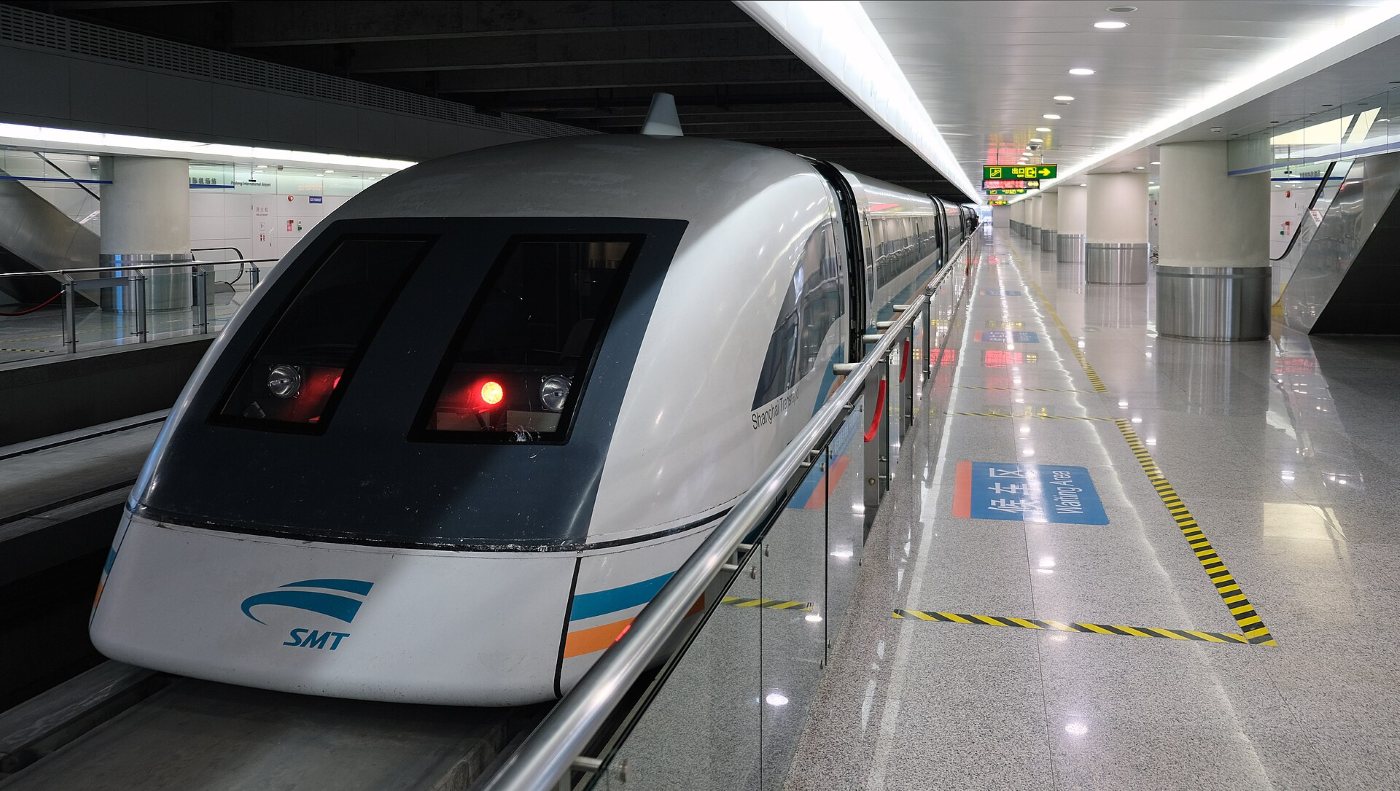
- Maglev: the magnetic levitation train takes 8 minutes to Longyang Road and costs ¥50 (about 30 PLN), or ¥40 (about 24 PLN) at the counter with a same-day air ticket. It runs from about 7:00 to about 21:40. Longyang Road isn't downtown, so you'll still change to metro line 2, but it's a great first ride.
- Taxi: about ¥140 (about 84 PLN)–¥260 (about 157 PLN) depending on the district, 50–70 minutes without traffic.
Between the airports and to Hongqiao station, the Airport Link Line is fastest: 40 minutes for ¥26 (about 16 PLN), from about 6:00 to about 22:15. From Hongqiao Airport you can walk to Hongqiao railway station. More: Shanghai travel guide.
Arriving at night
After about 22:30–23:00, the metro stops being a safe bet, especially as the last train may leave before you've cleared border control and collected your bags.
- A taxi from the rank or DiDi runs all night and is usually the simplest solution.
- Night bus: from Pudong in Shanghai, the 守航夜宵线 bus runs from 23:00 until the last flight, for ¥18 (about 11 PLN)–¥34 (about 20 PLN).
- Hotel transfer: if you land after midnight, ask your hotel about a pickup. It usually costs more, but you won't be finding your way after a 12-hour flight.
- Airport hotel: a good choice if you're flying or travelling on in the morning.
Straight from the airport to a train
You don't always have to go through the centre to reach other cities.
- Shanghai: from Hongqiao Airport you can walk to the railway station for trains to Hangzhou, Suzhou and Nanjing. From Pudong, take the Airport Link Line.
- Beijing: take the metro from Daxing or Capital to the railway stations, and leave plenty of time for the connection.
For a plane-to-train connection, allow at least 3 hours from your scheduled landing, as you still have border control, baggage, the transfer and station security. You can buy tickets in advance: How to buy train tickets in China.
Frequently asked questions
How much is a taxi from the airport to the city in China?
Usually ¥100 (about 60 PLN)–¥150 (about 90 PLN) from Beijing Capital, Xi'an and Guangzhou, ¥150 (about 90 PLN)–¥200 (about 121 PLN) from Chengdu Tianfu and about ¥140 (about 84 PLN)–¥260 (about 157 PLN) from Shanghai Pudong. Chongqing is cheaper, and Beijing Daxing costs more (about ¥220 (about 133 PLN)). Expect to pay more at night.
Does the Maglev go to downtown Shanghai?
No. The Maglev runs from Pudong Airport to Longyang Road in Pudong, where you change to metro line 2. It costs ¥50 (about 30 PLN) and takes 8 minutes.
What is the cheapest way from Pudong Airport to central Shanghai?
Metro line 2 for ¥3 (about 2 PLN)–¥9 (about 5 PLN). The trip to the centre takes 70–90 minutes, and the last trains leave at about 22:30, or about 23:00 on Fridays, Sundays and holidays.
Can I pay by card on the airport metro?
The easiest way is a QR code in Alipay or WeChat Pay. In Shanghai, some gates also accept contactless Visa and Mastercard, and you can buy a ticket from a machine. Set up Alipay before you fly: How to pay in China.
What should I do if I land at night and the metro has stopped?
Join the queue at the official taxi rank or book a DiDi. Don't take offers from drivers in the arrivals hall. If you land after midnight, it's best to ask your hotel about a pickup in advance.
Sources
- Beijing.gov.cn: subway and Airport Express fares
- China for Travelers: Pudong Airport – Maglev, metro, Airport Link, taxis and night arrivals (August 2026)
- Wego: Beijing airports – express trains, taxis and touts (July 2026)
- Xinhua: Guangzhou Baiyun Airport Terminal 3 opens (30 October 2025) (in Chinese)
- The Paper: Guangzhou Baiyun – T1 closes, getting to T2 and T3 (7 May 2026) (in Chinese)
- Chengdu, Chongqing, Xi'an, Guangzhou, Kunming and Hong Kong: our guides to these cities (sources in each guide)
Your transfer, step by step
In each of our travel plans, the trip from the airport to the city is described with connections and addresses in Chinese for taxi drivers, followed by a day-by-day route.