Destinations and inspiration · 14 min read
Suzhou travel guide: UNESCO gardens, canals and a day trip from Shanghai
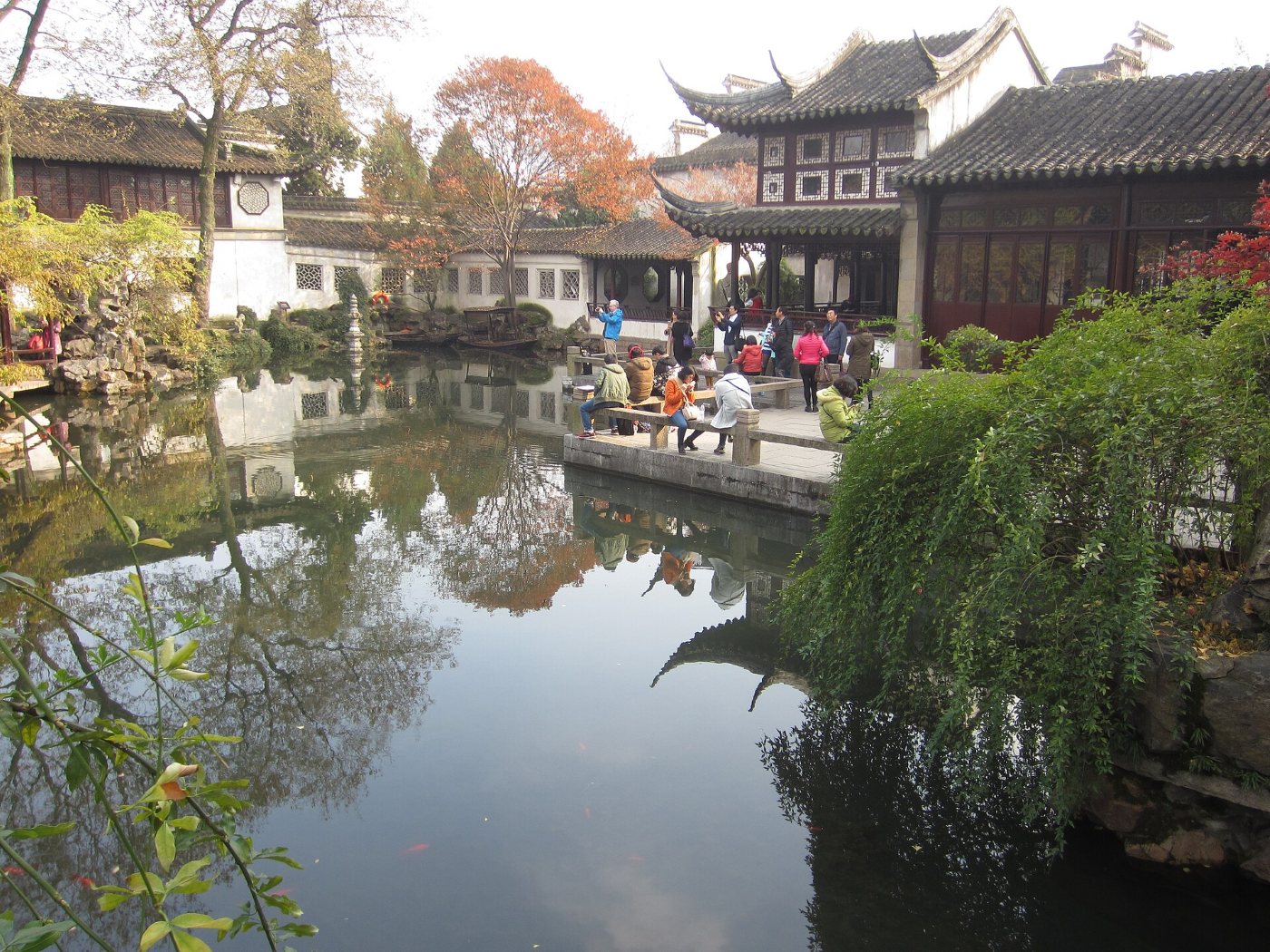
In short: Suzhou (苏州) is a city of classical gardens and canals in Jiangsu province, 25–35 minutes by bullet train from Shanghai (second class ¥37 (about 23 PLN)–¥46 (about 28 PLN)). Nine of its gardens are on the UNESCO list, and the most famous are the Humble Administrator's Garden (¥80 (about 49 PLN) in high season, ¥70 (about 43 PLN) in low season) and the Lingering Garden. Garden tickets are name-specific and you buy them online with your passport, ideally a few days ahead. The Suzhou Museum is free but needs a reservation and closes on Mondays. One day covers the highlights, and two days add Tiger Hill and an evening by the canals.
What surprised us most in China was how advanced the technology is, and Suzhou shows it especially well: half an hour ago you were in Shanghai, the train passed 300 km/h, and now you're scanning your passport to enter a garden that's 500 years old.
Correct as of 1 November 2026. Check prices and hours before you go, because guides list them differently; for Tiger Hill and the Master of the Nets night garden we give a range. Yuan amounts are converted at the NBP rate into the currency selected in the site menu.
Suzhou at a glance
| Question | Answer |
|---|---|
| Where? | eastern China, Jiangsu province, west of Shanghai |
| From Shanghai | bullet train in 25–35 minutes, about 70 trains a day from Shanghai station and about 120 from Hongqiao |
| Highlights | Humble Administrator's Garden, Lingering Garden, Suzhou Museum, Pingjiang Road, Tiger Hill |
| Tickets | name-specific, online, with your passport; bring the original |
| How many days? | 1 day from Shanghai, 2 days with an overnight stay |
| Best time | April–May and September–November |
| When to avoid | 1–7 October, 1–5 May and Lunar New Year |
Suzhou was founded in 514 BC as the capital of the Wu kingdom and grew rich on the Grand Canal, silk and trade. Officials who retired here built gardens behind their house walls, with ponds, rocks and pavilions. Suzhou's gardens joined the UNESCO list in 1997 and 2000. About 12.7 million people live in the wider city today (2020 census), but the moated old town is still low-rise. A Chinese saying goes: “Above is heaven, below are Suzhou and Hangzhou.”
How to buy garden tickets
This is the easiest place to trip up, because the gardens and the museum work differently from most European sights.
- Buy online before you arrive. The official channels are the 苏州园林旅游 account and the 君到苏州 mini-program in WeChat. Without a Chinese number, Trip.com is the simplest option, in English and with a foreign card. According to 2026 guides, the ticket windows on site no longer sell tickets.
- Choose passport as your document and enter your name and number exactly as they appear in it. Tickets are name-specific and timed.
- Book 3–7 days ahead. Tickets usually go on sale 7 days in advance, and the Humble Administrator's Garden can sell out several days ahead on weekends and holidays.
- Bring your original passport. You scan it at the gate, and a photo on your phone won't do.
NoteDon't buy “cheap tickets” from touts outside the gate. A ticket has to be linked to your passport, or the turnstile won't let you through. General booking rules in China: China attraction tickets.
Things to do in Suzhou: 8 places
1. Humble Administrator's Garden
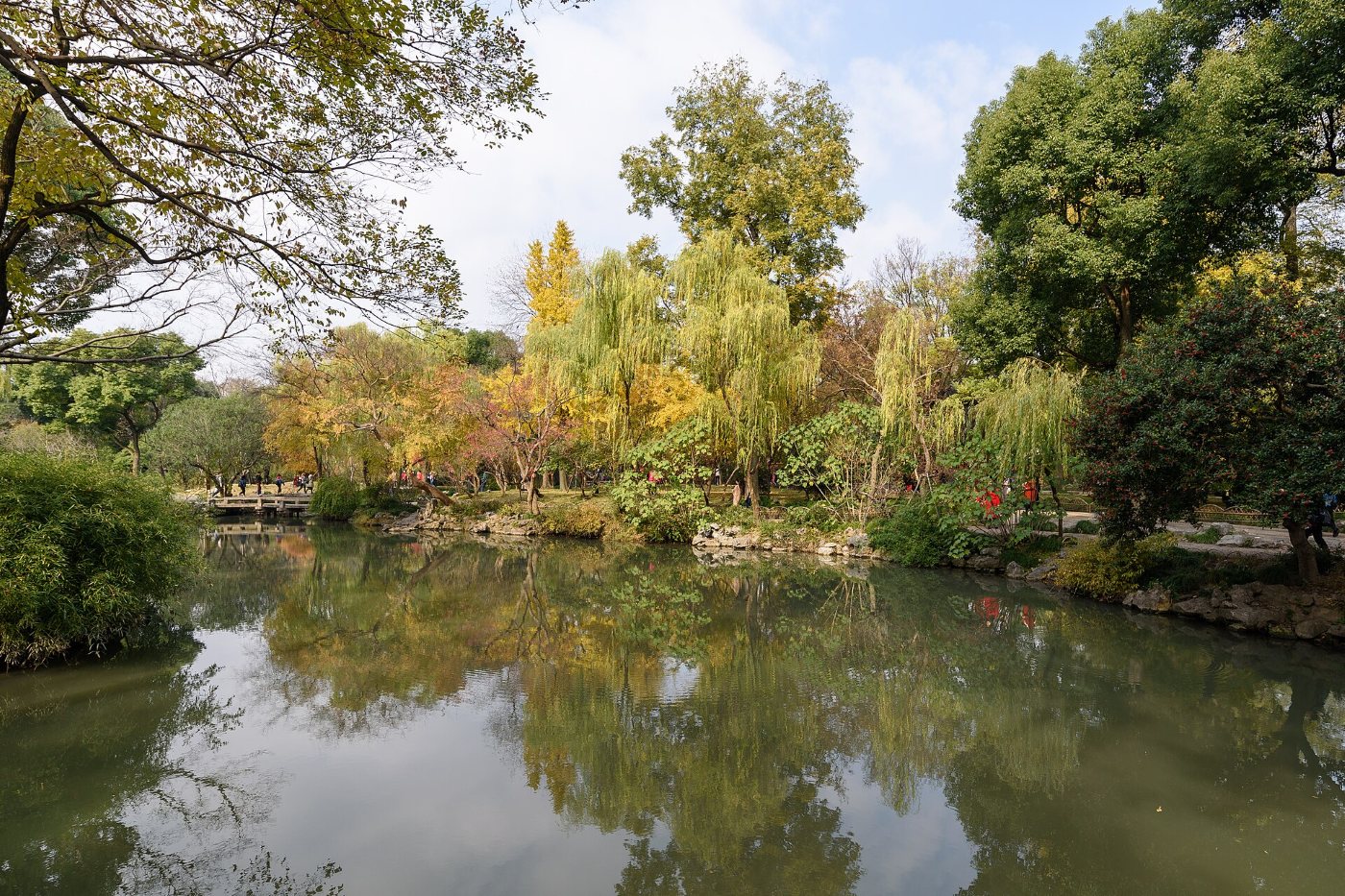
The Humble Administrator's Garden (拙政园, Zhuozheng Yuan) dates from the early 16th century and is Suzhou's largest garden. Much of it is water: the main pond is ringed by pavilions, small bridges and lotus beds, and the pagoda of Beisi Temple closes the view from beyond the wall. A full route takes about 2 hours. Start in the eastern section, circle the central pond and leave through the western section. It opens at 7:30, which is the best time to arrive, because it's far quieter before 10:00. Metro: line 6, 拙政园苏博 station.
2. Suzhou Museum
The museum (苏州博物馆) was designed by I.M. Pei, the architect of the Louvre's glass pyramid, whose family came from Suzhou. Its white and grey volumes with geometric roofs are a modern take on local houses, and in the garden, rocks are arranged like a landscape painting against a white wall. Inside you'll see porcelain and objects found in local pagodas, among other things. Entry is free but needs a reservation, which opens 7 days ahead. The museum closes on Mondays, and usual hours are 9:00–17:00, with last entry at 16:00. It's right next to the Humble Administrator's Garden, so combine the two. If there are no slots left, try the larger West Museum (苏州博物馆西馆), which according to the museum's notices admits visitors without a reservation, if you queue.
3. Lion Grove Garden
The Lion Grove (狮子林) was founded in 1342 next to a Buddhist temple and is famous for its maze of Lake Tai rocks, where it's easy to get lost. Allow 45–60 minutes. It's a few minutes' walk from the Humble Administrator's Garden, so the two gardens and the museum make one neat morning.
4. Pingjiang Road
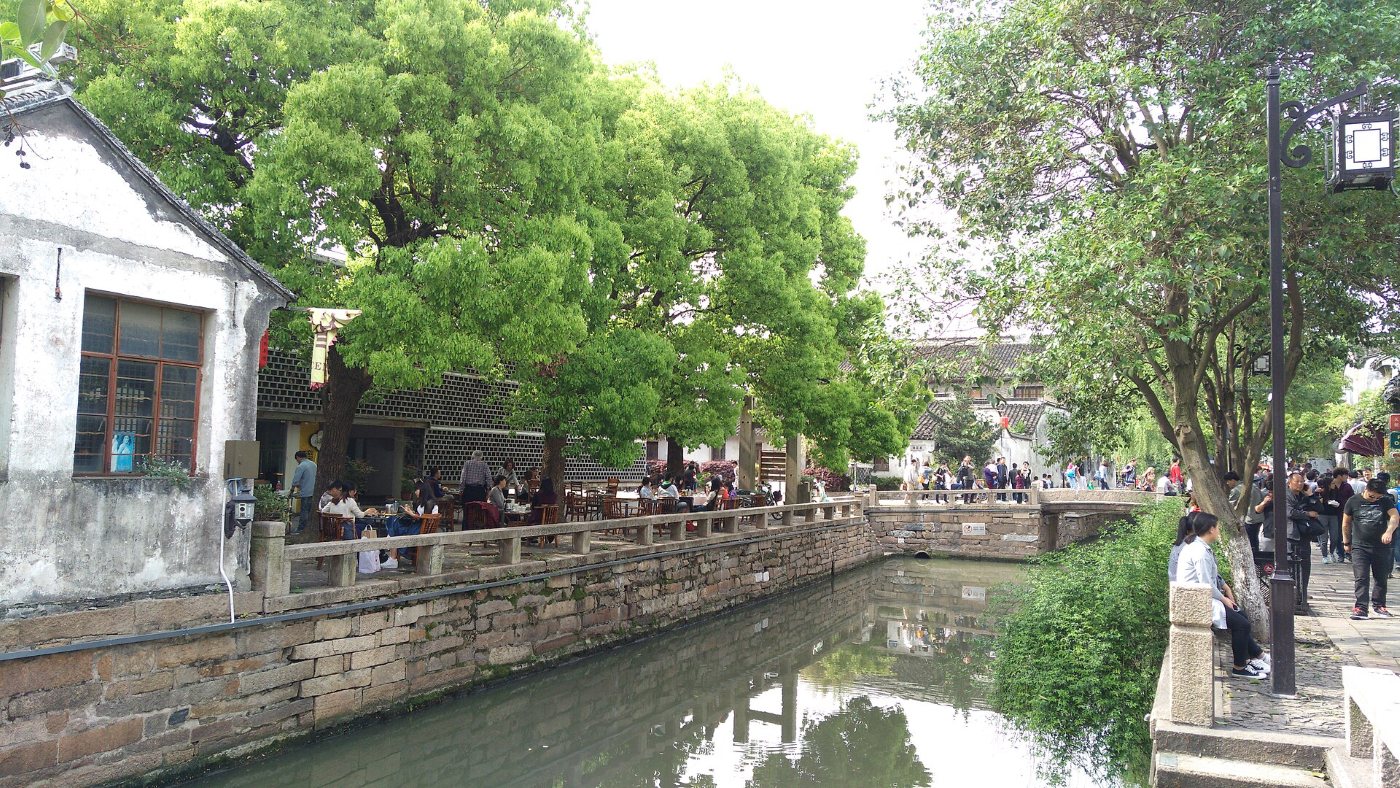
Pingjiang Road (平江路) is the prettiest street in the old town: a 1.5 km walk along a canal, with stone bridges, teahouses and side lanes where people still live. It's free and at its best early in the morning and after dark. You can take a rowed boat, but the prices in our sources vary widely, from about ¥40 (about 24 PLN) per person in a shared boat to about ¥150 (about 91 PLN) for half an hour, so agree the price at the pier. Guanqian Street (观前街), a shopping street with restaurants, is close by.
5. Lingering Garden
The Lingering Garden (留园, Liu Yuan) gets fewer visitors than the Humble Administrator's Garden, and many people think it's the prettier of the two. A long covered corridor runs through it, with stone inscriptions and windows that each frame a different view. At the end stands the Cloud-Capped Peak (冠云峰), a Lake Tai rock over 6 metres tall. The garden is outside the old town, on Liuyuan Road, so take a DiDi. It's open from about 7:30 to 17:00.
6. Tiger Hill
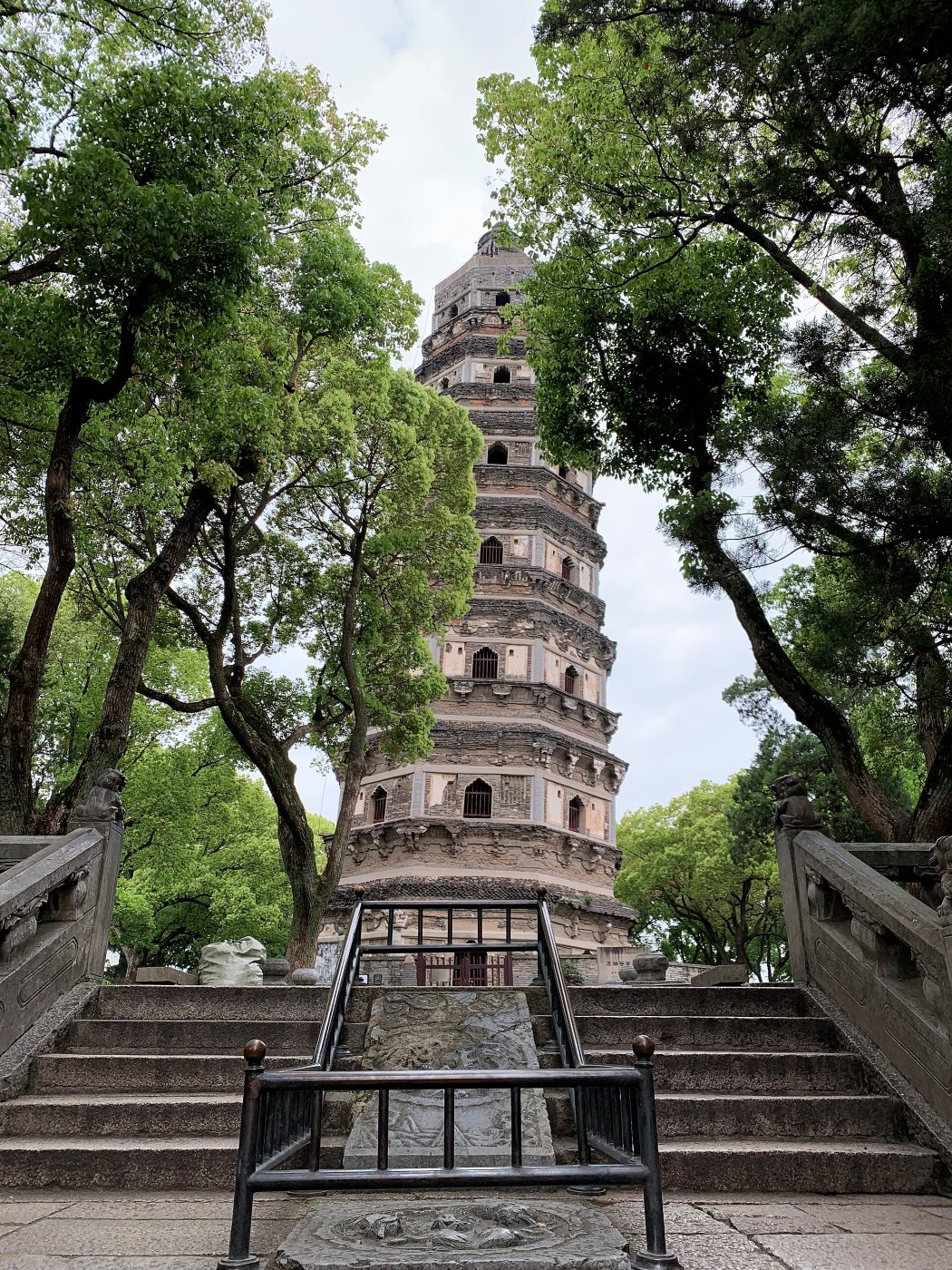
Tiger Hill (虎丘, Huqiu) is a small hill with a park and the leaning Yunyan Pagoda (云岩寺塔) from 961, which has been tilting for centuries and is sometimes called China's Pisa. Legend says King Helü, Suzhou's founder, is buried beneath the hill. Tickets cost about ¥70 (about 43 PLN)–¥80 (about 49 PLN) in high season and ¥60 (about 36 PLN) in low season. Allow 1.5–2 hours, and if you're using DiDi, combine it with the Lingering Garden, since both are in the same part of the city.
7. Master of the Nets Garden
The Master of the Nets Garden (网师园, Wangshi Yuan) is the smallest of the famous gardens, but its proportions are considered a model: a pond, a few pavilions and courtyards you can walk around in an hour. In the warmer months it runs a night garden with short music and Kunqu opera performances. Our sources give prices of ¥100 (about 61 PLN)–¥120 (about 73 PLN) and a season from April to October, so check the dates when you book.
8. Shantang Street and Pan Gate
Shantang Street (山塘街) is the other famous canal street, built in the 9th century on the orders of the poet Bai Juyi. Walking it is free, and after dark, when the lanterns come on, it's very atmospheric, if crowded. A boat ride costs about ¥50 (about 30 PLN). Pan Gate (盘门, about ¥40 (about 24 PLN)), on the southern edge of the old town, is a rare water gate in the city walls, which let boats enter the city as well as people on foot.
Water towns: Tongli and Zhouzhuang
- Tongli (同里): the quieter of the two, with three bridges and Tuisi Garden. Take metro line 4 to Tongli station, then a bus or DiDi, for 45–60 minutes in total from central Suzhou. Tickets cost about ¥100 (about 61 PLN).
- Zhouzhuang (周庄): the best-known water town in the area, but also the most touristy. A bus from Suzhou North bus station takes about an hour and costs about ¥17 (about 10 PLN). Guides list tickets at about ¥50 (about 30 PLN) on weekdays and ¥100 (about 61 PLN) at weekends, so check the price before you go.
If you only want to see one water town and you're staying in Shanghai, you can also take the metro to Zhujiajiao, as in our Shanghai in 5 days itinerary.
Tickets and prices
Garden high season is April, May and July–October. Low season is January–March, June, November and December.
| Place | High season | Low season | Hours |
|---|---|---|---|
| Humble Administrator's Garden | ¥80 (about 49 PLN) | ¥70 (about 43 PLN) | 7:30–17:30, November–February until 17:00 |
| Lingering Garden | ¥55 (about 33 PLN) | ¥45 (about 27 PLN) | about 7:30–17:00 |
| Lion Grove Garden | ¥40 (about 24 PLN) | ¥30 (about 18 PLN) | check when booking |
| Master of the Nets Garden | ¥40 (about 24 PLN) | ¥30 (about 18 PLN) | about 7:30–17:00 |
| Canglang Pavilion (沧浪亭) | ¥20 (about 12 PLN) | ¥15 (about 9 PLN) | about 7:30–17:00 |
| Tiger Hill | about ¥70 (about 43 PLN)–¥80 (about 49 PLN) | ¥60 (about 36 PLN) | check when booking |
| Pan Gate | about ¥40 (about 24 PLN) | about ¥40 (about 24 PLN) | check when booking |
| Suzhou Museum | free | free | 9:00–17:00, closed Mondays |
| Pingjiang Road, Shantang Street | free | free | all day |
Guides list 50% discounts for students and people over 60, and free entry for children under 1.4 m and people over 70. Check when booking whether and how this applies to foreigners.
How many days in Suzhou
- 1 day from Shanghai: an early train, the Humble Administrator's Garden at opening, then the Lion Grove and Suzhou Museum (not on a Monday), noodles near Pingjiang Road for lunch, a canal walk or a DiDi to the Lingering Garden in the afternoon, and the train back in the evening.
- 2 days: the first day as above, with Shantang Street or the night garden in the evening, then the Lingering Garden, Tiger Hill and Pan Gate on the second day.
- 3 days: add Tongli or Zhouzhuang.
What to eat in Suzhou
Suzhou food is mild, slightly sweet and based on fish and freshwater shrimp. More on China's regions: Chinese regional cuisines.
- Suzhou-style noodles (苏式汤面): thin noodles in a clear broth, with toppings such as shrimp or braised meat served on the side. A simple bowl costs from about ¥20 (about 12 PLN). Well-known places are Tongdexing (同得兴) and Zhuhongxing (朱鸿兴).
- Squirrel-shaped fish (松鼠桂鱼): fried fish scored to look like a squirrel's tail, in a sweet and sour sauce. The best-known restaurants are Deyuelou (得月楼) and Songhelou (松鹤楼).
- Shengjian dumplings (生煎): pan-fried dumplings filled with meat and broth.
- Yangcheng Lake hairy crab (阳澄湖大闸蟹): an autumn delicacy at its best in October and November, though it isn't cheap.
Getting there and around
- By train from Shanghai: about 70 trains a day from Shanghai station and about 120 from Hongqiao, the fastest in 25 minutes, second class ¥37 (about 23 PLN)–¥46 (about 28 PLN) (Shanghai to Suzhou by train). The first train from Shanghai station leaves at 5:45, and the last one back from Suzhou leaves at 22:32.
- Stations: the most convenient is Suzhou (苏州站), just north of the old town, on metro lines 2 and 4. Suzhou North (苏州北站) is far to the north, about half an hour by metro, so check the name on your ticket.
- Onward by train: Suzhou is on the Shanghai–Nanjing line, and Nanjing is about 1–1.5 hours away.
- By plane: Suzhou has no airport of its own. Fly to Shanghai; from Hongqiao Airport you can walk to Hongqiao station. See also Flights to China.
- In town: the metro costs from ¥2 (about 1 PLN), and you pay with a QR code in Alipay. The old town is small and easy to walk, while DiDi is the most convenient way to reach the Lingering Garden and Tiger Hill.
Where to stay in Suzhou
- Around Pingjiang Road and Guanqian Street: the old town, within walking distance of gardens, the museum and restaurants. The best choice for a first visit.
- Near Suzhou station: handy if you're only staying one night on your way elsewhere.
- Jinji Lake (金鸡湖): a modern district with towers and big hotels, but you'll have to take the metro to the old town.
A chain hotel in the centre usually costs about ¥250 (about 152 PLN)–¥400 (about 243 PLN) a room. When booking, check that the hotel accepts foreigners (Hotels, trains and flights).
Suzhou weather and when to go
| Month | Day / night | What it's like |
|---|---|---|
| January | 8°C / 2°C | cold and damp, but the gardens are empty |
| April | 21°C / 13°C | trees in blossom, but also tour groups |
| July | 33°C / 26°C | hot and humid, lotuses in bloom in the gardens |
| October | 23°C / 16°C | dry and sunny, with autumn colours coming later |
The best times are April and May, or September to November. Avoid 1–7 October, 1–5 May and Lunar New Year, because the gardens are small and get cramped during holidays. Come on a weekday if you can. More: Best time to visit China
Suzhou in our itineraries
| Itinerary | Days | How Suzhou fits |
|---|---|---|
| Shanghai in 5 days | 5 | a suggested extra day, with the train from Shanghai |
| Along the Yangtze | 11 | route Shanghai → Ningbo → Hangzhou → Wuxi → Nanjing → Wuhan; Suzhou is on the line between Shanghai and Nanjing, but the itinerary doesn't stop there |
Frequently asked questions
Can you see Suzhou in a day from Shanghai?
Yes. The train takes 25–35 minutes, so in one day you can see the Humble Administrator's Garden, the Lion Grove, the Suzhou Museum (not on a Monday) and Pingjiang Road. Buy garden tickets a few days ahead and leave early in the morning.
How much is a Humble Administrator's Garden ticket?
¥80 (about 49 PLN) in April, May and from July to October, and ¥70 (about 43 PLN) in the other months. Tickets are name-specific and bought online with your passport, for example on Trip.com or through the gardens' WeChat channels.
Which Suzhou garden should I choose if I only have time for one?
For a first visit, the Humble Administrator's Garden, because it's the largest and best known. If you'd prefer smaller crowds and architecture rather than a broad pond, choose the Lingering Garden.
Do I need to book Suzhou garden tickets?
Yes. Tickets are name-specific, and 2026 guides say the windows on site no longer sell them. Buy them 3–7 days ahead, and as early as you can for weekends and holidays. Bring your original passport.
Is the Suzhou Museum free?
Yes, but you have to reserve entry to the I.M. Pei building, and reservations open 7 days ahead. The museum is closed on Mondays.
Suzhou or Hangzhou for a trip from Shanghai?
Suzhou is closer and suits a single day better if you like gardens, canals and unhurried sightseeing. Hangzhou has a huge lake, tea hills and Lingyin Temple, so it's worth staying overnight.
Do I need a visa for Suzhou?
Citizens of 50 countries, including most of the EU, the UK, Canada and Australia, can currently enter China visa-free for up to 30 days, until 31 December 2026. All of Jiangsu province is also covered by the 240-hour visa-free transit if you're flying on to a third country. Details: China visa-free.
Sources
- Wander in China: Humble Administrator's Garden – tickets, hours, route (September 2026) and Suzhou Museum
- China for Travelers: Suzhou gardens – tickets and booking (2026) and water towns
- Cities Insider: Suzhou gardens and architecture (2026) and water transport
- Suzhou Bendibao: garden prices and seasons and The Paper: Suzhou Museum notice on opening hours (2026)
- Wander in China: Tongli and Zhouzhuang (2026)
- Wikipedia: Suzhou (history, 2020 census, climate from CMA 1991–2020 normals)
- Train times and fares from the 12306 system (November 2026); our Shanghai in 5 days and Along the Yangtze itineraries; photos from Wikimedia Commons (authors and licences in captions)
Suzhou in a ready-made itinerary
In Shanghai in 5 days, Shanghai is planned hour by hour, with prices and addresses in Chinese, and the transport table covers the trip to Suzhou if you add an extra day. Want to combine Shanghai, Suzhou and Hangzhou in one trip? We can prepare a custom itinerary.