
Before you go · 14 min read
Cash and ATMs in China: how to get yuan, where to exchange and how much to bring
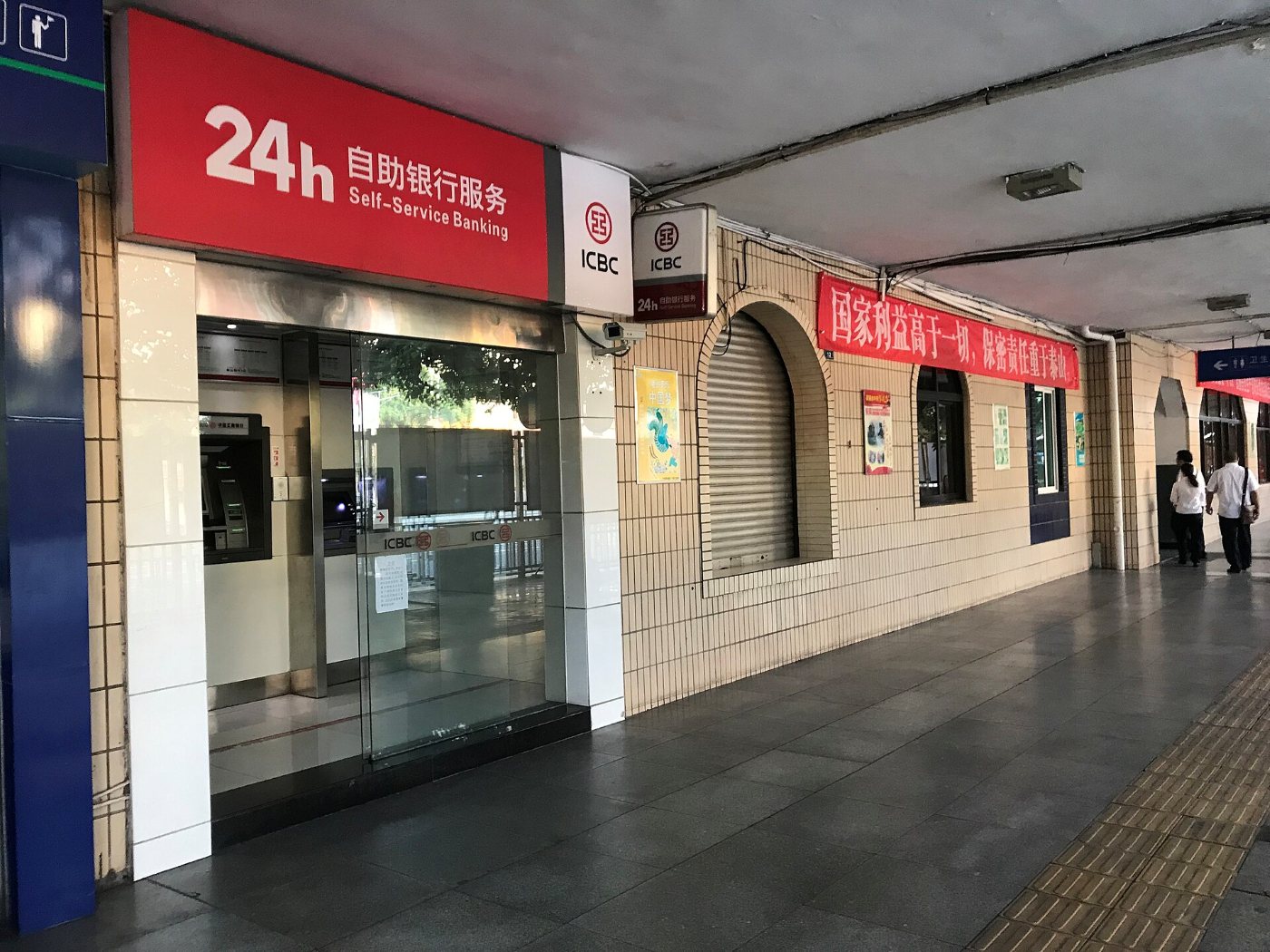
In short: in China you'll pay mostly by phone, but bring ¥500 (about 301 PLN)–¥1,000 (about 603 PLN) in cash for emergencies: a flat battery, a rejected card, a small market stall or a city bus. The cheapest way to get yuan is to withdraw from an ATM with a low-fee card such as Wise or Revolut, ideally at a Bank of China, ICBC or CCB machine showing the Visa or Mastercard logo. One withdrawal is capped at ¥3,000 (about 1808 PLN). On screen, always choose to be charged in yuan (CNY), not in your home currency. As a backup, bring some euros, US dollars or pounds – Bank of China exchanges them at close to the market rate.
What surprised us most in China was how safe it is, so a few hundred yuan in your wallet is an emergency fund rather than a worry. We rarely used cash, but it was good to have some.
As of 16 November 2026. Bank limits and fees change – check your card's fee table before you go. We convert yuan amounts at the National Bank of Poland rate into the currency you pick in the site menu.
Do you need cash in China?
Day to day, hardly ever: you pay by phone with Alipay or WeChat Pay and a linked card (how to pay in China). Cash still comes in handy in a few situations:
- a flat phone or no internet – without your phone, cash is the only way to pay,
- a rejected foreign card in an app or at a card terminal,
- small stalls, markets and villages – they take QR codes or cash, and card terminals are rare,
- city buses – usually ¥2 (about 1 PLN), you drop exact change in the box and the driver gives no change,
- hotel deposits (押金, yājīn) – some cheaper hotels take them in cash only, usually a few hundred yuan, refunded at check-out,
- temples and small sights – donations, incense, sometimes a ticket at the window.
Since 1 February 2026 new rules from China's central bank have been in force: shops, restaurants and other places serving customers in person may not refuse cash and should keep change. In practice cash is accepted almost everywhere, but a small café may not be able to break a ¥100 note, so carry some smaller notes too.
Three ways to get yuan
| Method | What it costs | When it helps |
|---|---|---|
| ATM in China with a low-fee card | usually the cheapest: your card's rate, sometimes a Chinese bank fee | your main source of cash |
| Exchanging cash in China (Bank of China) | rate close to the market rate | backup if your card doesn't work |
| Yuan bought at home | usually a poor rate – in Poland about 5% above the mid-market rate | if you want yuan the moment you land |
The best combination is the first two: yuan from ATMs, plus some euros or dollars in your wallet in case a card is declined.
ATMs in China: which ones take foreign cards
You can withdraw yuan with a Visa or Mastercard at any ATM showing the Visa or Mastercard logo – that's how China's central bank itself tells visitors to find one. In practice:
- Bank of China (中国银行) – the safest choice, with a clear English menu. It officially accepts foreign Visa, Mastercard, UnionPay, JCB and American Express cards, around the clock.
- ICBC (工商银行) and China Construction Bank (建设银行) – usually work and have lots of machines.
- Agricultural Bank of China (农业银行) – hit and miss.
- Avoid ATMs of small regional banks, rural credit cooperatives (农村信用社) and standalone machines in shops – they often take only Chinese UnionPay cards.
There are plenty of ATMs for foreign cards: over 11,000 in Beijing alone and about 9,000 in Shanghai – roughly 4 in 5 machines in big cities. Airports have them too (24 at Beijing's two airports), and more and more machines at airports, stations and city centres also dispense ¥10 notes. Coverage is thinner in small towns and the countryside, so withdraw cash in a big city before heading into the mountains or rural areas.
How to withdraw cash from an ATM step by step
- Pick an ATM of Bank of China, ICBC or CCB with the Visa or Mastercard logo – ideally inside a bank branch during opening hours.
- Insert your card and choose English – an "English" button, 英文 or a flag icon.
- Enter your PIN. A normal four-digit PIN usually works. If the machine insists on six digits, go to another one (preferably Bank of China) – don't guess, because a few wrong attempts will block your card.
- Choose withdrawal (取款) and the amount – up to ¥3,000 (about 1808 PLN), in multiples of ¥100.
- Decline conversion to your home currency. If the ATM asks which currency to charge you in, pick CNY / RMB or "without conversion". Conversion by the ATM (dynamic currency conversion, DCC) usually costs a few percent more.
- Take the cash, your card and the receipt. Don't walk away as soon as the money comes out – in China the ATM often returns the card only after the cash, and a card left in the slot is swallowed after a short while.
NoteIf an ATM keeps your card, hold on to the printed slip and ask the branch staff or call the bank's hotline (Bank of China: 95566). That's why it's safest to withdraw inside a branch while it's open – then the card can usually be returned on the spot. Bring a second card from a different bank just in case.
Limits and fees
- Per withdrawal: at most ¥3,000 (about 1808 PLN) on a foreign card, according to Bank of China and UnionPay. Daily and monthly limits are set by your own bank – check them in your banking app and switch on withdrawals abroad.
- Chinese bank fee: Bank of China officially says fees are set by the bank that issued your card. Guides and travellers, however, often report that Chinese ATMs add about ¥20 (about 12 PLN)–¥30 (about 18 PLN) per withdrawal. So it's better to withdraw a larger amount once than small amounts several times.
- Your own bank's fee: depends on your card – see below.
Which card to use for withdrawals
The cheapest option is a travel card or a bank card with no foreign transaction fee. A few examples (November 2026):
| Card | ATM withdrawal abroad | Currency conversion |
|---|---|---|
| Wise | free up to a monthly allowance (e.g. €250 on a German account), then 2.69% on the amount above | mid-market rate + Wise's conversion fee |
| Revolut | free up to a monthly allowance that depends on your plan and country, then 2% | no markup on weekdays up to a monthly limit (5,000 PLN on a Polish Standard plan), extra 1% at weekends on the basic plan |
| Charles Schwab Investor Checking (US) | Schwab charges nothing and refunds other banks' ATM fees worldwide | no foreign transaction fee |
| Fidelity Cash Management Account (US) | refunds ATM fees at machines with the Visa, Plus or Star logo | no foreign transaction fee |
| Credit card | cash advance fee, often a few percent | interest usually from day one – emergencies only |
Many ordinary bank cards charge both an ATM fee abroad and a conversion fee of 2–6%. Check your bank's fee table before you go.
TipIn your banking app, switch on payments and withdrawals abroad, check your daily withdrawal limit and, if your bank offers it, turn on a block on conversion into your home currency (DCC). Note that Schwab doesn't refund DCC fees either – always choose yuan.
Exchanging money in China
Bank of China buys US dollars, euros, pounds, Hong Kong dollars and other major currencies in cash. Less common currencies can be a problem: for example, it doesn't buy Polish złoty notes at all.
- Where: at bank branches (Bank of China is the safest bet), exchange counters at big airports and some 4–5-star hotels. Banks usually give the best rate; airports and hotels worse.
- Rate: at Bank of China the cash buying rate is the same as the non-cash rate. On 16 November 2026 the bank gave ¥7.31 for €1 and ¥6.66 for $1, with a buy–sell spread of about 0.7%.
- Document: you need your original passport – a copy won't do.
- Hours: branches usually open Monday to Friday, roughly 9:00–17:00. Many larger branches also open on Saturday (usually about 9:00–16:00), fewer on Sunday. Allow some time – banks can be slow, and serving a foreigner takes longer.
- Airport: exchange only what you need for the first day there, e.g. $50–100. Beijing and Shanghai airports also have ATMs for foreign cards and currency exchange machines.
TipKeep the exchange receipt (水单, shuǐdān) and your ATM slips. You'll need them if you want to change yuan back before you fly home.
Small change: a "零钱包" from the bank
ATMs usually give ¥100 notes, which can be awkward at a stall or on a bus. Since 2024 Chinese banks have offered foreigners a 零钱包 (língqián bāo), a "change wallet": a pack of small notes worth, for example, ¥100 or ¥500, in ¥1, ¥5, ¥10 and ¥20 notes. Ask for one at the counter of a bank branch (bring your passport) – it's a one-to-one swap with no fee. Any supermarket will also break a big note when you buy something.
Banknotes and coins
| Money | Denominations |
|---|---|
| Notes | ¥1, ¥5, ¥10, ¥20, ¥50, ¥100 |
| Coins | ¥1, 5 jiao, 1 jiao |
- 1 yuan = 10 jiao. In speech people say kuai (块) instead of yuan and mao (毛) instead of jiao: ¥10.50 is shí kuài wǔ máo. Price tags show ¥ or 元.
- There's no ¥2 note. Older notes from before the 1999 series (such as the old ¥100 and ¥50) have been out of circulation since 2018 – don't accept them as change.
- Fake ¥100 notes: on the genuine 2015 note, the large "100" in the middle changes from gold to green as you tilt it, and the security thread on the right changes from magenta to green. The UK Foreign Office warns that fake ¥100 notes turn up even from ATMs and banks won't replace them – check your notes right at the ATM or counter.
- Tipping: not done in China – not in restaurants, not in taxis. The exception is a private guide or driver on a full-day tour.
NoteWatch out for the note-swap trick: a taxi driver or vendor takes your ¥100, hands back a different one and claims yours is fake. Pay with smaller notes and don't hand over a second ¥100.
How much cash to bring to China
If Alipay and WeChat Pay work with your card, ¥500 (about 301 PLN)–¥1,000 (about 603 PLN) in cash is usually enough for two weeks, in ¥10, ¥20 and ¥50 notes plus a few ¥100s. You only need more, around ¥200 (about 121 PLN)–¥500 (about 301 PLN) a day, if you're travelling in the countryside or mobile payments don't work for you.
A plan that works well:
- Before you fly: bring some euros, dollars or pounds, e.g. the equivalent of $100–200, as an emergency fund.
- On arrival: withdraw ¥500 (about 301 PLN)–¥1,000 (about 603 PLN) at an airport ATM with a low-fee card.
- During the trip: pay by phone and keep the cash for places without internet, small stalls and buses. Top up at an ATM when it runs out.
- Before going home: spend what's left or change it at a bank.
Customs limits: how much cash you can bring
- Yuan: one person may bring into or take out of China at most ¥20,000 (about 12052 PLN) in cash.
- Foreign currency: cash worth $5,000 or more (for example in euros) must be declared to customs on arrival, through the red channel. If you want to take it out again, keep your entry declaration.
- At home: in the EU you declare cash of €10,000 or more when leaving or entering the EU; in the US, amounts over $10,000.
You won't need that much cash on a normal holiday, so these limits usually don't affect you (what to pack for China).
What to do with leftover yuan
- Spend it on a last meal, souvenirs or the train to the airport.
- Change it back at a bank: at Bank of China a passport is enough for up to the equivalent of $500 a day. Above that, the bank asks for the original exchange receipt (or ATM slip) showing you bought the yuan legally. Foreigners can do this only at a branch counter.
- Keep it for next time – yuan doesn't expire.
Outside China few exchange offices buy back yuan, and usually at a poor rate, so it's better to change it while you're still in China.
Hong Kong and Macau have their own money
- Hong Kong: Hong Kong dollar (HK$). Yuan usually isn't accepted, and ATMs dispense Hong Kong dollars (Hong Kong guide).
- Macau: pataca (MOP), but Hong Kong dollars are accepted almost everywhere, usually 1:1 – even though officially HK$1 is about MOP 1.03, so you lose about 3%. Change comes in patacas, which you can't spend in Hong Kong (Macau guide).
In Chinese可以付现金吗? kěyǐ fù xiànjīn ma? "Can I pay in cash?", 取款机在哪儿? qǔkuǎnjī zài nǎr? "Where's the ATM?", 银行 yínháng "bank", 零钱 língqián "small change", 我想换钱 wǒ xiǎng huàn qián "I'd like to change money".
Frequently asked questions
Can you pay with cash in China?
Yes. Yuan cash is legal tender, and since 1 February 2026 shops and service points may not refuse it. The only snag is sometimes a lack of small change.
How much can I withdraw from an ATM in China?
At most ¥3,000 (about 1808 PLN) per withdrawal on a foreign card. Your own bank sets the daily limit.
Do foreign cards work in Chinese ATMs?
Yes. A Visa or Mastercard works at ATMs showing the Visa or Mastercard logo – most reliably at Bank of China, ICBC and China Construction Bank.
Which currency should I bring to China?
US dollars, euros or pounds – Bank of China exchanges them at close to the market rate. Less common currencies may not be accepted. The cheapest option, though, is to withdraw yuan from an ATM with a low-fee card.
How much cash do I need for two weeks in China?
Usually ¥500 (about 301 PLN)–¥1,000 (about 603 PLN) if you pay by phone with Alipay or WeChat Pay. More only if you're travelling in rural areas.
Do you tip in China?
No. You don't tip in restaurants or taxis. The exception can be a private guide or driver on a full-day tour.
Sources
- Bank of China: ATM withdrawals with foreign cards (¥3,000 per withdrawal, fees and daily limits set by the card issuer, retained cards) and visitor guide (2024)
- UnionPay International: payments and cash in mainland China for cards issued abroad
- Shanghai government: payment methods for foreigners (updated July 2026: ATMs with card network logos, withdrawal limit)
- Beijing government: ATMs for foreign cards, airports and change wallets (2024) and 2025 figures
- People's Bank of China et al.: rules on accepting cash, in force from 1 February 2026 (in Chinese)
- Bank of China: exchange rate board (16 November 2026) and changing yuan back into foreign currency
- Customs: rules on carrying cash into China (General Administration of Customs, updated October 2025)
- GOV.UK: China travel advice – counterfeit ¥100 notes (current November 2026)
- China Daily: change wallets for foreign visitors (2024)
- Card fees: Wise card fees, Charles Schwab account agreement, Fidelity Cash Management Account
- Trip.com: withdrawing cash in China with a foreign card (August 2026: banks, PIN, conversion, fees) and exchanging money in China (May 2026)
Prices in every itinerary
In our travel itineraries each day lists the prices of tickets, transport and food in yuan, and at the end there's a budget for the whole route. You'll know straight away how much cash and card money you need. For the whole trip, see China on your own, step by step.