Destinations and inspiration · 18 min read
Nanjing travel guide: things to do in 2–3 days, Sun Yat-sen Mausoleum and the Ming city wall
In short: Nanjing (南京, "Southern Capital") is the capital of Jiangsu province, a city of over 9 million people on the Yangtze, usually about 1.5 hours from Shanghai by high-speed train. It was China's capital under the first Ming emperors and during the Republic, so it has some of the country's most important sights: Purple Mountain with the Sun Yat-sen Mausoleum and the Ming Xiaoling tomb, more than 25 km of surviving Ming city wall with Zhonghua Gate, and the Qinhuai River with the Confucius Temple, best seen at night. The mausoleum and the main museums are free but must be booked in advance with your passport, and they're closed on Mondays. Two days are enough for the city, three with the Nanjing Museum. The best seasons are spring (March–May) and autumn (October–November).
What surprised us most in China was its technology – and you notice it on the way to Nanjing. Over 160 high-speed trains a day run here from Shanghai Hongqiao station alone, and the fastest cover about 300 km in under an hour.
As of 25 October 2026. Check ticket prices, opening hours and booking rules before you go. Yuan amounts are converted at the current rate into the currency selected in the site menu.
Nanjing at a glance
| Question | Answer |
|---|---|
| Where? | eastern China, Jiangsu province, on the Yangtze, about 300 km by rail north-west of Shanghai |
| From Shanghai | high-speed train from Hongqiao to Nanjing South: from 59 minutes, over 160 trains a day |
| Highlights | Purple Mountain (Sun Yat-sen Mausoleum, Ming Xiaoling), the Ming wall and Zhonghua Gate, Qinhuai River and the Confucius Temple, Nanjing Museum |
| Booking | Sun Yat-sen Mausoleum, Nanjing Museum, Massacre Memorial Hall and Presidential Palace – with your passport, in advance |
| Mondays | these four are closed (except on public holidays) |
| How many days? | 2 days, 3 with the Nanjing Museum or a day trip |
| Best time | March–May and October–November |
Nanjing has been the capital of many states: the kingdoms and empires of the Six Dynasties (3rd–6th century), the first Ming emperors (1368–1421), the Taiping Heavenly Kingdom (1853–1864) and the Republic of China (1927–1937 and 1946–1949). That's where its name comes from – as opposed to Beijing, the "Northern Capital". In December 1937 the Japanese army massacred civilians here, an event remembered today by a vast memorial hall. Modern Nanjing is a green city of plane-tree avenues, big universities and famous duck.
Things to do in Nanjing: 10 places
1. Sun Yat-sen Mausoleum on Purple Mountain
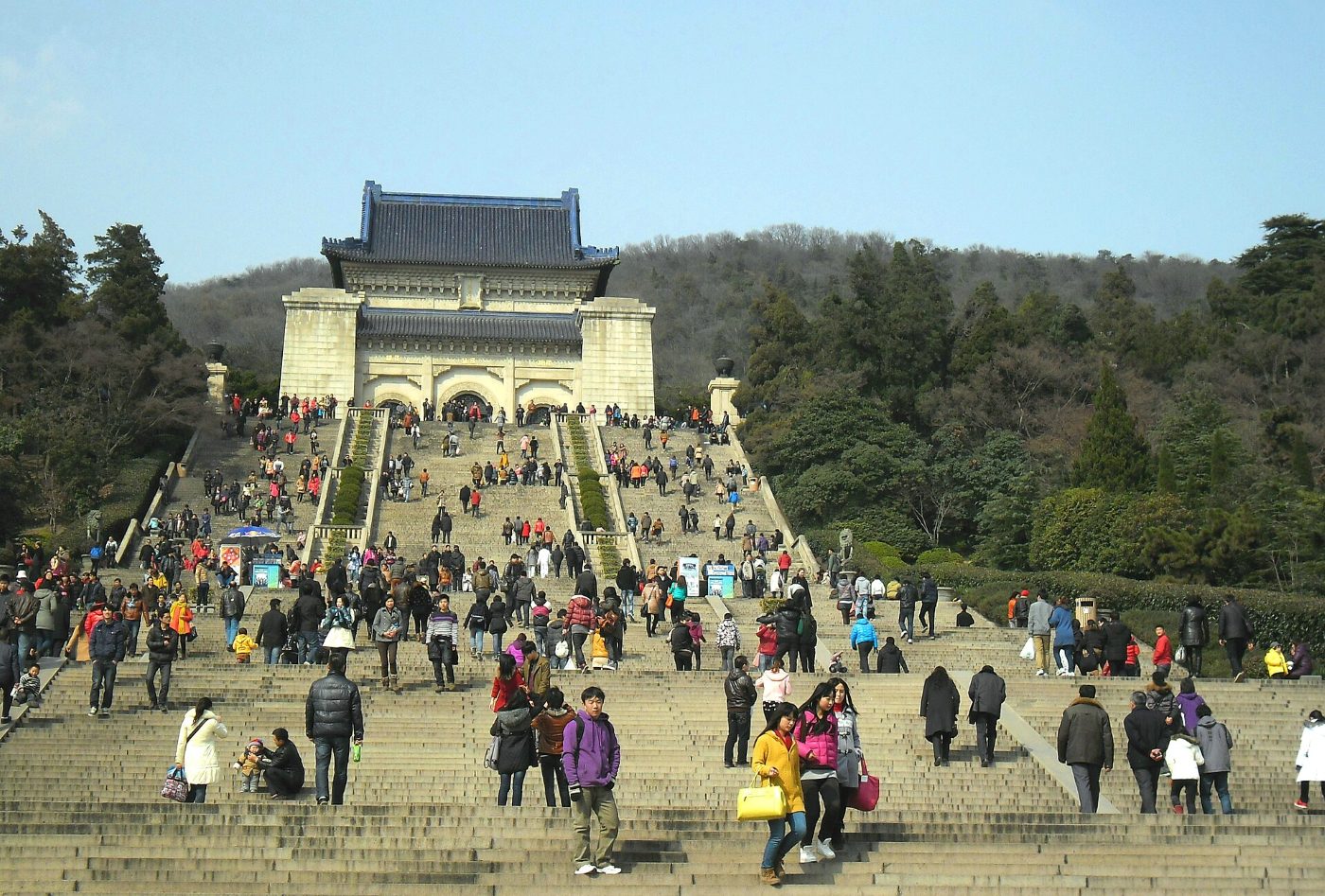
Sun Yat-sen (孙中山, Sun Zhongshan), the first provisional president of the Republic of China, revered in mainland China and Taiwan as the father of modern China, died in Beijing in 1925. In 1929 he was buried in a mausoleum on the slope of Purple Mountain (紫金山, Zijin Shan) on the east side of the city. 392 steps lead up to the memorial hall of white stone and blue tiles, with views of the wooded slopes and the city. Inside stands a 4.6-metre white marble statue of Sun Yat-sen; the burial vault itself is closed to visitors.
NoteThe mausoleum is free, but only with a reservation in your name and passport number – in the 钟山风景区 mini-program in WeChat (Alipay as a fallback), up to 7 days ahead, for a time slot. The hall is closed on Mondays (except holidays), while the park around it stays open. It's quietest early, before 9:30. Bring your original passport.
2. Ming Xiaoling and the Stone Animal Road
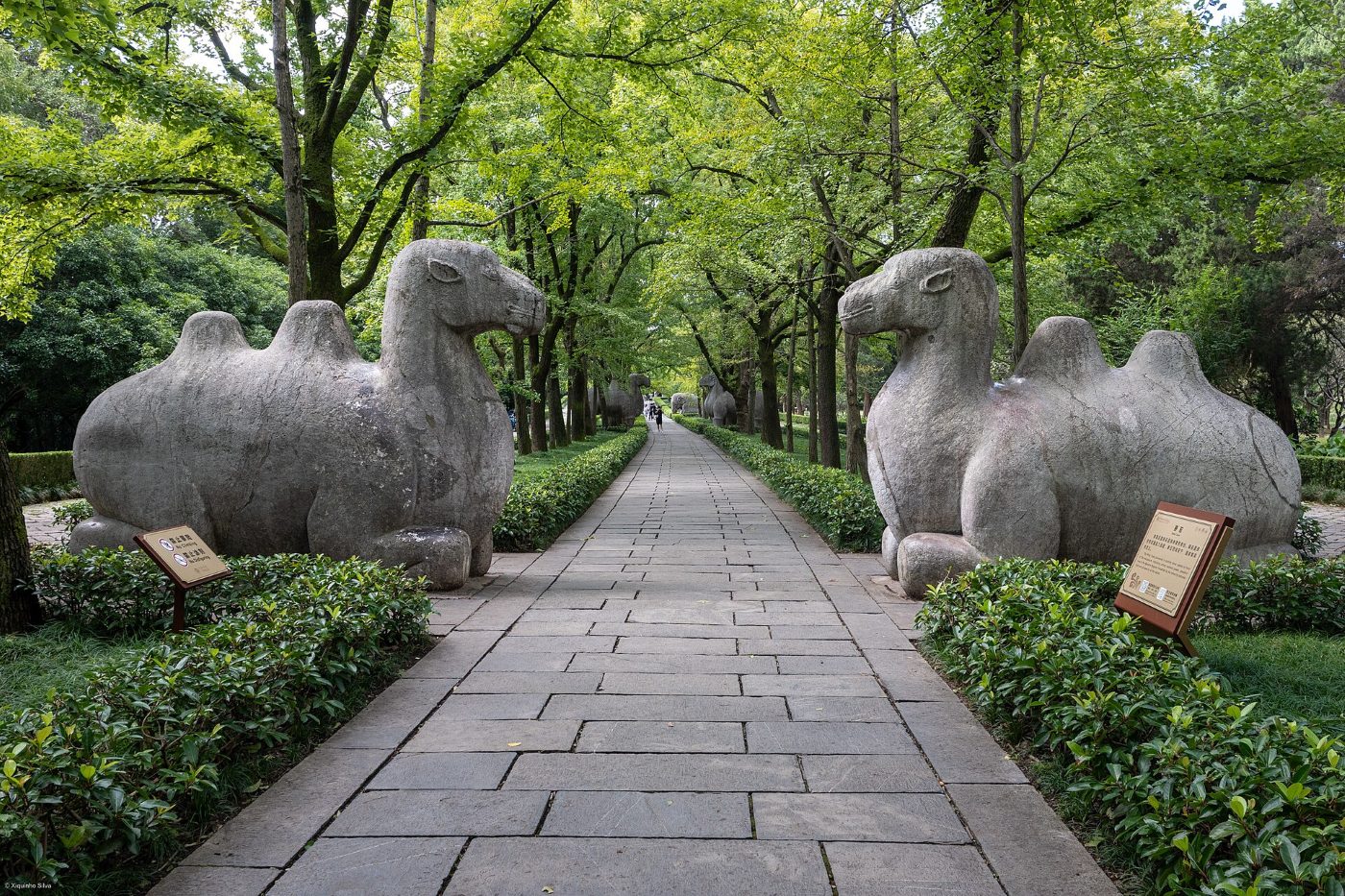
Ming Xiaoling (明孝陵) is the tomb of Zhu Yuanzhang – the Hongwu Emperor, who founded the Ming dynasty and had Nanjing's walls built. It was built between 1381 and 1405 and since 2003 has been on the UNESCO list together with other Ming and Qing imperial tombs. The best-known part is the Stone Animal Road (石象路): 12 pairs of lions, elephants, camels, horses and the mythical xiezhi and qilin, two pairs of each kind – one lying down, one standing. Beyond it runs an avenue of stone officials and generals. A ticket costs ¥70 (about 43 PLN), and a combined ticket with Linggu, Meiling Palace and the Music Terrace (Yinyuetai) is ¥100 (about 61 PLN).
3. Linggu Temple and Meiling Palace
On the eastern slope of Purple Mountain lies Linggu (灵谷寺, ¥35 (about 21 PLN)): a Buddhist temple, the Beamless Hall (无梁殿) from 1381, built entirely of brick without wood or nails, and the nine-storey, 60-metre Linggu Pagoda from 1930–1932, a memorial to soldiers who died in the Northern Expedition. Closer to the city stands Meiling Palace (美龄宫, ¥30 (about 18 PLN)), a 1930s villa used by Chiang Kai-shek and Soong Mei-ling. In late autumn the golden plane trees around it form a "necklace" when seen from above, which draws photographers every year. A sightseeing bus runs between the sights on Purple Mountain (about ¥10 (about 6 PLN) per leg), and a cable car goes up to the top.
4. Nanjing Museum
The Nanjing Museum (南京博物院), founded in 1933, is one of the oldest and largest museums in China, with more than 430,000 objects. Its buildings hold bronzes, Ming and Qing porcelain, painting and crafts, and underground there's a recreated Republic-era Nanjing street with shops and a café. Its greatest treasure is a Han dynasty burial suit made of jade plaques sewn with silver thread (银缕玉衣). Entry is free but requires a real-name reservation – in the 南京博物院 mini-program in WeChat or at njmuseum.com, up to 7 days ahead (new slots at 18:00). Open Tuesday–Sunday 9:00–17:00, closed on Mondays. Allow at least 3 hours. Metro line 2, Minggugong station.
5. Nanjing Massacre Memorial Hall
On 13 December 1937 the Japanese army took Nanjing and over the following weeks killed prisoners of war and civilians. The International Military Tribunal in Tokyo estimated more than 200,000 victims; China puts the number at 300,000. The Memorial Hall (侵华日军南京大屠杀遇难同胞纪念馆) stands on the site of one of the mass graves: an exhibition of documents, photographs and survivors' accounts, a hall with excavated remains and a memorial garden. It's a quiet, moving place – allow 2–3 hours and a moment of calm afterwards. Keep your voice down, and don't photograph the remains.
NoteEntry is free, but everyone, foreigners included, must book in their own name with a passport – via the memorial's official WeChat account (侵华日军南京大屠杀遇难同胞纪念馆), 1 to 7 days ahead (new slots at 8:00). Open Tuesday–Sunday 8:30–17:30, last entry 16:30, closed on Mondays. Around 13 December, the National Memorial Day, hours and access can change. Metro line 2, Yunjinlu station.
6. Presidential Palace
The Presidential Palace (总统府) is a complex with over 600 years of history: a Ming princely residence, the seat of a Qing viceroy, the palace of the Taiping Heavenly King (1853–1864), and in 1912 the office of Sun Yat-sen as provisional president. In 1927–1937 and 1946–1949 it housed the government of the Republic of China, including Chiang Kai-shek's office. Today it's the Museum of Modern Chinese History, with Chinese gardens and office buildings from the 1920s and 1930s. A ticket costs ¥35 (about 21 PLN) and must be booked in the 南京总统府 mini-program in WeChat; show your original passport at the gate. Open 8:30–18:00 (17:00 from 15 October to the end of February), closed on Mondays. Allow 2–3 hours. Metro lines 2 and 3, Daxinggong station.
7. The Ming city wall and Zhonghua Gate
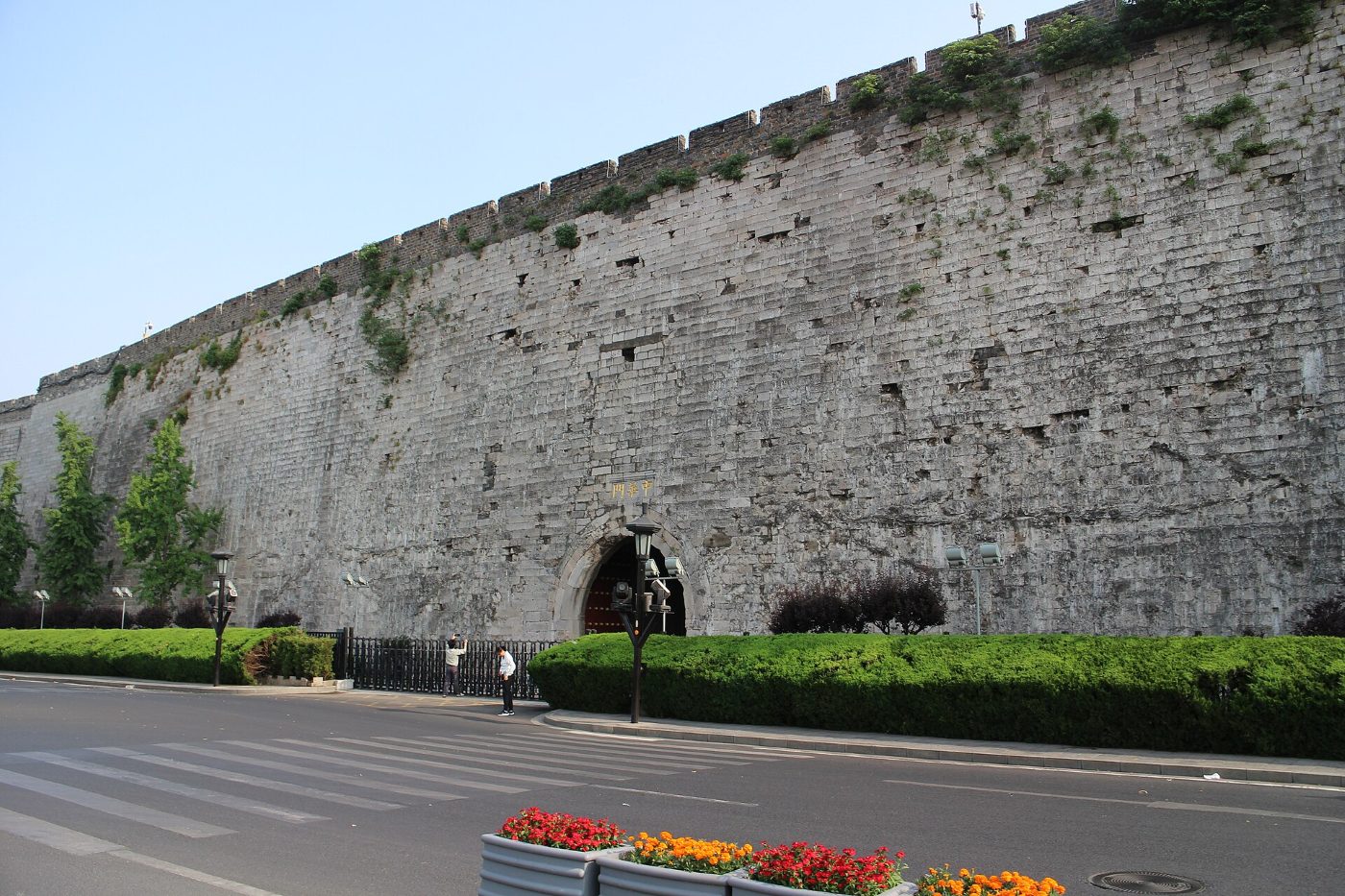
Zhu Yuanzhang had Nanjing's walls built between 1366 and 1393. They were about 35 km long, and more than 25 km survive – one of the longest surviving city walls in the world. Many of the roughly 350 million bricks are stamped with the names of the makers and officials, so that bad workmanship could be traced and punished. The most impressive part is Zhonghua Gate (中华门) in the south: a fortress with four gates one behind another and three courtyards between them, whose 27 chambers in the walls could hold more than 3,000 soldiers. A ticket costs ¥50 (about 30 PLN); it's open 8:30–17:30, and from April to October also in the evening until 21:30. You can also walk the wall by Xuanwu Lake (place 8), and the western section is free.
8. Jiming Temple, Taicheng wall and Xuanwu Lake
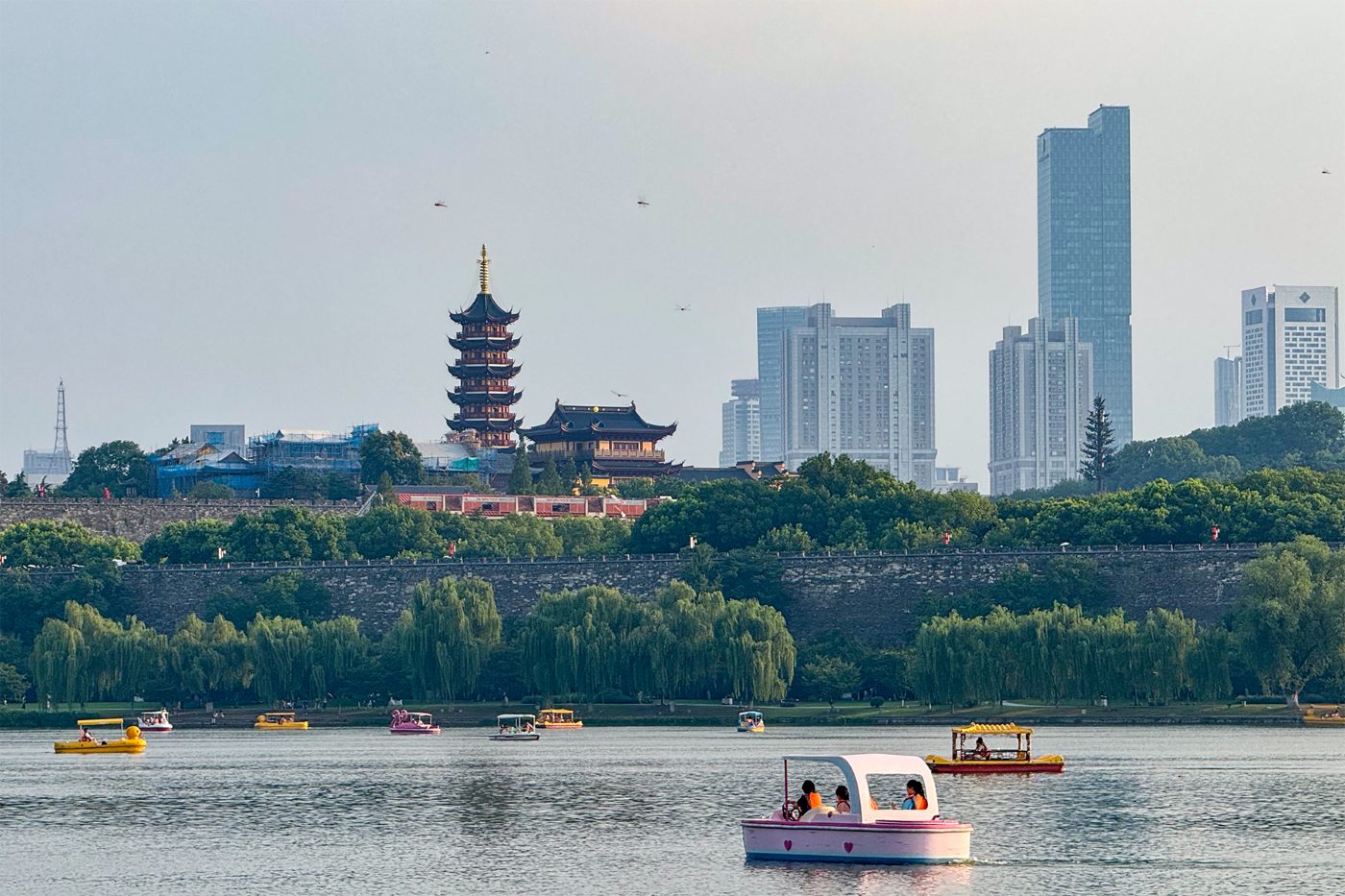
Jiming Temple (鸡鸣寺, "Rooster Crowing Temple") has roots going back to around 300 AD; today's complex dates from the Hongwu Emperor's rebuilding in 1387 and later. The ¥10 (about 6 PLN) ticket includes three incense sticks, and in March the street in front of the temple is a tunnel of cherry blossoms. From the upper exit you reach Jiefang Gate and the Taicheng section of the wall (¥30 (about 18 PLN)), overlooking Xuanwu Lake (玄武湖) – a former imperial garden with five islands, now a free park. Walking the wall at sunset, with Zifeng Tower across the lake, is one of the best views in the city.
9. Confucius Temple and the Qinhuai River
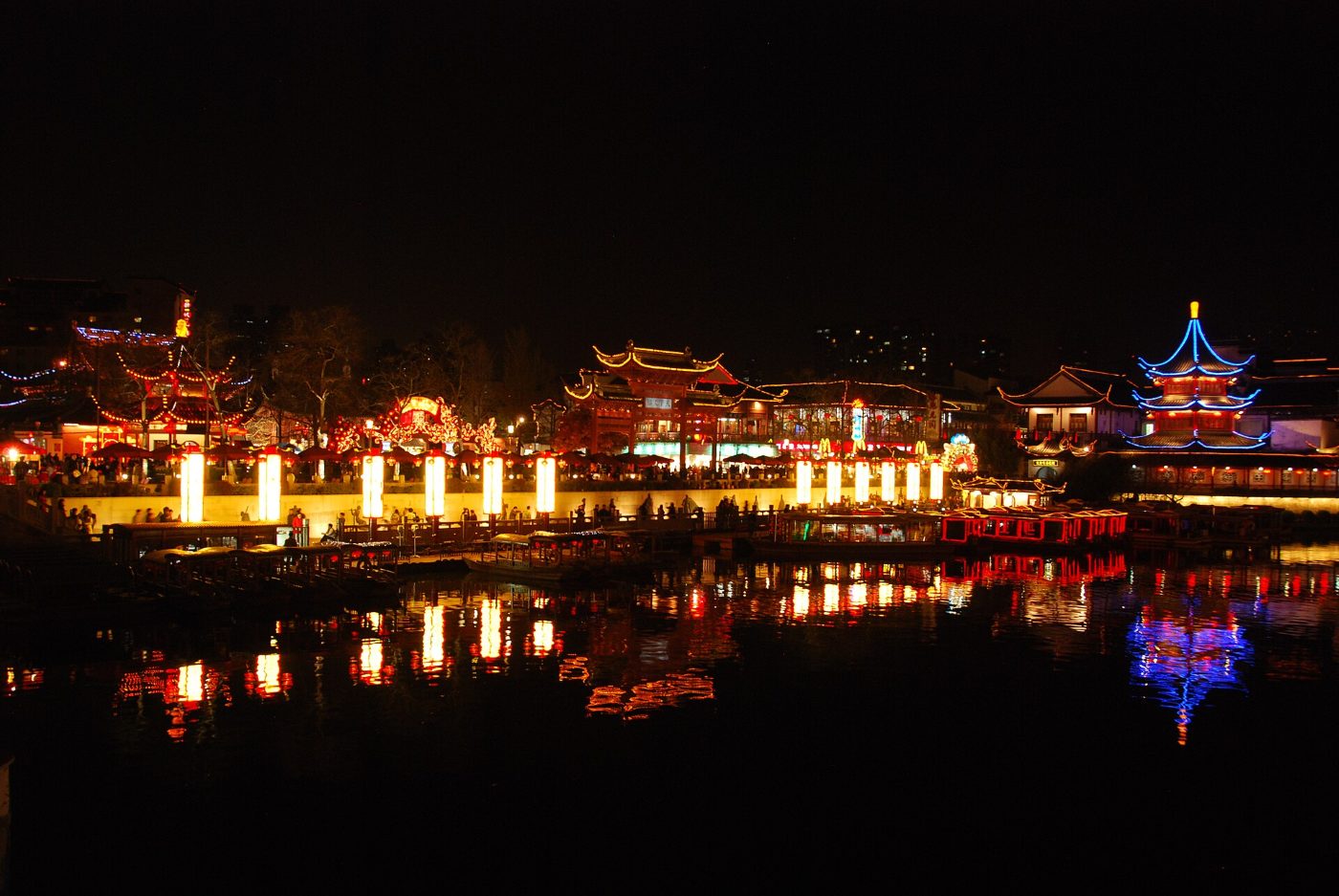
Fuzimiao (夫子庙) is the district around the Confucius Temple on the Qinhuai River (秦淮河): a canal lined with white houses and red lanterns, small bridges, restaurants and snack stalls. The temple itself (Dacheng Hall, ¥30 (about 18 PLN)) has been rebuilt many times. Next door is Jiangnan Gongyuan (江南贡院) – once China's largest imperial examination centre, with thousands of cells where candidates for the civil service sat their exams. It's now a museum, and a combined ticket with the temple costs ¥50 (about 30 PLN). In the evening, take a boat: the cruise lasts 40–50 minutes and costs ¥100 (about 61 PLN) (¥80 (about 49 PLN) by day). The area is crowded and very touristy, but after dark, in the lantern light, it looks like a postcard.
10. Laomendong: old lanes by Zhonghua Gate
Laomendong (老门东, "East of the Old Gate") is a district of grey-brick houses east of Zhonghua Gate, rebuilt in recent years: teahouses, small shops, little museums and dozens of snack bars. Entry is free. It's a good place to try Nanjing's specialities (see below) and to rest under the wall, which runs right alongside.
Day trips from Nanjing: Niushoushan, Wuxi and Suzhou
- Niushoushan and the Usnisa Palace (牛首山 · 佛顶宫): a huge underground temple opened in 2015 to house a relic of the Buddha's skull bone, about 40 minutes from the centre by taxi. Tickets are about ¥98 (about 60 PLN) when bought online a day ahead, and a bus runs around the park.
- Wuxi and Lake Tai (无锡 · 太湖): 40–60 minutes by train; the giant Lingshan Buddha and parks on the lake. In Along the Yangtze it's the stop before Nanjing.
- Suzhou (苏州): the city of gardens and canals, about 1–1.5 hours by train from Nanjing station.
Tickets and prices
| Place | Price | How to buy |
|---|---|---|
| Sun Yat-sen Mausoleum | free | booking in the 钟山风景区 mini-program (WeChat), up to 7 days ahead |
| Ming Xiaoling | ¥70 (about 43 PLN) | at the gate |
| Linggu / Meiling Palace / Music Terrace | ¥35 (about 21 PLN) / ¥30 (about 18 PLN) / ¥10 (about 6 PLN) | at the gate; combined with Ming Xiaoling ¥100 (about 61 PLN) |
| Nanjing Museum | free | booking: 南京博物院 (WeChat) or njmuseum.com, up to 7 days ahead |
| Massacre Memorial Hall | free | booking via the memorial's WeChat account, 1–7 days ahead |
| Presidential Palace | ¥35 (about 21 PLN) | booking in the 南京总统府 mini-program (WeChat) |
| Zhonghua Gate | ¥50 (about 30 PLN) | at the gate |
| Taicheng wall (by Jiming Temple) | ¥30 (about 18 PLN) | at the gate |
| Jiming Temple | ¥10 (about 6 PLN) | at the gate |
| Confucius Temple / with Jiangnan Gongyuan | ¥30 (about 18 PLN) / ¥50 (about 30 PLN) | at the gate |
| Qinhuai River cruise | ¥80 (about 49 PLN) by day, ¥100 (about 61 PLN) in the evening | pier at Fuzimiao |
| Xuanwu Lake, Laomendong | free | – |
| Metro | from ¥2 (about 1 PLN) | QR code in Alipay |
TipYou need a WeChat account to book – set it up before you leave home, along with Alipay (How to pay in China). How to book sights with a passport: China attraction tickets.
How many days in Nanjing
NoteDon't leave Nanjing for a Monday – the Sun Yat-sen Mausoleum, Nanjing Museum, Massacre Memorial Hall and Presidential Palace are all closed (unless it's a public holiday).
- 1 day: the Presidential Palace in the morning, Zhonghua Gate and Laomendong in the afternoon, Fuzimiao and a Qinhuai River cruise in the evening.
- 2 days: add Purple Mountain – the Sun Yat-sen Mausoleum (booked!) and Ming Xiaoling in the morning, the Massacre Memorial Hall in the afternoon, and the wall above Xuanwu Lake at sunset – just like in our Along the Yangtze itinerary.
- 3 days: add the Nanjing Museum (half a day), Jiming Temple or Linggu and Meiling Palace, or a trip to Niushoushan.
What to eat in Nanjing
Nanjing is a duck city – Chinese people joke that "no duck swims out of Nanjing alive" (没有一只鸭子能游出南京). A meal in an ordinary restaurant costs about ¥60 (about 36 PLN)–¥100 (about 61 PLN) per person, and a bowl of soup or a plate of dumplings in a canteen about ¥15 (about 9 PLN)–¥30 (about 18 PLN).
- Salted duck (盐水鸭): cold, tender duck cooked in brine – the city's most famous speciality.
- Duck blood soup (鸭血粉丝汤): broth with glass noodles, cubes of duck blood and offal.
- Beef potstickers (牛肉锅贴): crispy pan-fried dumplings from Muslim eateries marked 清真.
- Soup buns (汤包): thin dough filled with meat and hot broth.
- Sweet: plum-blossom-shaped cakes (梅花糕) and taro in osmanthus syrup (桂花糖芋苗).
All of these are served at the popular Nanjing Impressions (南京大牌档) chain, decorated like an old teahouse; for soup buns try Jiming Tangbao (鸡鸣汤包). For snacks, head to Laomendong or Fuzimiao. More on China's cuisines: Chinese regional cuisines.
Getting there and around
- From Shanghai by train: about 167 high-speed trains a day run from Shanghai Hongqiao to Nanjing South (南京南站), from 6:09 to 22:05. The fastest takes 59 minutes and most about 1.5 hours, for ¥128 (about 78 PLN)–¥162 (about 99 PLN) in second class. Some trains from Shanghai station (上海站) run to Nanjing station (南京站) in the centre.
- From Hangzhou: from 1 hour, usually about 1.5 hours, ¥106 (about 64 PLN)–¥223 (about 136 PLN) in second class (Hangzhou to Nanjing by train).
- From Beijing: from Beijing South in as little as 3 hours 14 minutes, usually about 4.5 hours, ¥444 (about 270 PLN)–¥556 (about 338 PLN) in second class.
- Onward to Wuhan: from 2.5 hours, ¥202 (about 123 PLN)–¥272 (about 165 PLN) in second class (Nanjing to Wuhan by train, Wuhan travel guide).
- By air: from Europe you'll usually fly into Shanghai and take the train. Nanjing Lukou Airport (NKG) is about 35 minutes from Nanjing South on metro line S1.
- In the city: the metro (from ¥2 (about 1 PLN), QR code in Alipay) reaches most sights: line 2 – Daxinggong (Presidential Palace), Minggugong (Nanjing Museum), Muxuyuan (Purple Mountain), Yunjinlu (Massacre Memorial Hall); line 1 – Zhonghuamen; lines 3 and 4 – Jimingsi (Jiming Temple).
Watch the station names: Nanjing South (南京南站, the main high-speed station, metro lines 1, 3, S1 and S3) and Nanjing (南京站, the older station by Xuanwu Lake, metro lines 1 and 3). Get to Nanjing South about 45 minutes before departure – it's huge.
Where to stay in Nanjing
- Xinjiekou (新街口): the very centre, where metro lines 1 and 2 meet, close to the Presidential Palace, shops and restaurants. The easiest base for a first visit – it's where you stay in Along the Yangtze.
- Fuzimiao and Laomendong (夫子庙 · 老门东): old-town atmosphere with the Qinhuai River round the corner, but noisy and touristy.
- Around Xuanwu Lake and Nanjing station: quieter, close to Jiming Temple and the wall.
- By Nanjing South station: only if you're staying one night on your way elsewhere.
A chain hotel usually costs about ¥300 (about 182 PLN)–¥400 (about 243 PLN) for a double room, and a 4–5-star hotel about ¥600 (about 365 PLN)–¥1,200 (about 730 PLN) (Prices in China).
Nanjing weather and when to go
| Month | Day / night | What it's like |
|---|---|---|
| January | 7°C / 0°C | cold and damp, sometimes snow |
| April | 21°C / 12°C | warm and green, the best time for Purple Mountain |
| July | 32°C / 25°C | hot and humid – Nanjing is one of the "three furnaces" on the Yangtze |
| October | 23°C / 14°C | sunny and dry |
The best seasons are spring (March–May) – plum blossoms on Plum Blossom Hill (梅花山) next to Ming Xiaoling in February and March, cherry blossoms at Jiming Temple in March – and autumn (October–November), when Purple Mountain and the plane-tree avenues turn gold. The rainy season runs from mid-June to the end of July, and July and August bring over 30°C during the day. Avoid 1–7 October, 1–5 May and Chinese New Year, and if you want to visit the Massacre Memorial Hall, the days around 13 December. More: Best time to visit China
Nanjing in our itineraries
| Itinerary | Days | Route |
|---|---|---|
| Along the Yangtze | 11 | Shanghai → Ningbo → Hangzhou → Tianducheng → Wuxi → Nanjing → Wuhan |
In Along the Yangtze you get two days in Nanjing: on the first, the Presidential Palace, Zhonghua Gate and an evening cruise on the Qinhuai; on the second, Purple Mountain with the Sun Yat-sen Mausoleum and Ming Xiaoling, the Massacre Memorial Hall and a walk on the wall above Xuanwu Lake. On the third morning you take the train up the Yangtze to Wuhan. The itinerary includes step-by-step transport, prices and addresses in Chinese.
Frequently asked questions
How many days do you need in Nanjing?
Two days are enough for Purple Mountain (the Sun Yat-sen Mausoleum and Ming Xiaoling), the Massacre Memorial Hall, the Presidential Palace, Zhonghua Gate and an evening on the Qinhuai. With the Nanjing Museum, Linggu or a trip to Niushoushan, plan three days.
Can you do Nanjing as a day trip from Shanghai?
Yes, the train takes as little as an hour, so in one day you can see, for example, Purple Mountain and Fuzimiao in the evening. Remember the reservations for the mausoleum and museums, and that they're closed on Mondays. For the rest of the city, it's worth staying the night.
Do you need to book the Sun Yat-sen Mausoleum?
Yes. Entry is free, but only with a real-name reservation using your passport in the 钟山风景区 mini-program in WeChat, up to 7 days ahead. The memorial hall is closed on Mondays.
How much is the Nanjing Massacre Memorial Hall?
It's free, but everyone – foreigners included – must book with a passport via the memorial's official WeChat account, 1 to 7 days ahead. It's open Tuesday to Sunday, 8:30–17:30.
How do I get from Shanghai to Nanjing?
By high-speed train from Shanghai Hongqiao to Nanjing South: from 59 minutes, usually about 1.5 hours, ¥128 (about 78 PLN)–¥162 (about 99 PLN) in second class. Trains run from about 6:00 to 22:00, and you can buy tickets with your passport on Trip.com or 12306 (How to buy train tickets in China).
When is the best time to visit Nanjing?
Spring, from March to May (plum and cherry blossoms), or autumn, in October and November (golden trees on Purple Mountain). Avoid the rainy season from mid-June, the heat of July and August, and Chinese public holidays.
Do I need a visa for Nanjing?
Citizens of 50 countries, including most of the EU, the UK, Canada and Australia, can currently enter China visa-free for up to 30 days, until 31 December 2026. All of Jiangsu province is also covered by the 240-hour visa-free transit, and Nanjing Lukou Airport is one of its ports of entry if you're flying on to a third country. Details: China visa-free.
Sources
- Wander in China (2026): Sun Yat-sen Mausoleum – tickets and booking, Nanjing Museum, Massacre Memorial Hall, Presidential Palace, city wall and Zhonghua Gate, Jiming Temple, Qinhuai River cruise and train stations
- Zhongshan Scenic Area (Nanjing city website): prices for Ming Xiaoling, Linggu, Meiling Palace and cable car hours
- Wikipedia: Nanjing (climate, CMA 1991–2020 normals), Sun Yat-sen Mausoleum, Ming Xiaoling, Linggu Temple and City Wall of Nanjing
- Train timetables and fares from the 12306 system (November 2026); our Along the Yangtze itinerary (as of October 2026); photos from Wikimedia Commons (authors and licences in the captions)
Nanjing in a ready-made itinerary
In Along the Yangtze Nanjing is planned hour by hour: the train from Wuxi, the Presidential Palace, a Nanjing duck lunch, Zhonghua Gate and a Qinhuai River cruise, then Purple Mountain, the Massacre Memorial Hall and the wall above Xuanwu Lake the next day – with prices and addresses in Chinese for taxi drivers. The itinerary links Nanjing with Shanghai, Ningbo, Hangzhou, Wuxi and Wuhan. Prefer a shorter trip to Shanghai and Nanjing? We can make you a custom itinerary.