Before you go · 7 min read
Basic Chinese phrases for travellers – 70 phrases that help in China
In short: few people in China speak English, but you don't need to learn Chinese. The easiest way is to show Chinese characters on your phone – any Chinese person can read them instantly. Below are about 70 of the most useful phrases: at restaurants, shops, in taxis, at hotels and in an emergency. Each has the characters, the pinyin pronunciation and the meaning. Take screenshots and you're ready.
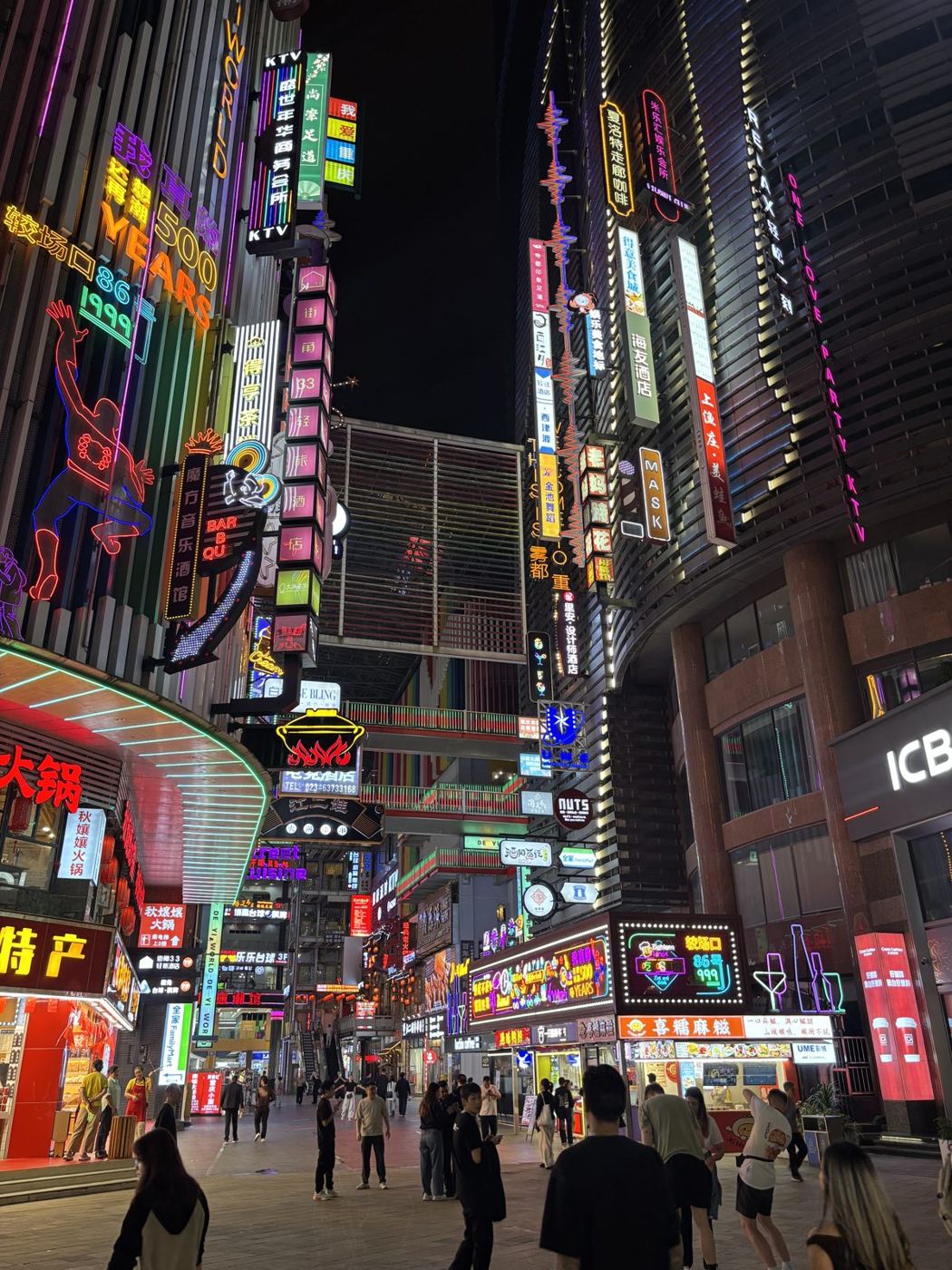
What surprised us most in China was how safe we felt – even when we couldn't make ourselves understood. A phrase in Chinese on a phone screen and a smile were usually enough for someone to help.
How to use these phrases
- Show the characters, don't try to pronounce them. Chinese has four tones, and the same syllable in a different tone means something else. Characters are unambiguous.
- Take screenshots of this page – the signal can be weak in the metro and in the mountains.
- A translator app: without a VPN, Google Translate only works offline with the Chinese pack downloaded in advance. Apple Translate, Microsoft Translator (with Chinese downloaded offline) and the translation built into WeChat also work well (internet in China).
- Keep addresses in Chinese. Taxi drivers can't read hotel or street names in the Latin alphabet.
TipPinyin isn't read like English: "x" is close to "sh", "q" to "ch", "j" to "j", "zh" to a hard "j", "c" to "ts" and "r" to the "s" in "pleasure". The marks over the vowels are the tones.
The basics
| Chinese | Pinyin | Meaning |
|---|---|---|
| 你好 | nǐ hǎo | Hello |
| 您好 | nín hǎo | Hello (polite, to older people) |
| 谢谢 | xièxie | Thank you |
| 不客气 | bú kèqi | You're welcome |
| 对不起 | duìbuqǐ | Sorry (for a mistake) |
| 不好意思 | bù hǎoyìsi | Excuse me (to get attention or get past) |
| 对 / 不对 | duì / bú duì | Yes, that's right / no, that's not right |
| 好的 | hǎo de | OK |
| 不用了,谢谢 | bú yòng le, xièxie | No need, thank you |
| 可以拍照吗? | kěyǐ pāizhào ma? | May I take a photo? |
| 再见 | zàijiàn | Goodbye |
When you don't understand each other
| Chinese | Pinyin | Meaning |
|---|---|---|
| 我听不懂 | wǒ tīng bu dǒng | I don't understand |
| 我不会说中文 | wǒ bú huì shuō Zhōngwén | I don't speak Chinese |
| 你会说英语吗? | nǐ huì shuō Yīngyǔ ma? | Do you speak English? |
| 请再说一遍 | qǐng zài shuō yí biàn | Please say that again |
| 请慢一点 | qǐng màn yìdiǎn | Please speak more slowly |
| 请写下来 | qǐng xiě xiàlái | Please write it down |
| 我是外国人 | wǒ shì wàiguórén | I'm a foreigner |
Numbers and money
| Character | Pinyin | Number |
|---|---|---|
| 一 | yī | 1 |
| 二 | èr | 2 |
| 三 | sān | 3 |
| 四 | sì | 4 |
| 五 | wǔ | 5 |
| 六 | liù | 6 |
| 七 | qī | 7 |
| 八 | bā | 8 |
| 九 | jiǔ | 9 |
| 十 | shí | 10 |
| 一百 | yìbǎi | 100 |
| 两个 | liǎng ge | two (items) |
In everyday speech the yuan is called 块 (kuài): 五十块 (wǔshí kuài) is 50 yuan. At markets sellers often show the price on a calculator – you can type your own offer too.
Counting on your fingers: from 6 to 10 Chinese people show numbers with one hand, differently from the West. 6 – thumb and little finger, 7 – the tips of the thumb, index and middle fingers pressed together, 8 – thumb and index finger (like an L), 9 – a crooked index finger, 10 – a closed fist or crossed index fingers.
At a restaurant
| Chinese | Pinyin | Meaning |
|---|---|---|
| 请给我菜单 | qǐng gěi wǒ càidān | The menu, please |
| 有英文菜单吗? | yǒu Yīngwén càidān ma? | Is there an English menu? |
| 两个人 | liǎng ge rén | A table for two |
| 我要这个 | wǒ yào zhège | I'll have this (pointing) |
| 有什么推荐的? | yǒu shénme tuījiàn de? | What do you recommend? |
| 辣吗? | là ma? | Is it spicy? |
| 不要辣 | bú yào là | Not spicy |
| 微辣 | wēi là | Just a little spicy |
| 我吃素 | wǒ chī sù | I'm vegetarian |
| 我不吃猪肉 | wǒ bù chī zhūròu | I don't eat pork |
| 我对花生过敏 | wǒ duì huāshēng guòmǐn | I'm allergic to peanuts |
| 一瓶水 | yì píng shuǐ | A bottle of water |
| 好吃! | hǎochī! | Delicious! |
| 买单 | mǎidān | The bill, please |
| 打包 | dǎbāo | To take away / please pack the rest |
NoteIn Sichuan and Chongqing "a little spicy" (微辣) can already be very hot for most visitors. If you don't like spicy food, say 不要辣 straight away (Chinese regional cuisines).
Shopping and bargaining
| Chinese | Pinyin | Meaning |
|---|---|---|
| 多少钱? | duōshao qián? | How much is it? |
| 太贵了 | tài guì le | Too expensive |
| 便宜一点吧 | piányi yìdiǎn ba | A bit cheaper? |
| 我只是看看 | wǒ zhǐshì kànkan | I'm just looking |
| 可以用支付宝吗? | kěyǐ yòng Zhīfùbǎo ma? | Can I pay with Alipay? |
| 可以刷卡吗? | kěyǐ shuā kǎ ma? | Can I pay by card? |
At markets and tourist stalls the first price can be several times too high – start at about a third and keep smiling. In shops, malls and restaurants prices are fixed (how to pay in China).
Taxi, metro and train
| Chinese | Pinyin | Meaning |
|---|---|---|
| 请带我去这里 | qǐng dài wǒ qù zhèlǐ | Please take me here (show the address in Chinese) |
| 去机场 | qù jīchǎng | To the airport |
| 去火车站 | qù huǒchēzhàn | To the railway station |
| 请打表 | qǐng dǎ biǎo | Please use the meter |
| 请在这里停 | qǐng zài zhèlǐ tíng | Please stop here |
| 地铁站在哪里? | dìtiězhàn zài nǎlǐ? | Where is the metro station? |
| 几号检票口? | jǐ hào jiǎnpiàokǒu? | Which ticket gate? |
| 我的座位在哪里? | wǒ de zuòwèi zài nǎlǐ? | Where is my seat? |
| 洗手间在哪里? | xǐshǒujiān zài nǎlǐ? | Where is the toilet? |
More on trains in our guide how to buy train tickets in China.
At the hotel
| Chinese | Pinyin | Meaning |
|---|---|---|
| 我有预订 | wǒ yǒu yùdìng | I have a reservation |
| 我要退房 | wǒ yào tuìfáng | I'd like to check out |
| WiFi密码是多少? | WiFi mìmǎ shì duōshao? | What's the Wi-Fi password? |
| 可以寄存行李吗? | kěyǐ jìcún xíngli ma? | Can I leave my luggage? |
| 请帮我叫出租车 | qǐng bāng wǒ jiào chūzūchē | Please call me a taxi |
Help and health
| Chinese | Pinyin | Meaning |
|---|---|---|
| 请帮帮我! | qǐng bāngbang wǒ! | Please help me! |
| 请叫救护车 | qǐng jiào jiùhùchē | Please call an ambulance |
| 请报警 | qǐng bàojǐng | Please call the police |
| 我需要看医生 | wǒ xūyào kàn yīshēng | I need a doctor |
| 附近有药店吗? | fùjìn yǒu yàodiàn ma? | Is there a pharmacy nearby? |
| 我的护照丢了 | wǒ de hùzhào diū le | I've lost my passport |
| 我迷路了 | wǒ mílù le | I'm lost |
| 我需要联系我的大使馆 | wǒ xūyào liánxì wǒ de dàshǐguǎn | I need to contact my embassy |
Emergency numbers in China: 110 – police, 120 – ambulance, 119 – fire, 122 – traffic accident. In Hong Kong and Macau – 999. More safety tips in Is China safe to visit?.
Signs worth recognising
| Characters | Pinyin | Meaning |
|---|---|---|
| 入口 | rùkǒu | entrance |
| 出口 | chūkǒu | exit |
| 洗手间 · 厕所 | xǐshǒujiān · cèsuǒ | toilet |
| 男 · 女 | nán · nǚ | men · women |
| 推 · 拉 | tuī · lā | push · pull |
| 地铁 | dìtiě | metro |
| 售票处 | shòupiàochù | ticket office |
| 检票口 | jiǎnpiàokǒu | ticket gate |
| 安检 | ānjiǎn | security check |
| 禁止吸烟 | jìnzhǐ xīyān | no smoking |
Frequently asked questions
Can you get by in China with English?
In hotels used to foreign guests, at airports and at the big sights – usually yes. In restaurants, shops and taxis – rarely. Chinese phrases shown on your phone and an offline translator make up the difference.
Do I need to learn the tones?
No. Show the Chinese characters – they're unambiguous. Chinese people will understand a few simple words like 你好 (nǐ hǎo) and 谢谢 (xièxie) even with imperfect tones, and trying a little Chinese always earns a smile.
Which translator works in China?
Google Translate works without a VPN only offline, with the Chinese pack downloaded beforehand. Apple Translate, Microsoft Translator and WeChat's built-in translation work online.
How do you say "thank you" in Chinese?
谢谢 (xièxie) – roughly "shyeh-shyeh".
Sources
- Our Chinese phrasebook for travellers (3-page PDF) – phrases tested on our trips; the help phrases match the SOS card in our app
- Wikipedia: Pinyin and Standard Chinese
- Emergency numbers: our guide Is China safe to visit?
Addresses in Chinese in every itinerary
In our travel itineraries every place comes with its name and address in Chinese to show a taxi driver, and the app has an SOS card with help phrases. You don't have to translate anything yourself.