Destinations and inspiration · 8 min read
The Terracotta Army in Xi'an: tickets, how to get there and what to see
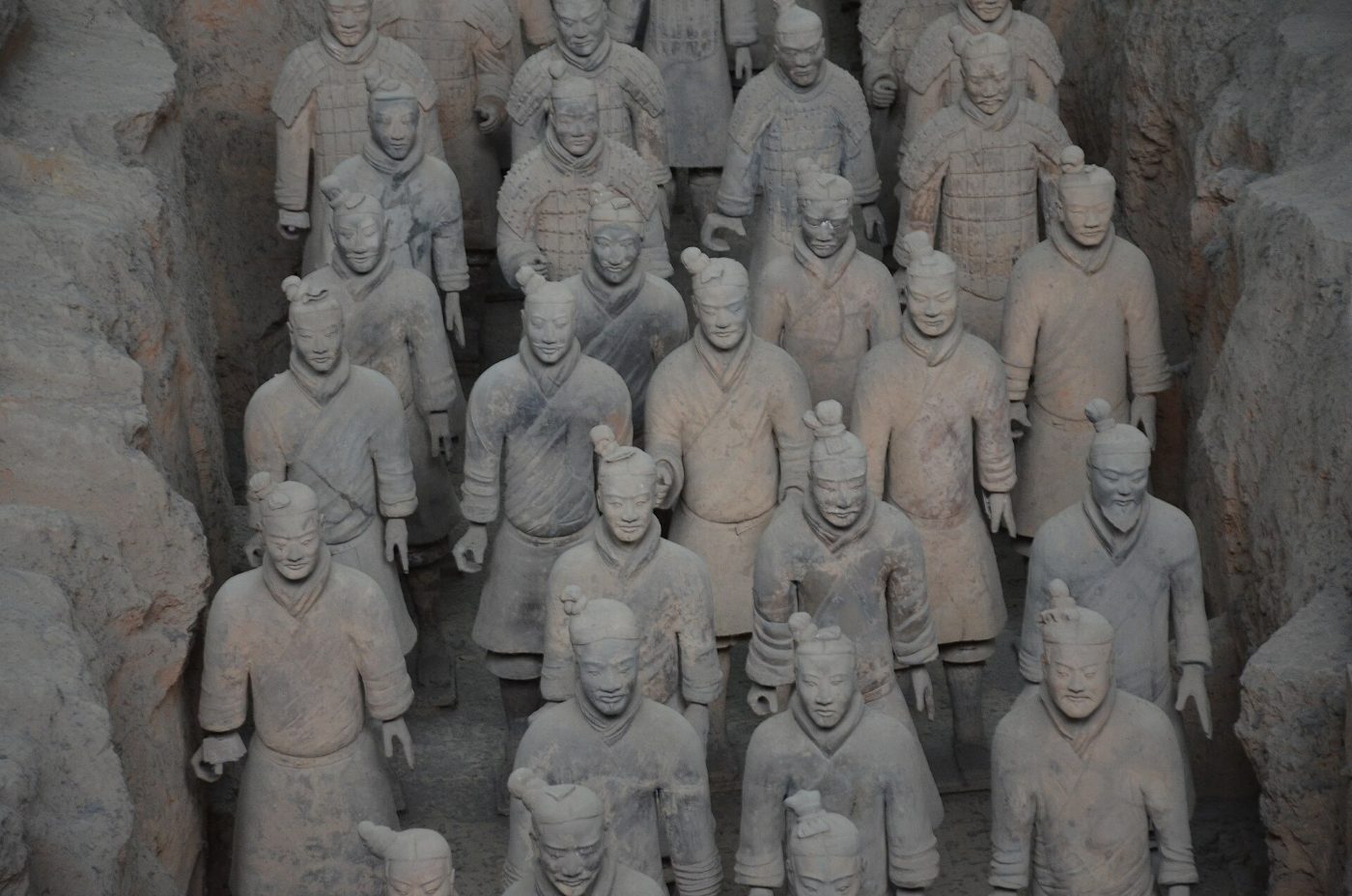
In short: the Terracotta Army (兵马俑, Bīngmǎyǒng) stands in Lintong district, about 40 km from central Xi'an. A ticket costs ¥120 (about 72 PLN) all year, and you can buy it online only, with your passport, up to 7 days ahead, most easily on Trip.com. It covers the museum with its three pits and Lishan Garden with the bronze chariots, linked by a free shuttle. Allow 3–4 hours on site and about 1–1.5 hours each way: by metro line 9 and a short bus, or by car. Bus 游5 (306) no longer leaves from the old Xi'an station: since 29 August 2026 it starts at Xi'an East station. Watch out for touts at the station and at the museum.
In both of our itineraries with Xi'an you leave at 7:30 and reach the first pit around 9:00. That leaves time for lunch in the city and the Big Wild Goose Pagoda in the afternoon.
Correct as of 18 November 2026. Prices, hours and rules follow the museum's official website. Yuan amounts are converted at the NBP rate into the currency selected in the site menu.
Terracotta Army tickets: 2026 prices
| Ticket | Price | Notes |
|---|---|---|
| Adult | ¥120 (about 72 PLN) | same price all year |
| Student | ¥60 (about 36 PLN) | undergraduates and school pupils, with student ID at the gate |
| Non-Chinese child up to 1.4 m | free | with a parent, but must also be booked |
| Shuttle to Lishan Garden | free | included in the ticket |
| Electric cart | ¥5 (about 3 PLN) at the museum, ¥15 (about 9 PLN) at Lishan | optional |
Free entry for over-65s and under-16s applies to Chinese citizens, so older visitors on a foreign passport pay the full price. The museum's Chinese notice describes the student discount as being for students at Chinese universities, so a foreign student card may not be enough.
How to buy a ticket
- Buy online only. The museum sells named tickets online, to foreigners too: on its official website and through the WeChat accounts "秦始皇帝陵博物院" and "兵马俑票务在线". Trip.com is the simplest for tourists, and the museum's English site also links to it. Klook sells tickets too.
- Buy early. Sales open 7 days before your visit, and the museum takes about 65,000 people a day. In July and August and in the first weeks of May and October tickets go fastest.
- Choose an entry time. The museum admits visitors in time slots and asks you to be at the entrance half an hour early.
- Bring your original passport. It's your ticket: you scan it at the gate. The ticket is valid only on that day and is checked three times. You can get a refund until it's first scanned, and the money comes back in 3–5 working days.
More on this kind of booking: Attraction tickets in China.
Opening hours
| Period | First entry | Last entry |
|---|---|---|
| 16 March – 15 November | 8:30 | 17:00 |
| 16 November – 15 March | 8:30 | 16:30 |
The museum is also open on Mondays. Hours can change during major holidays, so check the latest notice. You enter the pits only through the North Gate, and the route runs one way.
How to get there from Xi'an
| How | From | Time | Cost |
|---|---|---|---|
| Metro line 9 and bus 602 or 613 | Huaqingchi station (华清池), exit C | about 1.5 hours from the centre, the bus alone 15–20 minutes | metro about ¥7 (about 4 PLN), bus ¥2 (about 1 PLN)–¥5 (about 3 PLN) |
| Tourist bus 游5 (306) | Xi'an East station (西安东站) or the Fangzhicheng hub (纺织城, by metro lines 1 and 9) | slower than the metro: 45 km and 28 stops | ¥7 (about 4 PLN), cash only |
| DiDi or a car with driver | central Xi'an | about 1 hour | about ¥120 (about 72 PLN)–¥160 (about 96 PLN) |
NoteBus 306 hasn't left from the old Xi'an Railway Station (西安火车站) since 2019, and since 29 August 2026 it starts at Xi'an East station. Even so, touts at the old station push "306 buses" that stop at shops along the way or go to fake museums – don't get on. At the museum itself, people in uniforms sometimes say tickets are sold out and steer you to other buildings. They aren't museum staff, and your ticket is linked to your passport anyway.
Enter 秦始皇兵马俑博物馆 in DiDi. On the way back, check when the last bus leaves, or book a car in advance.
What to see, and in what order
- Pit 1 (14,260 m²): the most important and the largest, in a hall the size of a hangar. These are the famous rows of soldiers: about 6,000 figures in all, of which more than 500 have been uncovered, plus horses and chariots. Start here, as it gets crowded later in the day.
- Pit 2 (about 6,000 m²): a mixed force of archers, cavalry, chariots and infantry. It's only partly excavated, but you can see individual figures up close in glass cases, including the kneeling archer.
- Pit 3 (about 520 m²): the smallest, probably the army's command post. It's the only pit that didn't burn, so its figures kept the most paint.
- Lishan Garden and the bronze chariots: after the museum, take the free shuttle to the park around the emperor's burial mound. Its hall, 铜车马馆, holds two half-size bronze chariots from around 210 BC. Many people skip Lishan, but the museum allows about 1.5 hours for each of the two parts.
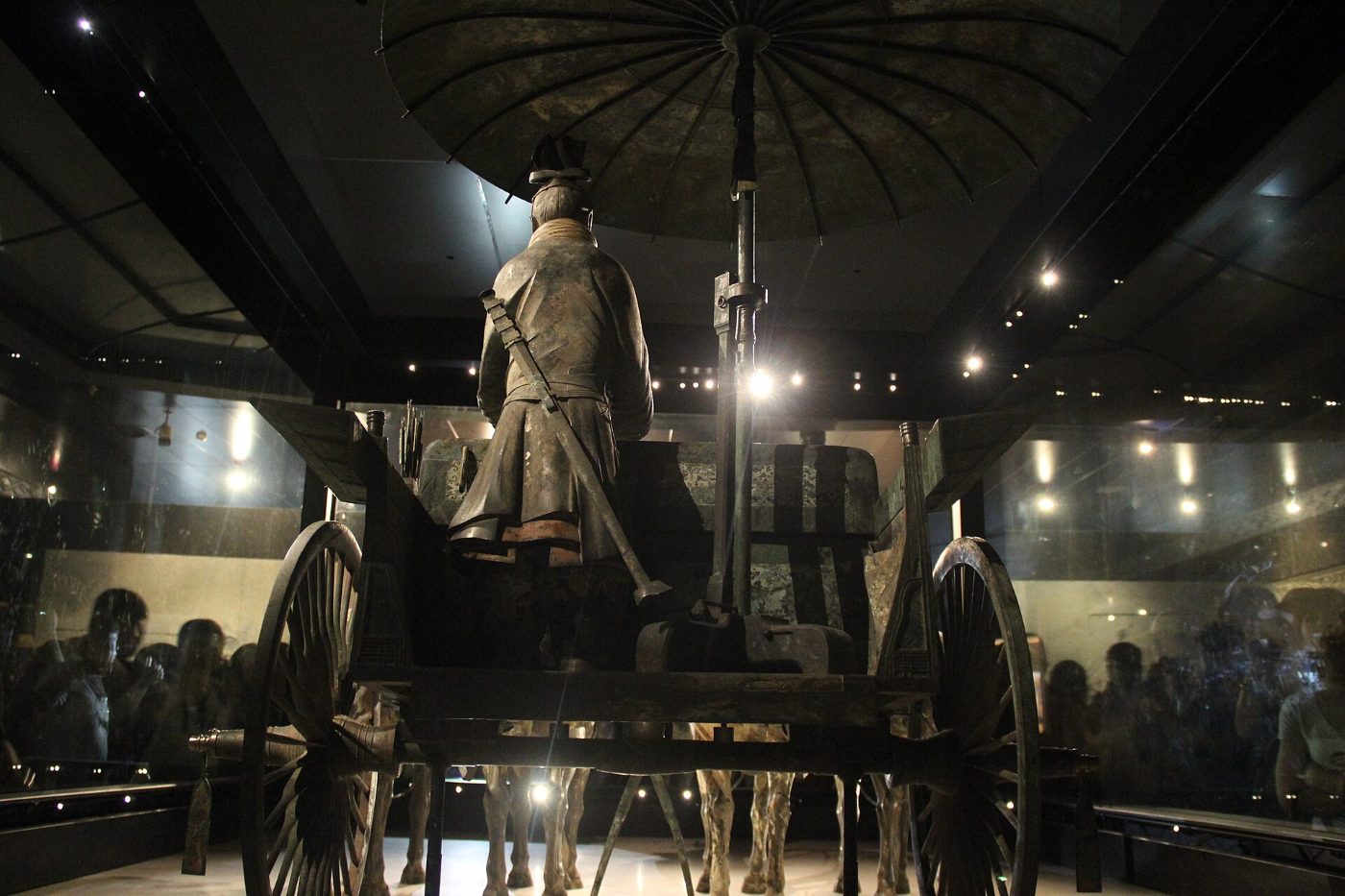
The emperor's tomb itself remains unopened, so at Lishan you see the mound from outside and the nearby burial pits.
Practical tips
- Audio guide or human guide: worth it, as without the stories the pits soon start to look alike. Arrange a guide in advance, not at the gate, as unlicensed "guides" at the entrance can take you to shops.
- Luggage: the left-luggage office by the ticket hall is free, which helps if you're coming straight from a train. It doesn't accept valuables or electronics.
- What not to bring: lighters, knives, drones, kites, scooters and bicycles.
- When to go: ideally on a weekday, in the first entry slots. Avoid 1–7 October and 1–5 May.
- Food: it's best to eat in Xi'an and just bring water. What else to see in the city: Xi'an: what to see and 2 days in Xi'an.
- While you're there: Huaqing Palace, with its imperial hot springs, is next to Huaqingchi station, so you can combine the two in one day.
Terracotta Army facts
- What is it? A clay army meant to guard Qin Shi Huang, the first emperor of a unified China, after his death.
- When was it made? In the 3rd century BC, before the emperor died in 210 BC.
- When was it found? In March 1974, when farmers from Xiyang village were digging a well.
- How many soldiers are there? About 8,000 figures, horses and chariots in all, with about 6,000 in Pit 1. Only some have been excavated.
- Does each one have a different face? Yes, the figures differ in their features, hairstyles and clothes. They were originally painted too, and only traces of the colour survive.
- UNESCO: on the World Heritage List since 1987.
Frequently asked questions
Where is the Terracotta Army?
In China, in the Lintong district of Xi'an, about 40 km east of the centre. From Xi'an you can take metro line 9 and a short bus, a car, or tourist bus 游5 (306), which since 29 August 2026 runs from Xi'an East station.
How much is a Terracotta Army ticket?
¥120 (about 72 PLN) all year. The ticket covers Pits 1–3 in the museum, Lishan Garden with the bronze chariots and the free shuttle between them. Non-Chinese children up to 1.4 m enter free but must be booked.
How do I buy Terracotta Army tickets?
Online only, with your passport, up to 7 days before your visit: on Trip.com, Klook, the museum's official website or its WeChat accounts. During school holidays and Chinese public holidays buy as early as you can, and show your original passport at the entrance.
How much time do you need for the Terracotta Army?
3–4 hours on site, or half a day or a little more with the journey. The museum allows about 1.5 hours for the pits and the same for Lishan Garden.
Is the Terracotta Army open on Mondays?
Yes. First entry is at 8:30 and last entry at 17:00 (16:30 from 16 November to 15 March). Hours can change during major holidays.
When was the Terracotta Army made?
In the 3rd century BC, for Qin Shi Huang, the first emperor of a unified China, who died in 210 BC. Farmers digging a well only discovered it in 1974.
Can you see the emperor's tomb?
Not inside, as the burial chamber hasn't been opened. At Lishan Garden you see the mound from outside, the burial pits and the famous bronze chariots.
Sources
- Emperor Qinshihuang's Mausoleum Site Museum: tickets, hours, rules and pit descriptions (official website, checked on 18 November 2026)
- Wander in China: tickets 2026 (sale start, daily cap, touts) and getting there 2026
- Xi'an Bendibao: new route of bus 游5 (306) from Xi'an East station from 29 August 2026 (in Chinese)
- UNESCO: Mausoleum of the First Qin Emperor
- Photos from Wikimedia Commons (authors and licences in the captions)
The Terracotta Army in a ready-made itinerary
In our China's Golden Triangle+ and Emperors & Hotpot itineraries, the Terracotta Army day is planned hour by hour: from the metro and the bus from Huaqingchi station, through the pits, to lamb with bread and the Big Wild Goose Pagoda in the evening, with prices and addresses in Chinese. What else to see in the city: Xi'an: what to see and 2 days in Xi'an.