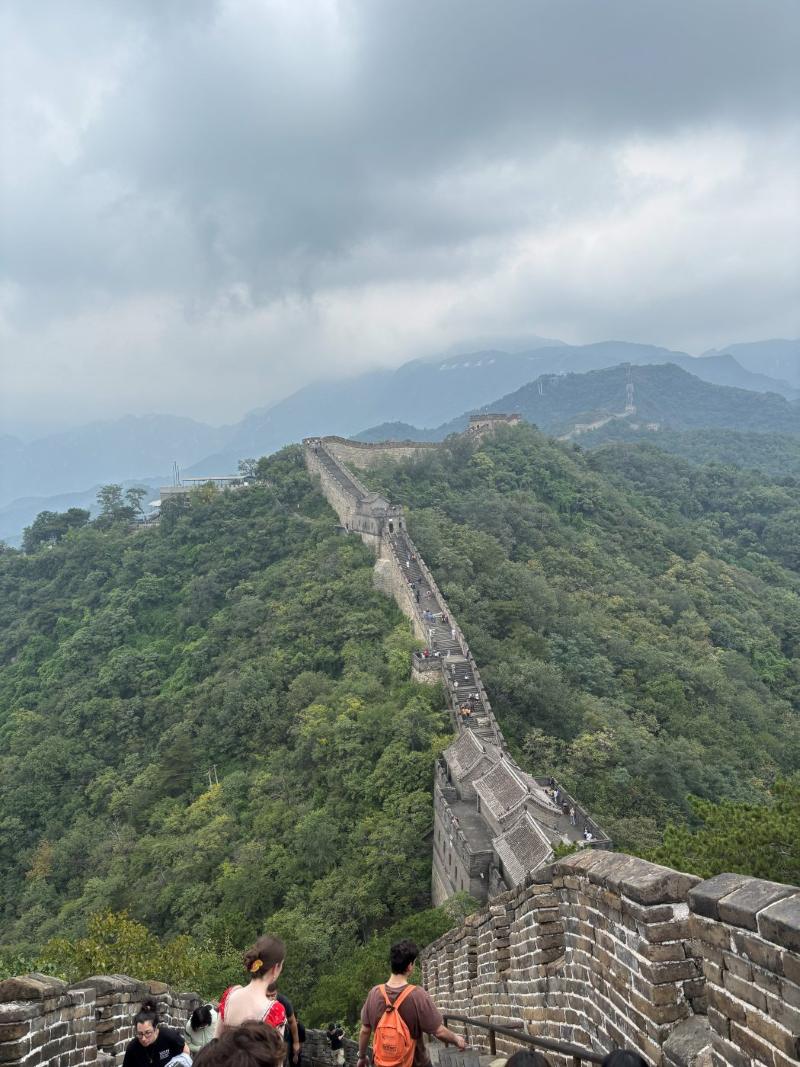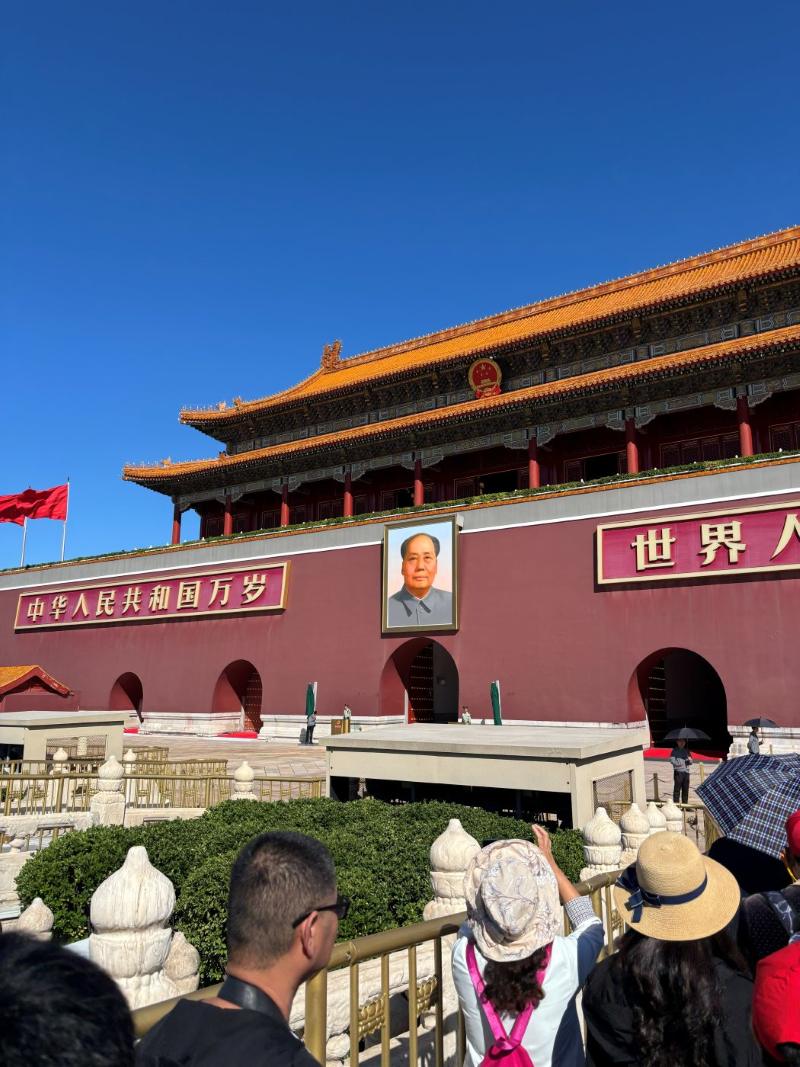
Destinations and inspiration · 12 min read
The Great Wall of China from Beijing: which section to visit, tickets and how to get there
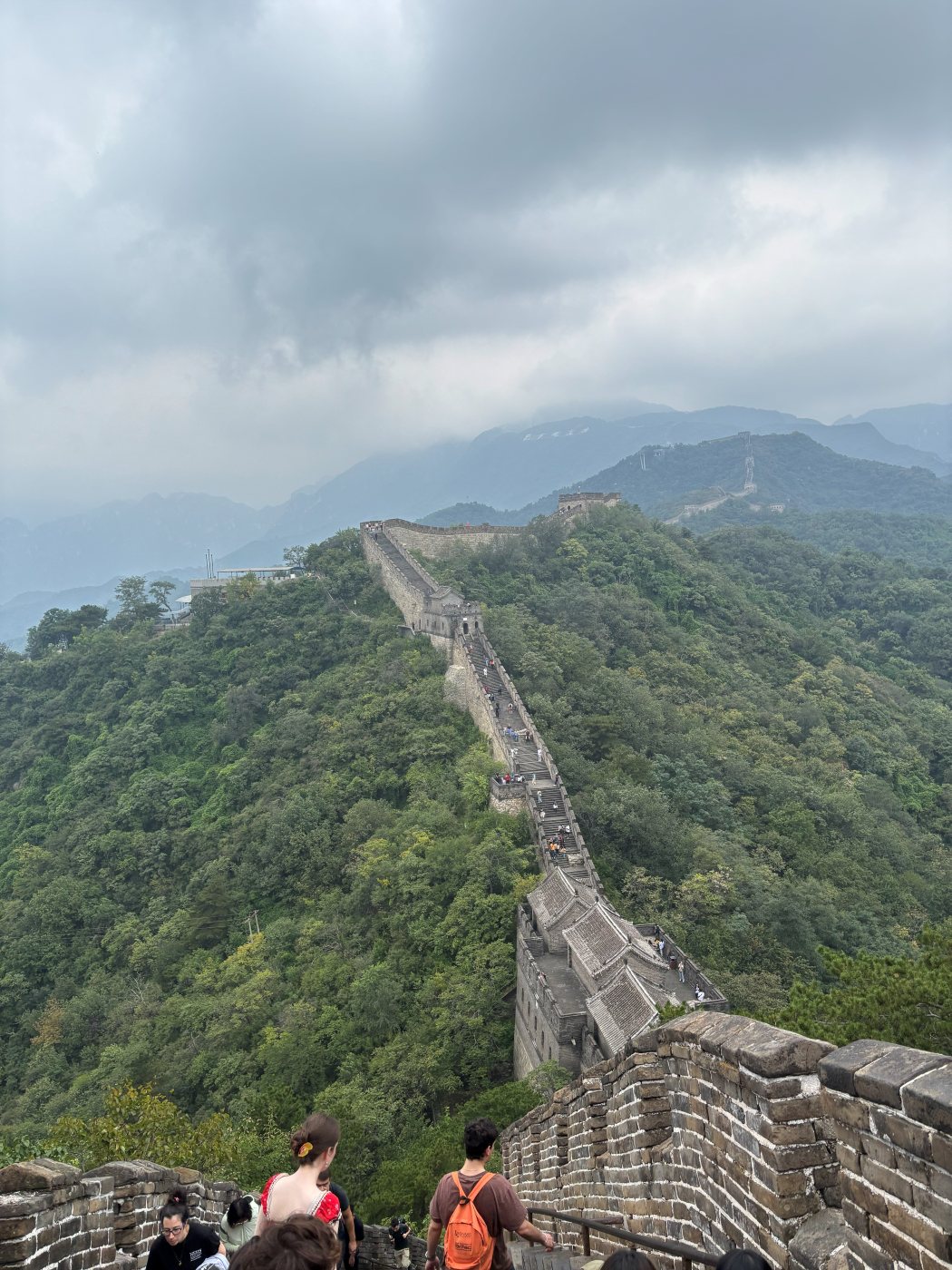
In short: for a first visit we recommend Mutianyu. It's a restored section about 70 km from Beijing, with a cable car and a toboggan run, and it's less crowded than Badaling. Badaling is the quickest to reach, as the bullet train from Qinghe station takes about 20 minutes, but it's also the busiest. Jinshanling and Simatai are further out (2–3 hours' drive), wilder and better for a longer walk, and Simatai can also be visited in the evening. Admission costs ¥40 (about 24 PLN)–¥65 (about 39 PLN) (¥45 (about 27 PLN) at Mutianyu), and a cable car about ¥140 (about 84 PLN) return. Tickets are personal and booked with your passport. Buy them a few days ahead, and well in advance for weekends and Chinese holidays. Set aside a whole day for the Great Wall.
What surprised us most in China was the technology, and you can see it even on the Great Wall: your passport is your ticket at the gate, and you pay for the cable car or a bottle of water at the top with your phone.
Correct as of 30 October 2026. Prices and opening hours change with the seasons, so check them when you book. Yuan amounts are converted at the NBP rate into the currency selected in the site menu.
Which section of the Great Wall should you visit?
Several sections of the wall near Beijing are open to visitors. They differ in distance, crowds and how heavily they've been restored.
| Section | Getting there from Beijing | Admission | Best for |
|---|---|---|---|
| Mutianyu | about 1.5 hours by car or tourist bus | ¥45 (about 27 PLN) + shuttle ¥15 (about 9 PLN) + cable car ¥140 (about 84 PLN) | a first visit, families |
| Badaling | 20–40 minutes by bullet train | ¥40 (about 24 PLN), off-season ¥35 (about 21 PLN) | when you're short of time |
| Jinshanling | about 2.5–3 hours by car | ¥65 (about 39 PLN), off-season ¥55 (about 33 PLN) | longer hikes and photos |
| Simatai | about 2 hours by car, entry via Gubei Water Town | about ¥40 (about 24 PLN) + Gubei ticket | the evening, with the wall lit up |
Mutianyu: the best choice for a first visit
The restored Ming-dynasty wall here runs along the ridges of forested mountains, with a watchtower every few hundred metres. It's just as impressive as Badaling, but with noticeably fewer people, and it's easy to find an empty stretch.
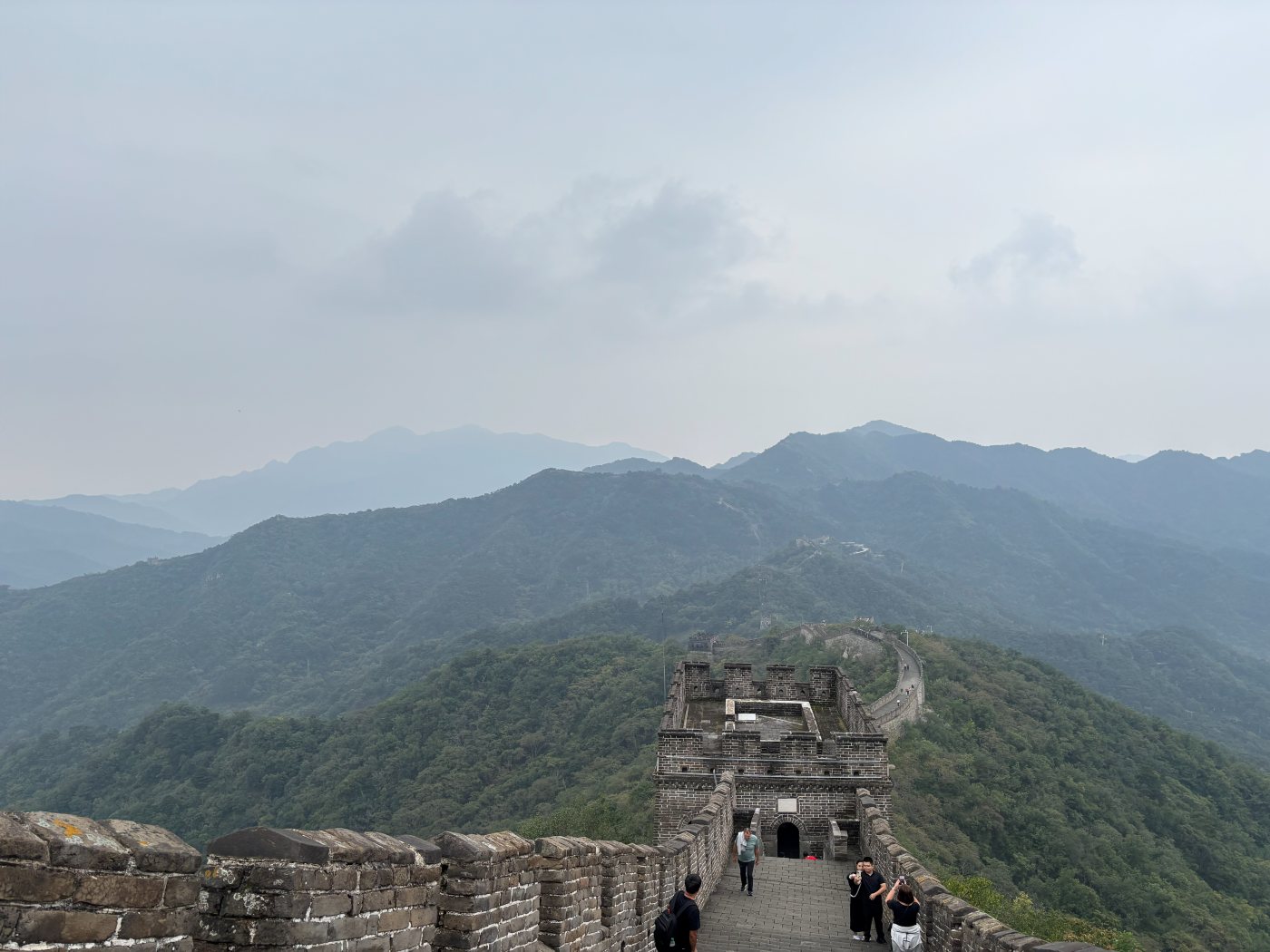
Tickets (official prices, October 2026):
- admission: ¥45 (about 27 PLN), or ¥25 (about 15 PLN) for under-18s and students up to 25,
- shuttle bus from the service area to the ticket gates (3 km): ¥15 (about 9 PLN) return,
- cable car to Tower 14: ¥140 (about 84 PLN) return or ¥100 (about 60 PLN) one way,
- chairlift and toboggan to Tower 6: about ¥100 (about 60 PLN) for the ride down. They're run by a different company, so cable car and toboggan tickets aren't interchangeable.
Children up to 1.2 m ride the shuttle and cable car free. In summer 2026 the night tour cost ¥200 (about 121 PLN) (17:30–21:00, with unlimited cable car rides).
Opening hours: from 16 March to 15 November, 7:30–18:00 on weekdays and 7:30–18:30 at weekends; from 16 November to 15 March, 8:00–17:30 daily. Ticket sales end an hour before closing.
Route: take the cable car up to Tower 14 and walk west towards Towers 15–20: it gets steeper, but also quieter. The other popular option is to walk east to Tower 6 and ride the toboggan down, in which case you buy a one-way cable car ticket and a one-way toboggan ticket. You'll spend 2–3 hours on the wall itself, and with the journey it takes the whole day.
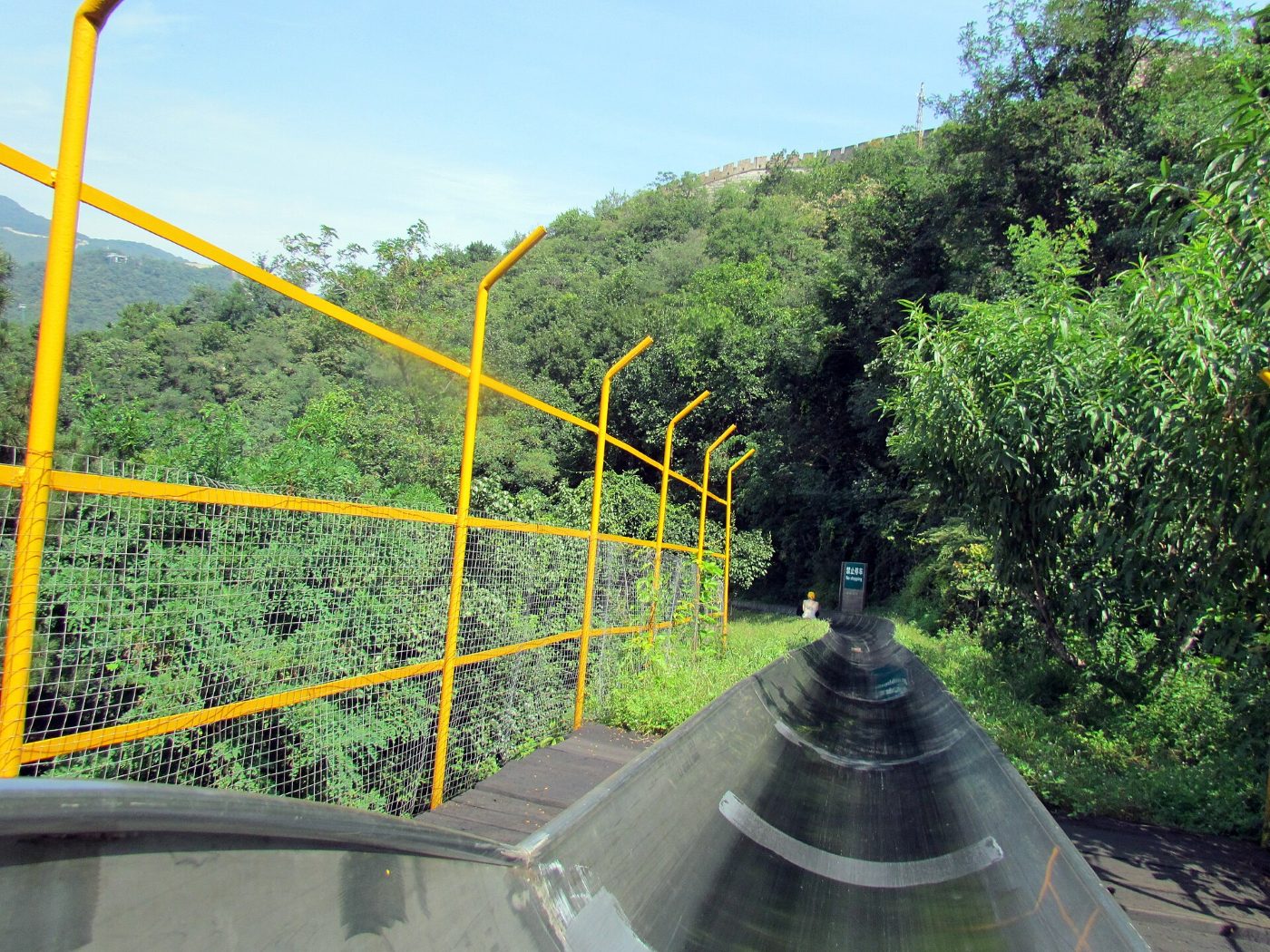
Getting there:
- tourist buses from central Beijing, for example from Qianmen and Dongzhimen metro station, for about ¥80 (about 48 PLN) return. They usually come back between 13:00 and 16:00, and the official Mutianyu website lists the operators and departure times,
- city bus 916 Express from Dongzhimen to the Huairou Beidajie stop, then bus H7, H23, H24, H35 or H36 to the wall. Cheapest, but slowest,
- a car with driver or DiDi: about ¥400 (about 241 PLN)–¥600 (about 362 PLN) for the car, return. Agree the return trip in advance, as it's hard to get a ride back to the city from the wall.
Badaling: the quickest to reach, the most crowded
The most famous and best-equipped section: a wide wall, ramps and lifts around the lower fortress, and cable cars up the hill. It's also where most tour groups go, so at weekends and on holidays you queue at the gates and for the cable car, and the wall itself can be packed.
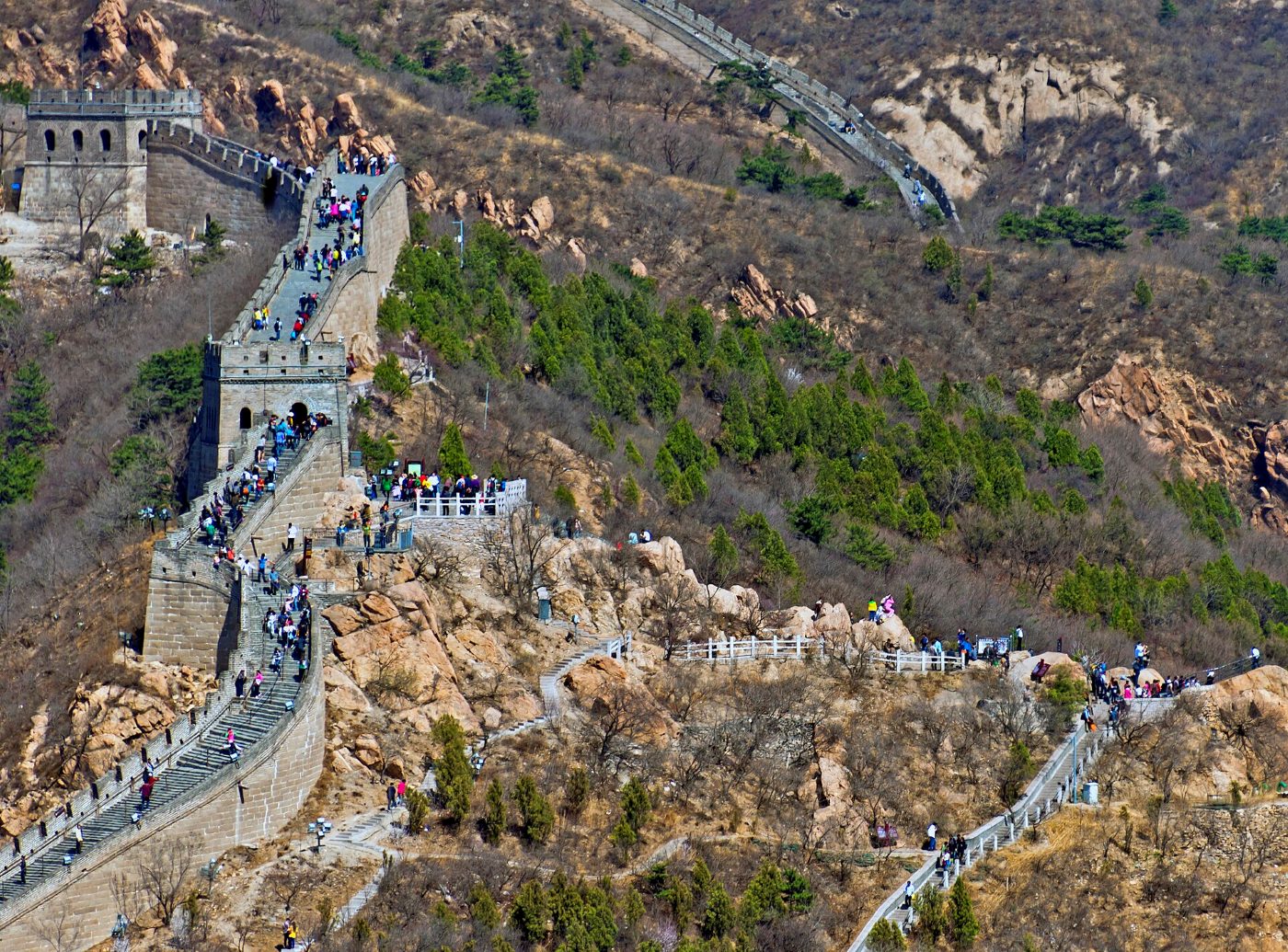
Tickets: ¥40 (about 24 PLN) from April to October, ¥35 (about 21 PLN) from November to March. Tickets are personal and linked to your passport. You can buy them online or on site, but book ahead for weekends and holidays. The north cable car and the south ground cable car cost about ¥100 (about 60 PLN) one way and about ¥140 (about 84 PLN) return.
Opening hours: April to October 6:30–16:30, November to March 7:30–16:00.
Getting there: by bullet train from Qinghe station (about 20 minutes, second class ¥16 (about 10 PLN)–¥25 (about 15 PLN)) or Beijing North (30–40 minutes, ¥23 (about 14 PLN)–¥31 (about 19 PLN)) to Badaling Great Wall station (八达岭长城). On the November timetable there are a dozen or so trains a day from Qinghe, the first before 7:00 and the last one back at about 20:45. You buy the ticket like any other, with your passport, 15 days before departure (how to buy train tickets). Morning trains sell out fast at weekends, so book your return at the same time. The station is deep underground, so allow 10–15 minutes for the escalators.
Jinshanling: for those who want to walk
Jinshanling lies about 140 km from Beijing, across the border in Hebei province. The watchtowers stand close together, and while part of the wall has been restored, part still has its original, crumbling bricks. The views are the most "postcard" of all, with far fewer people than at Mutianyu. Allow 3–4 hours of walking on steep steps.
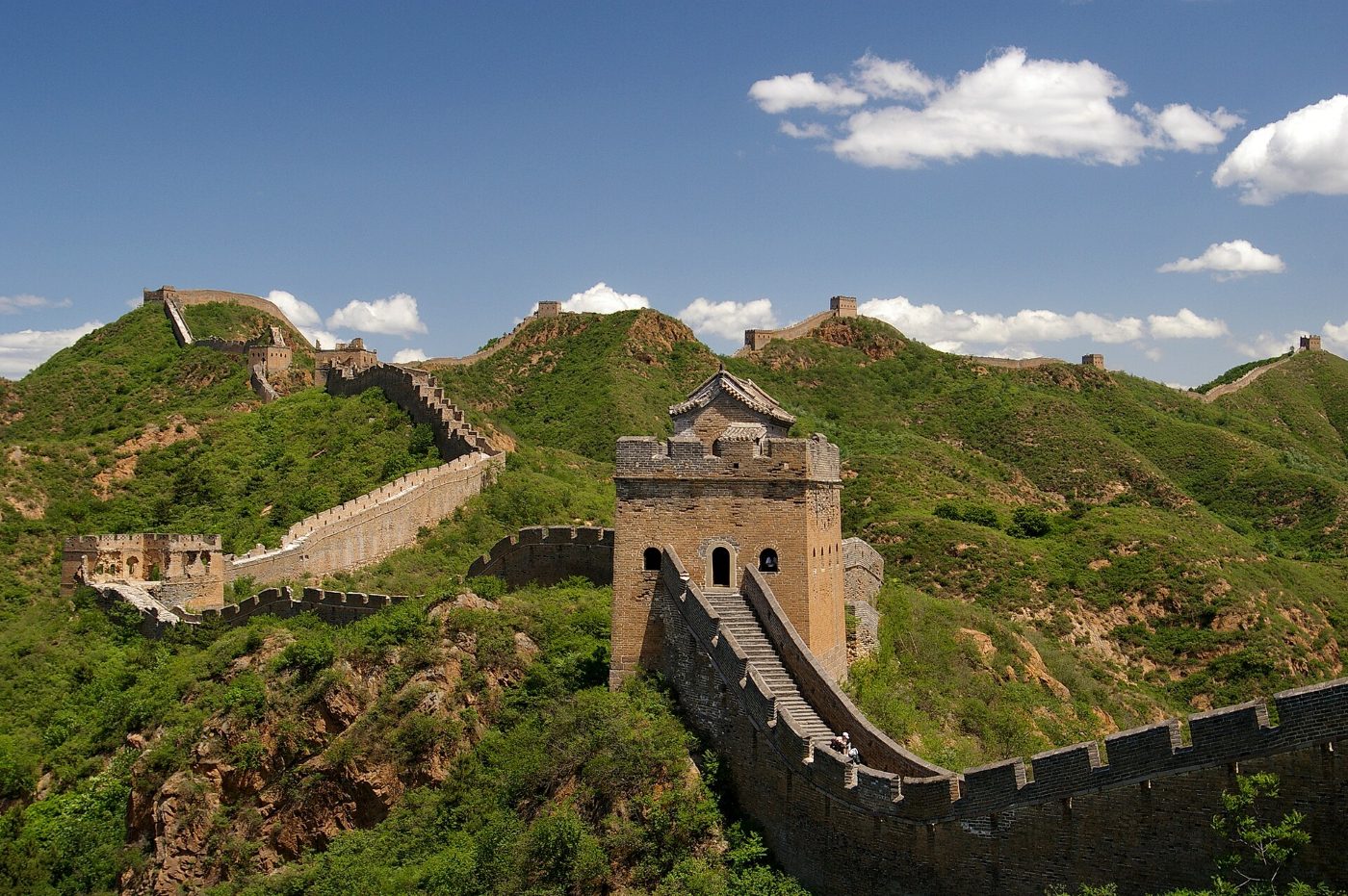
Tickets: ¥65 (about 39 PLN) from 16 March to 15 November and ¥55 (about 33 PLN) off-season. The cable car costs ¥40 (about 24 PLN) one way and ¥60 (about 36 PLN) return. At the main entrance ticket sales end at 16:30.
Getting there: most easily by car with a driver or on a tour (about 2.5–3 hours each way). At weekends and on holidays a tourist bus also runs from the Dongzhimen Outer stop: in 2024 it left at 8:00 and came back at 16:00, for ¥50 (about 30 PLN). Check the timetable before you go.
Simatai and Gubei Water Town: the wall at night
Simatai is a steep, partly original section above Gubei Water Town, a resort rebuilt in the style of an old northern Chinese town with canals. You enter the wall through the town, so you usually buy a combined ticket. From spring to autumn the wall is lit up in the evening, and night visits have a daily cap and must be booked. Admission to the wall alone is about ¥40 (about 24 PLN), but prices for packages with the town and the cable car change with the season, so check them when you book. It's about 2 hours from Beijing. The best plan is to stay overnight in Gubei and see the wall in the evening and the next morning.
Other sections
- Juyongguan: a fortress in the pass you travel through on the way to Badaling, with the wall climbing steeply up both sides of the valley.
- Huanghuacheng: the wall running down into a lake, known as the "water Great Wall".
- Jiankou and other "wild" sections: not open to visitors. Since 1 March 2026 a new Great Wall protection law has been in force in Beijing. Unopened sections have warning signs and electronic fencing, and climbing them is prohibited. Serious accidents also happen there, so we don't recommend them.
- Far from Beijing: at Shanhaiguan the wall runs into the sea (Old Dragon's Head), about 2–2.5 hours from Beijing by bullet train for ¥150 (about 90 PLN)–¥180 (about 108 PLN). At the western end, in Gansu province, stands the Jiayuguan fortress.
How to buy Great Wall tickets
- Tickets are personal and linked to your passport. You can buy them on Trip.com in English or through the official booking systems (Mutianyu has its own, also in English). One passport gets one ticket per day.
- Bring the original passport you used to book to the gate. Copies and photos may be rejected.
- When to buy: Mutianyu tickets go on sale 15 days in advance. For an ordinary weekday a day or two ahead is enough, but for weekends, 1–7 October and 1–5 May buy as early as you can.
- Cable cars, the toboggan and the shuttle are separate tickets. At Mutianyu the cable car and the toboggan are run by different companies.
More on booking with your passport: Attraction tickets in China.
When to visit the Great Wall
- Spring (April–May) and autumn (September–October) are best. At the end of October the hills around Mutianyu turn red and gold.
- Go on a weekday and early. Mutianyu opens at 7:30 and Badaling at 6:30. The first hour is the quietest part of the day.
- In summer there's almost no shade on the wall, it can be over 30°C, and the cable cars stop during thunderstorms. Go early and take plenty of water.
- In winter the wall looks beautiful under snow, but steep steps can be icy and Beijing drops to about −10°C at night. Choose a shorter route and remember the shorter opening hours.
- Avoid Chinese holidays: on 1–7 October and 1–5 May the wall is packed and tickets sell out.
More on Beijing's weather through the year: When is the best time to visit China?
Practical tips
- Shoes with good grip. The steps on the wall are steep, uneven in height, and the stone can be slippery.
- Water, a snack and a windproof layer. It's windy on the ridge even on a warm day, and the only kiosks are by the cable car stations.
- You don't need cash. Tickets, cable cars and food can all be paid for with Alipay or WeChat Pay (How to pay in China).
- Leave your drone at the hotel. Flying is banned on most sections near Beijing.
- With children choose Mutianyu: the cable car, chairlift and toboggan cut out the climbs, and for kids the toboggan is the highlight of the day.
Great Wall facts
- How long is it? According to a survey announced in 2012 by China's cultural heritage administration: 21,196 km. That figure covers walls from different dynasties across 15 provinces, plus trenches and natural barriers. The Ming-dynasty walls alone are about 8,850 km.
- How old is it? The sections you visit near Beijing date mainly from the Ming dynasty (14th–17th centuries).
- UNESCO: the Great Wall has been on the World Heritage List since 1987.
- Can you see it from space? Generally not with the naked eye from low Earth orbit: the wall is narrow and the same colour as the land around it. China's first astronaut, Yang Liwei, admitted in 2003 that he couldn't see it.
Frequently asked questions
Which section of the Great Wall is best for a first visit?
Mutianyu: it's restored, less crowded than Badaling, has a cable car and a toboggan, and takes about 1.5 hours to reach from Beijing. Choose Badaling if you're short of time and want to go by train. Jinshanling and Simatai are for those who want a longer walk.
How much does it cost to visit the Great Wall?
Admission costs ¥40 (about 24 PLN)–¥65 (about 39 PLN) depending on the section and season: ¥45 (about 27 PLN) at Mutianyu, ¥40 (about 24 PLN) at Badaling (¥35 (about 21 PLN) off-season) and ¥65 (about 39 PLN) at Jinshanling (¥55 (about 33 PLN) off-season). On top of that comes a cable car, about ¥140 (about 84 PLN) return, and at Mutianyu also a ¥15 (about 9 PLN) shuttle bus.
How do I get to the Great Wall from Beijing?
To Badaling, fastest by bullet train from Qinghe or Beijing North (20–40 minutes). To Mutianyu, by tourist bus from the city centre (about ¥80 (about 48 PLN) return), by bus 916 Express with a change in Huairou, or by car with driver for about ¥400 (about 241 PLN)–¥600 (about 362 PLN). To Jinshanling and Simatai, most easily by car or on a tour.
Do I need to buy Great Wall tickets in advance?
Ideally yes, because tickets are personal, linked to your passport and subject to daily caps. For an ordinary weekday a day or two ahead is enough, but for weekends and Chinese holidays book as soon as sales open (15 days ahead for Mutianyu).
How much time do I need for the Great Wall?
A whole day. You'll spend 2–3 hours on the wall at Mutianyu, plus about 1.5 hours each way to get there. Badaling by train can be done in half a day. Jinshanling is a trip from morning to evening.
Can you see the Great Wall from space?
Generally not with the naked eye from low Earth orbit. NASA explains that the wall is narrow and the same colour as the surrounding terrain, and China's first astronaut, Yang Liwei, admitted he couldn't see it. Astronauts have only managed to photograph it with a telephoto lens.
How long is the Great Wall of China?
21,196 km according to China's 2012 survey, counting all the walls, trenches and natural barriers from different dynasties. The best-known Ming-dynasty walls are about 8,850 km long.
Sources
- Mutianyu: official ticket booking system (prices checked on 30 October 2026), getting there and tourist buses and night tour
- Wander in China: Mutianyu and Badaling (September 2026: opening hours, booking, Badaling prices)
- 12306: China Railway's official website (Qinghe and Beijing North – Badaling Great Wall trains, timetable for 5 November 2026)
- Visit Beijing: Jinshanling (tickets, cable car, hours and bus, 2024)
- Science and Technology Daily: Beijing's Great Wall protection law in force from 1 March 2026 (in Chinese)
- CBC: the 2012 survey of the Great Wall's length and UNESCO: the Great Wall on the World Heritage List
- NASA: can you see the Great Wall from space and NASA: questions about photos of Earth from orbit
- Mutianyu photos: our own. Others from Wikimedia Commons (authors and licences in the captions)
The Great Wall in a ready-made itinerary
In our China's Golden Triangle+ and Emperors & Hotpot itineraries, the day at the Great Wall in Mutianyu is planned hour by hour: getting there, the cable car, the route along the wall and the toboggan ride down, with prices and addresses in Chinese for your driver. Before you go, read what to see in the city itself: Beijing in 3–4 days and the Forbidden City.