Planning your route · 19 min read
China in winter: where to go in December, January and February
In short: in winter, from December to February, China feels like two different countries. In the south – Hong Kong, Guangzhou, Macau and Xiamen – days are around 18–19°C, dry and sunny, and in Sanya on Hainan Island and in Xishuangbanna it's 26–27°C. Down there, winter is the best season of the year. In the north it's freezing: around 2°C by day and −7°C at night in Beijing, −12°C and −22°C in Harbin. In return it's dry, quiet and cheaper: a Forbidden City ticket costs ¥40 (about 23 PLN) in winter instead of ¥60 (about 35 PLN). In between are Yunnan, where Kunming has 16°C and sunshine, and Shanghai, Sichuan and Chongqing: 3–10°C, grey and damp, with no central heating indoors. The worst time is Chinese New Year (6 February 2027) and the roughly 40 days of holiday travel around it.
What surprised us most in China was the diversity of its cultures and food, and in winter you taste it best: in Beijing it's lamb from a copper hotpot, in Chongqing a fiery Sichuan hotpot, in Harbin pears frozen rock-solid, and in Guangzhou rice cooked in a clay pot.
As of 23 October 2026. Most dates and ticket prices for the 2026/27 ice season haven't been announced yet, so we give last season's figures and will update them once they're out. Temperatures are 1991–2020 averages from the China Meteorological Administration and the Hong Kong Observatory. Yuan amounts are converted at the current rate into the currency selected in the site menu.
China in winter at a glance: where to go
| Destination | January: day / night | Why go | Watch out for |
|---|---|---|---|
| Hong Kong, Macau, Guangzhou | 19°C / 11–15°C | city life, food, shopping | Chinese New Year crowds |
| Xiamen | 18°C / 11°C | Gulangyu Island, round tulou houses | the odd cool, windy day |
| Sanya (Hainan) | 27°C / 20°C | beach, sea around 24°C | the priciest time of year |
| Xishuangbanna (Yunnan) | 26°C / 12°C | tropics, Dai temples | far: 3–3.5 h by train from Kunming |
| Kunming, Dali, Lijiang | 14–16°C / 1–4°C | sunshine, Siberian gulls, snowy peaks | nights close to freezing |
| Guilin and Yangshuo | 12°C / 6°C | misty hills, few tourists | low water, shorter cruises |
| Beijing and Xi'an | 2–5°C / −7 to −4°C | sights without crowds, ice rinks | frost and short days |
| Harbin | −12°C / −22°C | Ice and Snow World, Snow Town | the cold, peak hotel prices in January |
| Skiing: Chongli, Yabuli | freezing | Olympic slopes | away from the city centres |
| Shanghai, Chengdu, Chongqing | 9–10°C / 3–6°C | city sights, pandas, hotpot | grey, damp, chilly indoors |
January temperatures: from −22 to +27°C
China is so big that in the same week you can carve ice and swim in the sea. Harbin and Sanya are about 3,400 km apart as the crow flies, roughly the distance from London to Cairo.
China in December, January and February: what's on
December
- The ice season begins. Harbin's Ice and Snow World usually opens between 17 and 21 December. In 2025 it opened on 17 December; dates for 2026/27 haven't been announced yet.
- Christmas is a normal working day in mainland China, although malls in Shanghai, Beijing and Guangzhou fill up with Christmas trees and lights. In Hong Kong and Macau it's a public holiday.
- In the south it's the loveliest month: Hong Kong is dry, sunny and warm, and the views from Victoria Peak are the clearest of the year.
- Flights get more expensive before Christmas and New Year (more on that under "Practical tips" below).
January
- The coldest month across China.
- 1 January is a public holiday in China. In 2027 it falls on a Friday, so people get a long weekend.
- 5 January is the official opening of the Harbin Ice and Snow Festival. All three parks are open by then: Ice and Snow World, the snow sculptures on Sun Island and the ice lanterns in Zhaolin Park.
- Beijing's ice rinks on the Shichahai lakes and at the Summer Palace open once the ice is thick enough, usually from late December or in January. In 2025/26 Shichahai opened on 20 January, and the rink on Kunming Lake at the Summer Palace stayed open until 3 February.
- From around 22 January 2027 (forecast), the holiday travel rush before Chinese New Year begins and train tickets start to disappear.
February
- 5 February 2027 is Chinese New Year's Eve and 6 February is New Year's Day (the Year of the Fire Goat). The holiday lasts about a week; China usually publishes the exact calendar in November.
- 20 February is the Lantern Festival, which ends the holiday season. The biggest lantern shows include Yu Garden in Shanghai and the city walls of Xi'an.
- In late February Harbin's ice parks close. In 2026 Ice and Snow World closed on 21 February.
- In Yunnan the rapeseed fields of Luoping start to bloom in February, and the holiday travel rush ends around 2 March.
Where is it warm in China in winter? Hong Kong, Guangzhou, Macau and Xiamen
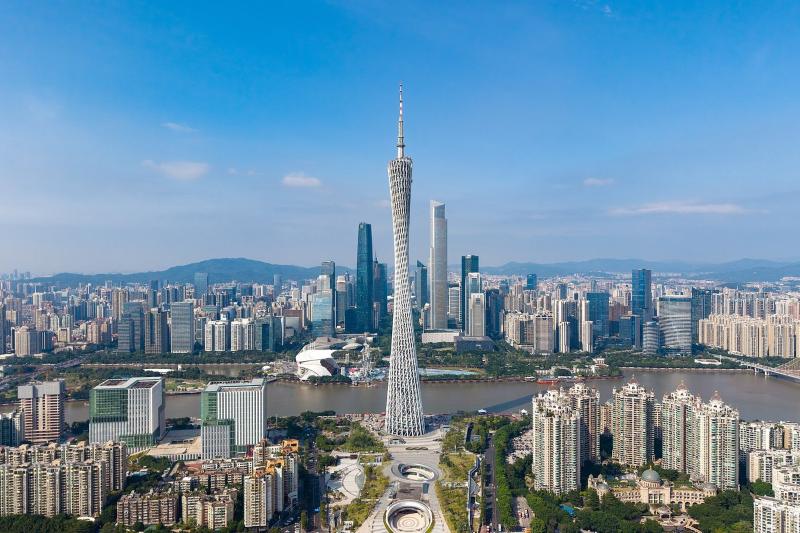
In winter this is the most pleasant part of China. From October to December Hong Kong is dry and sunny, and in January and February it's around 19°C by day and 15°C at night, though it can be cloudy. In Guangzhou January brings about 19°C and 11°C, and in Xiamen 18°C and 11°C. It's perfect weather for exploring on foot: the Star Ferry across the harbour, dim sum for breakfast, Shamian Island in Guangzhou or Gulangyu in Xiamen.
Do pack a sweater and a light jacket, though. A few times each winter cold air sweeps down from the north and the temperature drops to around 10°C. The Hong Kong Observatory then issues a cold weather warning and locals bring out their down jackets. Buildings in the south have no central heating, so on those days it's chilly indoors too.
TipOver Chinese New Year, Hong Kong and Macau fill up with visitors from the mainland. Hong Kong also puts on an evening parade on the first day of the new year and fireworks over the harbour on the second. Details: Chinese New Year 2027.
Hainan and Sanya: a beach in the middle of winter
At the southern tip of Hainan Island, in Sanya, January averages 27°C by day and 20°C at night, and the sea is around 24°C. December to February is peak season and the most expensive time of year. Over Chinese New Year hotel prices can multiply, as families from the frozen north descend on the island.
Sanya works best as a few beach days at the end of a trip around southern China. Hainan also has its own visa-free policy: citizens of 61 countries, including the US, the UK, Canada, Australia and most of Europe, can fly to the island from abroad and stay up to 30 days without a visa. The stay is limited to Hainan, but the policy has no announced end date.
Yunnan in winter: eternal spring in Kunming
Yunnan is the best winter choice if you want mountains, not just cities.
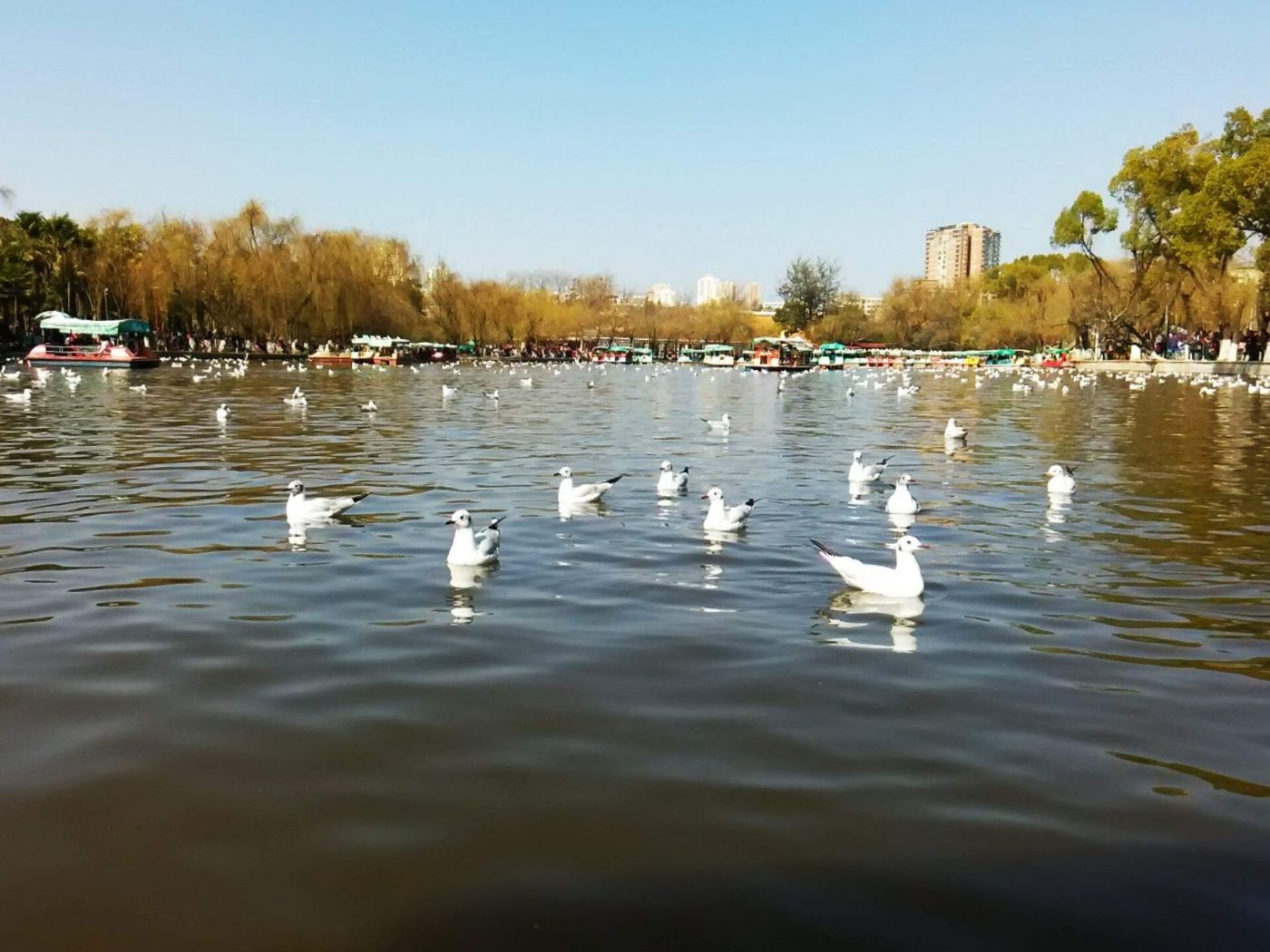
- Kunming sits at around 1,900 m and is known as the "City of Eternal Spring". In January it's about 16°C by day and 4°C at night, usually under clear skies. From November to March thousands of black-headed gulls fly in from Siberia to Green Lake Park (Cuihu) in the centre and to Dian Lake, and locals feed them by hand.
- Dali and Lijiang: sunny and around 14°C by day, but close to freezing at night. Winter is when you're most likely to see the snowy summit of Jade Dragon Snow Mountain above Lijiang.
- Shangri-La sits at around 3,300 m. In January it's about 7°C by day and −9°C at night. Before booking, check that your room has heating or an electric blanket.
- Xishuangbanna, on the border with Laos and Myanmar, is tropical: 26°C by day, rainforest and temples of the Dai people, who are related to the Thai. From Kunming it's about 3–3.5 hours on the train line to Laos.
- The Yuanyang rice terraces of the Hani people are at their most beautiful from December to March, when they're flooded and reflect the sunrise. They're about 5–6 hours by road from Kunming.

Guilin and Yangshuo: mist over the hills
In Guilin and Yangshuo January is about 12°C by day and 6°C at night. There are few tourists, and the mist over the karst hills looks like a Chinese ink painting. The downside is the low water on the Li River: in winter cruises are often shortened, and sometimes instead of the full route from Guilin you only sail the stretch between Yangdi and Xingping, with a bus transfer. Check how the cruise runs that day when you buy your ticket.
Beijing in winter: frost, sunshine and sights without the crowds
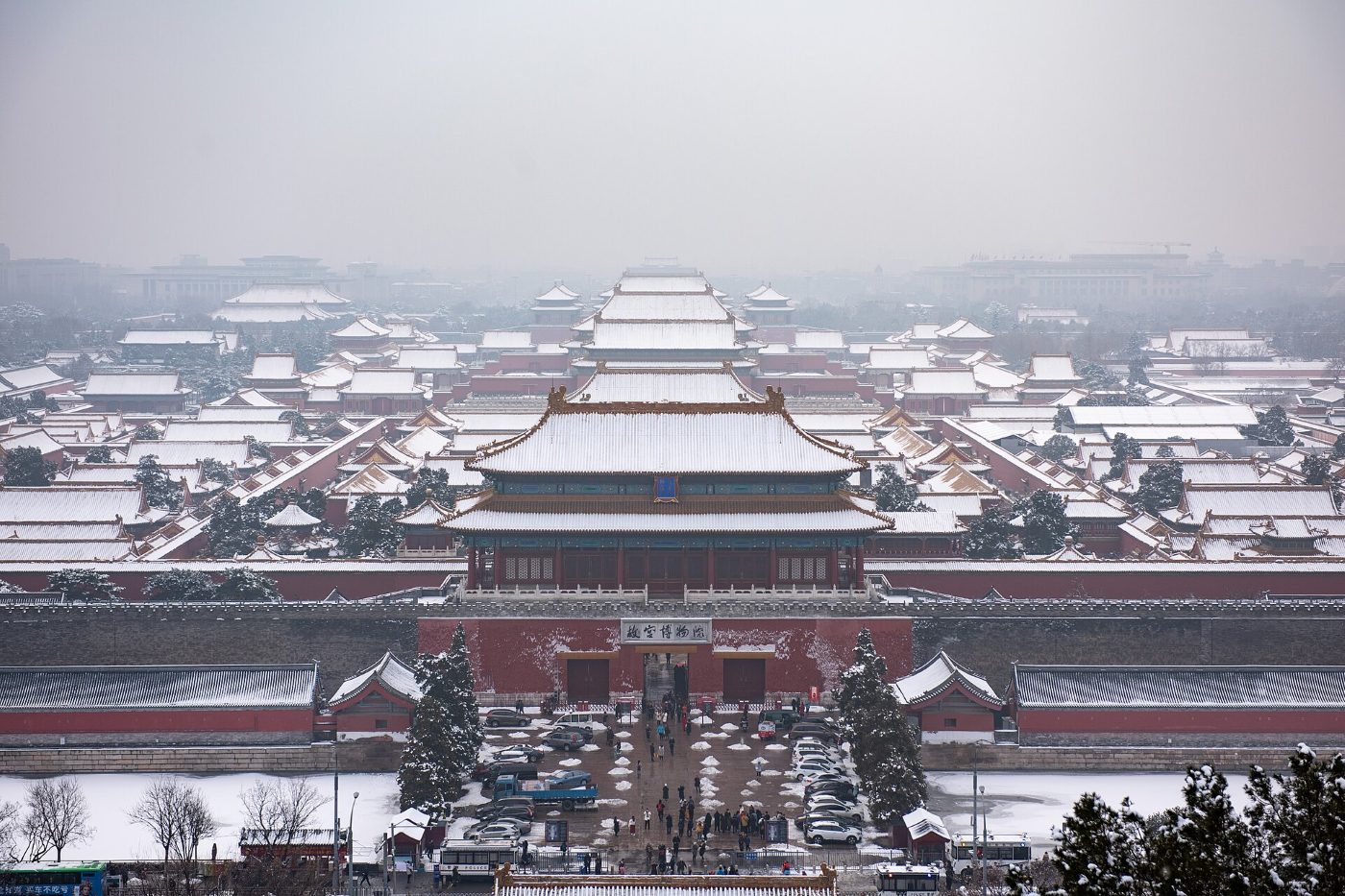
In January Beijing averages 2°C by day and −7°C at night, but it's dry, often sunny and quiet. There are no summer queues at the ticket gates or crowds on the walking routes, and tickets are cheaper.
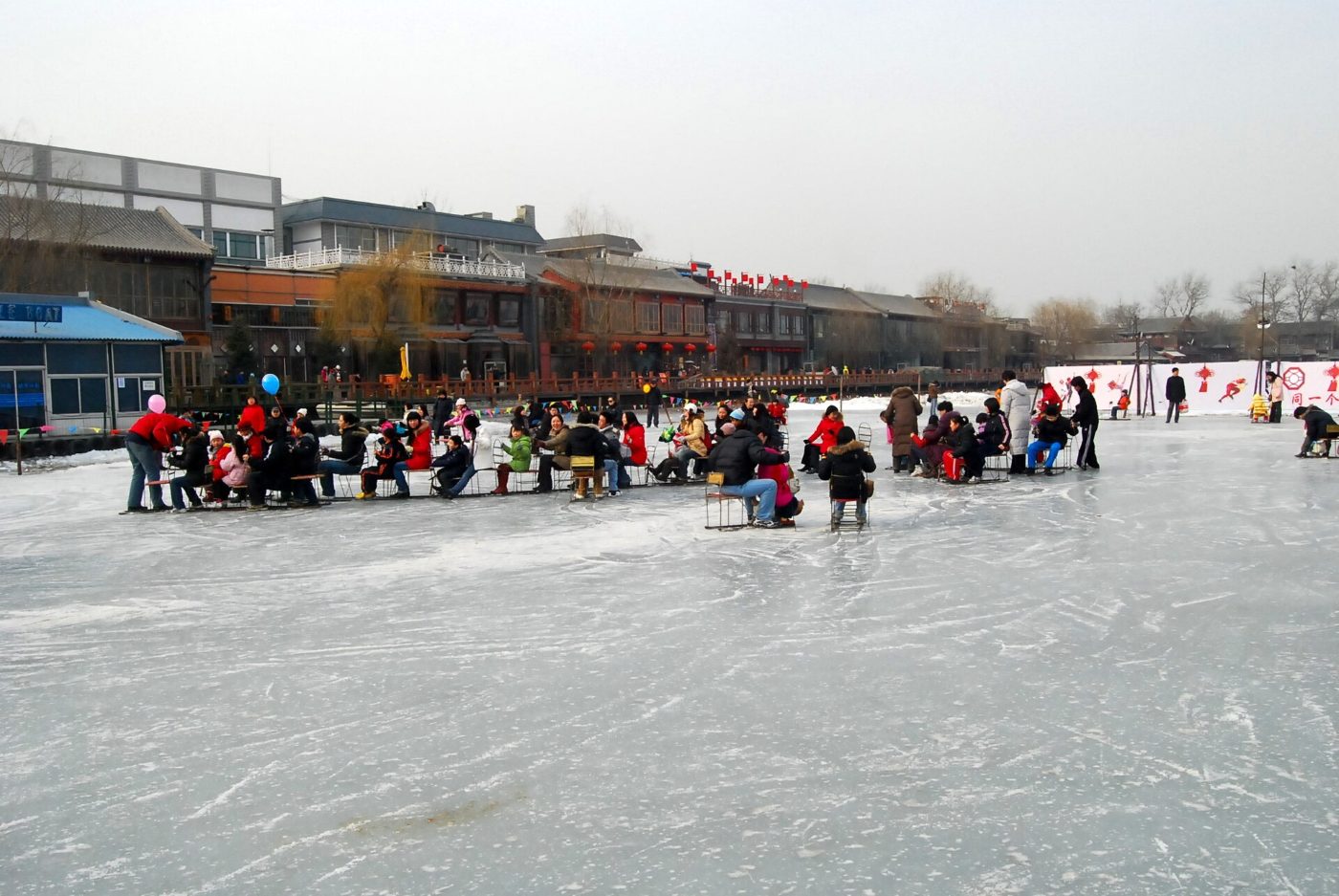
- Ice rinks: on the frozen Shichahai lakes (Houhai and Qianhai) people skate, ride chair sleds and ice bikes. In 2025/26 Shichahai tickets cost from ¥30 (about 17 PLN) (speed-skating area, weekdays) to ¥100 (about 58 PLN) (general area). The city's biggest natural rink is on Kunming Lake at the Summer Palace.
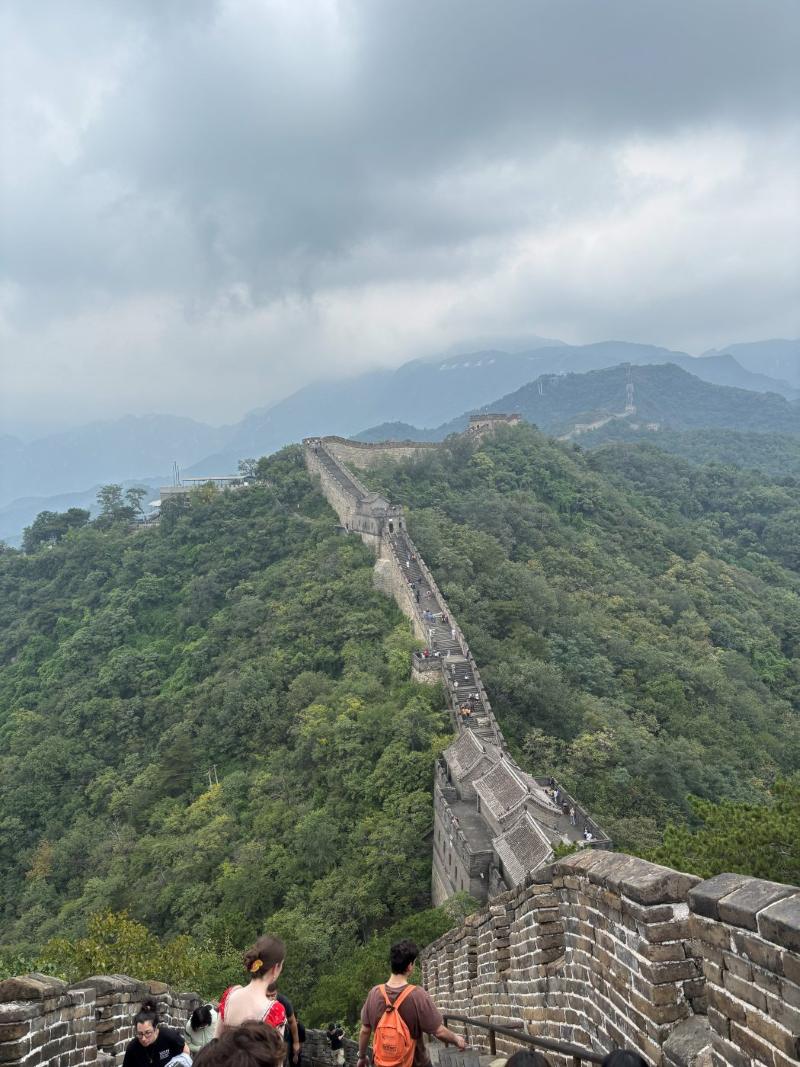
- The Great Wall in snow looks its best, but the steps can be icy. Wear shoes with good grip, and at Mutianyu take the cable car up.
- Short days: in December the sun sets before 5 pm in Beijing, so plan outdoor sightseeing for the morning and early afternoon, and save the evening for museums, dinner and the hutongs.
- Food for the cold: lamb from a copper hotpot (铜锅涮肉), candied hawthorn on a stick (冰糖葫芦), and roasted sweet potatoes and chestnuts from street ovens.
- Air quality: Beijing's air is far cleaner than a few years ago. In 2025 the average PM2.5 level was the lowest on record (27 µg/m³, compared with 89.5 in 2013), and there was just one day of heavy smog all year. In winter, during the heating season, it's still worth checking the air quality index (AQI) in a weather app.
Xi'an is a little milder in winter (5°C by day, −4°C at night). The Terracotta Army stands indoors, so the weather doesn't matter there, and over Chinese New Year thousands of lanterns light up the city walls. On the sacred mountain of Huashan the paths can be icy, so it's better to take the cable car.
Harbin and the northeast: ice, snow and −20°C
In winter Harbin turns into a city of ice. Ice and Snow World, with buildings made of ice blocks cut from the Songhua River, usually runs from the second half of December to the second half of February. A ticket cost ¥328 (about 191 PLN) in 2025/26. The best time to go is January, before Chinese New Year, when all three parks are open. Be ready for the cold: January averages −12°C by day and −22°C at night, while indoors it's very warm. From Beijing it's 4.5–6.5 hours by high-speed train.
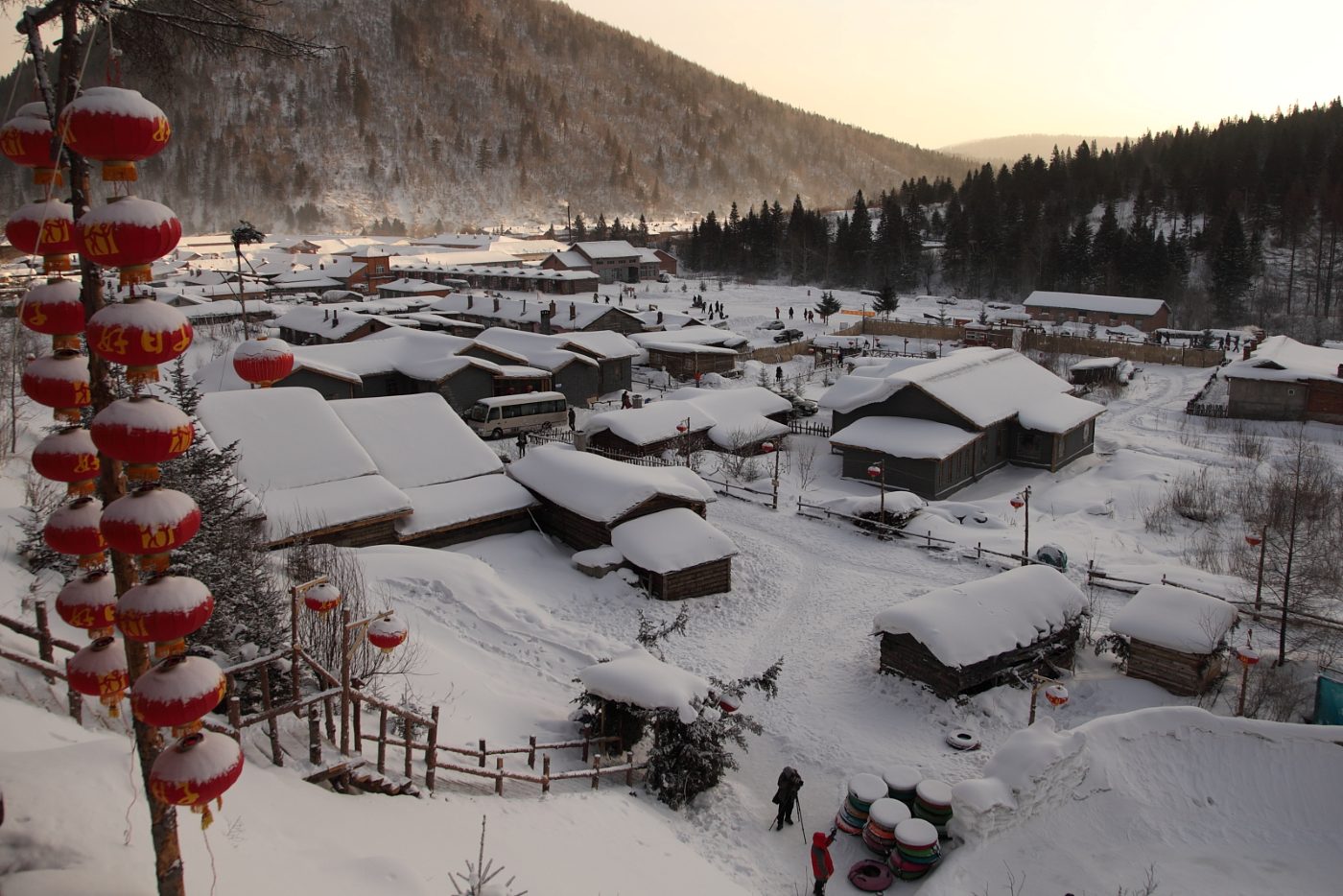
About 280 km from Harbin is Snow Town (中国雪乡), where snow lies for up to seven months a year and the wooden houses disappear under thick caps of snow. Getting there takes half a day, so plan to stay the night. Everything about the cold, what to wear and keeping your phone alive at −20°C is in our Harbin travel guide.
Skiing in China
Since the 2022 Winter Olympics in Beijing, China has built world-class ski resorts.
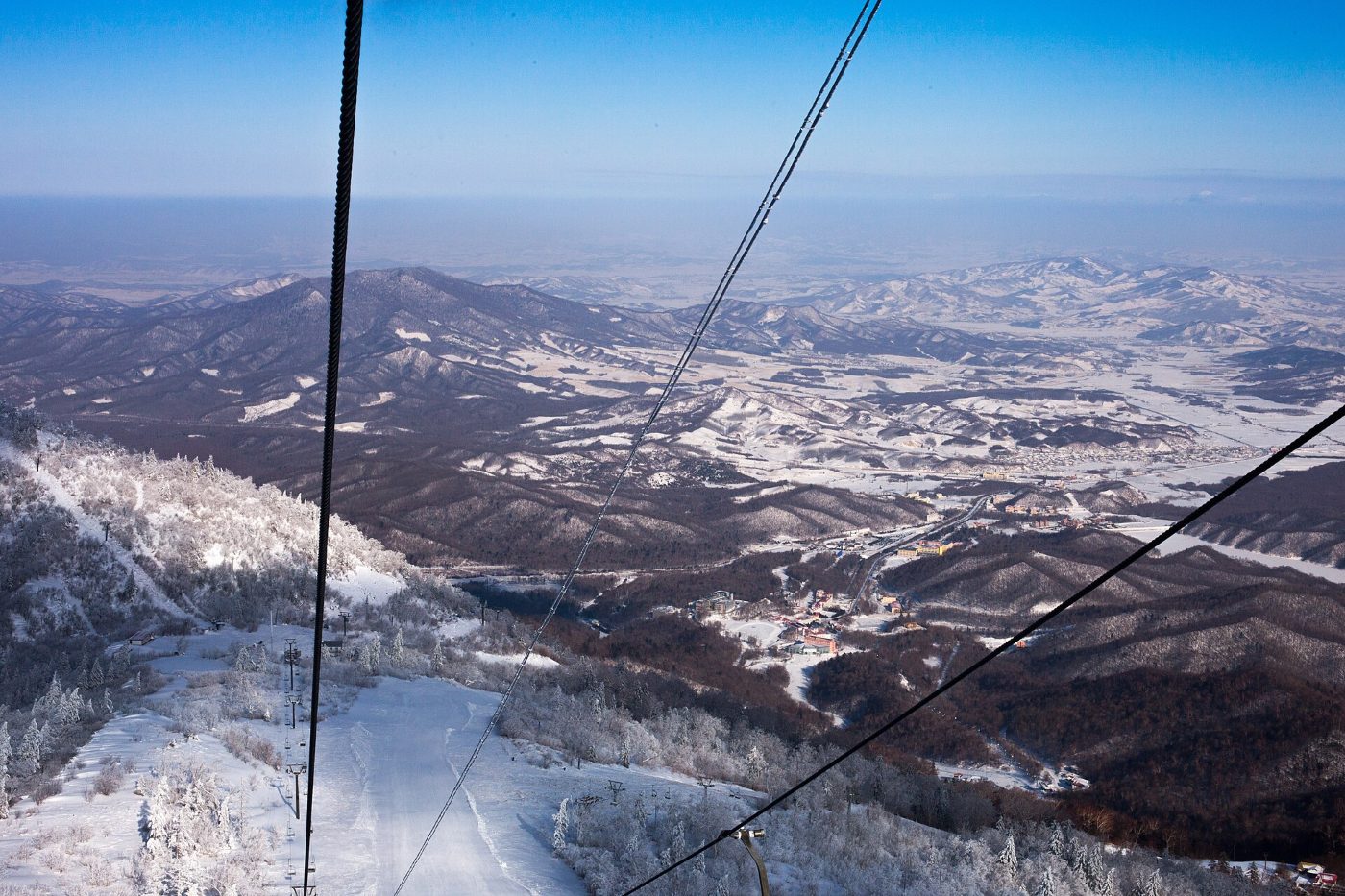
- Chongli (崇礼) near Zhangjiakou has nine resorts with about 178 km of runs, including Genting, which hosted the snowboard and freestyle skiing events at the 2022 Games, as well as Thaiwoo and Wanlong. High-speed trains from Beijing's Qinghe Station reach Taizicheng in just over an hour, and the resorts run free shuttle buses from the station. The season runs from November to March; in 2025 Wanlong opened as early as 21 October. A one-day lift pass at Thaiwoo cost ¥299 (about 174 PLN) on weekdays and ¥339 (about 198 PLN) at weekends in 2024/25.
- Yabuli (亚布力) near Harbin is one of China's biggest resorts and hosted the skiing events of the 2025 Asian Winter Games.
- Changbaishan in Jilin province and Altay in Xinjiang are famous for powder, but they're far from the main routes.
Few people fly to China just to ski, but a day or two on the slopes at Chongli makes a great add-on to a winter trip to Beijing.
Shanghai, Sichuan, Chongqing and Zhangjiajie in winter
Central China is the least impressive part in winter: 3–10°C, grey, damp and often foggy. South of the Qinling Mountains and the Huai River, buildings usually have no central heating. Hotels heat rooms with air conditioning, but restaurants, temples and museums can be chilly, so people often keep their coats on. On the plus side, there are fewer tourists and tickets are cheaper.
- Shanghai: about 9°C by day and 3°C at night in January. In December the city dresses up for Christmas, and before Chinese New Year lanterns light up Yu Garden.
- Chengdu and Chongqing: around 10°C by day. Pandas cope well with the cold, so they're livelier in winter than in the summer heat, and a steaming hotpot never tastes better than on a damp, cold evening. The summit of Mount Emei has snow and ice, and the ticket costs ¥110 (about 64 PLN) in winter instead of ¥160 (about 93 PLN).
- Jiuzhaigou: from 16 November to 31 March, entry costs ¥80 (about 47 PLN) instead of ¥190 (about 111 PLN), and the park bus ¥80 (about 47 PLN) instead of ¥90 (about 52 PLN). The frozen waterfalls are spectacular, but parts of the park, including the Primeval Forest, are closed in winter, and at 2,000–3,100 m it's very cold.
- Zhangjiajie: about 10°C by day and 3°C at night in January, sometimes with snow on the stone pillars. A ticket to Wulingyuan costs about ¥147 (about 86 PLN) in winter instead of about ¥225 (about 131 PLN), but the pillars hide in the fog more often.
Chinese New Year 2027: when not to go
Chinese New Year is the hardest time to travel around China. Hundreds of millions of people head home to their families and then go on holiday.
| What | When in 2027 | What it means for you |
|---|---|---|
| Holiday travel rush (春运) | around 22 January – 2 March (forecast) | trains and domestic flights full, tickets gone in minutes |
| New Year's Eve and New Year's Day | 5 and 6 February | some small restaurants and shops close for a few days |
| Public holiday | from 5 February, about a week | crowds at the sights, higher hotel prices |
| Lantern Festival | 20 February | lantern shows, end of the holiday |
If you can't avoid it, pick one or two cities rather than a route with many transfers. Buy train tickets on the day sales open, 15 days before departure (how to buy train tickets in China), and book hotels well ahead. Big cities like Beijing and Shanghai empty out, as many residents travel to their families. More: Chinese New Year 2027.
Cheaper in winter: off-season tickets
Many sights cut their prices in winter:
| Sight | Winter | High season | When it's cheaper |
|---|---|---|---|
| Forbidden City (Beijing) | ¥40 (about 23 PLN) | ¥60 (about 35 PLN) | November–March |
| Summer Palace (Beijing), entry | ¥20 (about 12 PLN) | ¥30 (about 17 PLN) | November–March |
| Jiuzhaigou: entry + bus | ¥80 (about 47 PLN) + ¥80 (about 47 PLN) | ¥190 (about 111 PLN) + ¥90 (about 52 PLN) | 16 November – 31 March |
| Wulingyuan park (Zhangjiajie) | about ¥147 (about 86 PLN) | about ¥225 (about 131 PLN) | December–February |
| Mount Emei | ¥110 (about 64 PLN) | ¥160 (about 93 PLN) | winter |
Outside the holidays, hotels are usually cheaper in winter, with three exceptions: Harbin is at its priciest in January, Sanya throughout the winter, and everywhere over Chinese New Year.
Practical tips: heating, clothes, flights and visas
- Heating: the north has central heating, and flats and hotels can reach 25°C. In Beijing the heating season runs from 15 November to 15 March. South of the Qinling Mountains and the Huai River (Shanghai, Chengdu, Chongqing, Guilin) there's usually no central heating.
- Clothes: for the north you need a down jacket, a hat and insulated boots; for the south, a sweater and a light jacket. Dress in layers so you can easily take off the top one in the heated metro. Full list: What to pack for China.
- Short days: on 21 December the sun sets at 15:51 in Harbin, 16:52 in Beijing, 16:55 in Shanghai and 18:06 in Chengdu, because the whole of China runs on one time zone (China time zone).
- Flights: fares from Europe and North America peak around Christmas and New Year and again before Chinese New Year. Early December and the weeks after New Year's Day are usually cheaper. More: Flights to China.
- Visa: China's 30-day visa-free entry for 50 countries, including most of the EU, the UK, Canada and Australia, currently runs until 31 December 2026. If you're staying past 1 January 2027 or flying in January or February, check whether it has been extended before you book (a decision is expected in November). US citizens can use the 240-hour visa-free transit. Details: China visa-free.
Which route for winter? Our itineraries
- Dim Sum & Palm Trees: Guangzhou, Hong Kong, Macau and the beaches of Sanya. Our best winter itinerary, as long as you avoid Chinese New Year.
- The Road to Shangri-La: Kunming, Dali and Lijiang are sunny in winter, though nights are cold and Shangri-La is frosty.
- China's Golden Triangle+: Beijing, Xi'an and Shanghai without the crowds and with cheaper tickets, if you don't mind the cold. From Beijing you can add 2–3 days in Harbin.
- Shanghai in 5 Days: good for December, when the city is decorated for Christmas. It's cool and damp, but not freezing.
- Spicy Chengdu: mild and grey, but with lively pandas, teahouses and hotpot.
The itineraries with Mount Emei and Jiuzhaigou (Cyberpunk & Pandas, Pandas, Buddha & a Sea of Clouds, Sichuan Deluxe) are better saved for spring or autumn: in winter the summits are icy and some trails are closed. The full-year calendar: Best time to visit China.
Frequently asked questions
Is it worth visiting China in winter?
Yes, if you choose the right region. In the south (Hong Kong, Guangzhou, Sanya, Xishuangbanna) it's the best season of the year, while in the north (Beijing, Xi'an) it's freezing but quiet and cheaper. Winter is also the time for Harbin's Ice and Snow World. Just avoid Chinese New Year (6 February 2027) and the weeks around it.
Where is it warm in China in winter?
The warmest places are Sanya on Hainan Island (27°C by day in January) and Xishuangbanna in Yunnan (26°C). Hong Kong and Guangzhou have about 19°C, Xiamen 18°C, and Kunming 16°C with plenty of sunshine.
What is the weather like in Beijing in winter?
Cold but dry and often sunny. January averages 2°C by day and −7°C at night, and snow is rare. The sun sets before 5 pm, and it's warm indoors because central heating runs from 15 November to 15 March.
When is the Harbin Ice Festival in 2026/27?
The festival officially opens on 5 January every year. Ice and Snow World usually opens between 17 and 21 December and runs until the second half of February. Exact dates for 2026/27 haven't been announced yet. Details: Harbin travel guide.
Is China cheaper in winter?
Usually, yes: the Forbidden City costs ¥40 (about 23 PLN) in winter instead of ¥60 (about 35 PLN), Jiuzhaigou ¥80 (about 47 PLN) instead of ¥190 (about 111 PLN), and hotels are cheaper outside the holidays. The exceptions are Sanya and Harbin in peak season and the whole Chinese New Year period. Flights are most expensive around Christmas and New Year.
Is Christmas celebrated in China?
In mainland China 25 December is a normal working day, although malls are full of Christmas trees and lights, and churches in big cities hold services. In Hong Kong and Macau Christmas is a public holiday. The most important winter festival is Chinese New Year.
Do I need a visa for China in January 2027?
It depends on your passport and on a decision China hasn't made yet. The 30-day visa-free entry for 50 countries currently runs until 31 December 2026, and so far China has announced each extension in November. US citizens can use the 240-hour visa-free transit, and Hainan has its own 30-day visa-free entry for 61 countries.
Sources
- Weather: China Meteorological Administration (CMA), 1991–2020 climate normals, via the climate tables on Wikipedia, e.g. Beijing, Harbin, Kunming, Jinghong (Xishuangbanna); Hong Kong Observatory: 1991–2020 normals
- Beijing: Beijing government – Shichahai ice rinks (January 2026), Summer Palace ice rink (January 2026), Summer Palace tickets, air quality in 2025
- Skiing: China Daily: ski season opens in Zhangjiakou (2025), Visit Beijing: Chongli resorts and Thaiwoo prices (2024/25)
- Jiuzhaigou: official park website – prices and hours
- Harbin 2026/27: China Highlights: ice festival dates
- Li River in winter: China for Travelers: Li River cruise
- Kunming and the gulls: Green Lake (Cuihu) on Wikipedia)
- Our city guides and the articles Best time to visit China and Chinese New Year 2027
A winter itinerary
Every one of our itineraries has a "When to go" box covering the weather and the holidays to avoid, a packing list and cards with addresses in Chinese for taxi drivers. For winter, Dim Sum & Palm Trees works best, and if you'd like help matching a route to your dates, write to us. See all our China itineraries.